

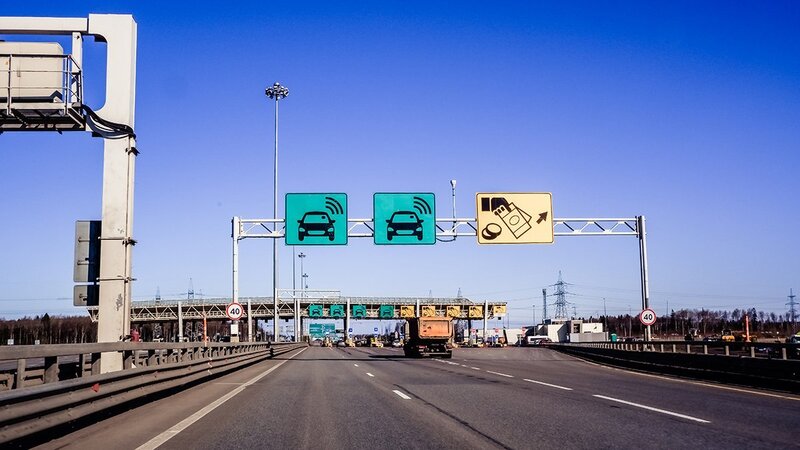
A scam so incredible it's real. It involves a highway, motorists traveling, and... a fake toll booth. It happened in India, and news of the scam of the century went viral worldwide. Albeit slowly.
A "prank" that generated profits of approximately 75 million rupees in 18 months (almost 700 thousand euros at the exchange rate) and that, in fact, made scammers as cunning as they are ingenious famous. And the motorists? Thinking they were paying a toll to the state, they found themselves contributing to the coffers of fake toll booth operators. But how could something like this happen, in broad daylight, on a road open to all types of traffic?
The Scam of the Century: The Origins of the Fake Toll Booth (on the Fake Highway)
We are in the state of Gujarat, in the Morbi district, along the Indian national highway Bamanbore-Kutch. Here, an organized group built a real parallel toll booth, exploiting a private property: the land of a disused factory, the White House Ceramic Company. Not improvised, but a perfect replica, like a movie set: barriers, lanes, signs, personnel, and even a meticulously planned traffic diversion.
The mechanism was as simple as it was effective: motorists were directed away from the official toll booth, located a few kilometers away, and convinced to take this alternative route. All with an irresistible incentive: halved toll. A seemingly logical choice for truck drivers and frequent travelers, who found themselves saving money without any obvious signs of irregularity.
Making the system even more credible was a carefully constructed narrative: drivers were told that the money would be used to fund local temples. Savings and "charity" combined, a perfect mix to allay any suspicion and effectively portray the reality in which the scam took place.
The result? Thousands of rupees collected every day - for a total of 75 million - for over a year and a half, while traffic at the official toll booth decreased abnormally. Only when the authorized operator reported the drop did the authorities initiate checks, leading to the arrest of several perpetrators: landowners, organizers, and managers of the diversion. A complex and surprising criminal system. But the most telling statistic remains the time: 18 months before anyone noticed everything.
From scam to social phenomenon: a new life three years later
If the scam worked for so long, it's due to a combination of factors that are difficult to replicate but perfectly aligned in that context: a sparsely populated area, zero controls, and above all, a system designed to appear completely normal. Not a single detail out of place, not a single suspicious request.
It's precisely this "normality" that made the scam invisible. The constant traffic, the presence of operators, and the economic logic of the reduced price did the rest. No one stopped to ask whether it was truly an official toll booth. And when no one doubts, even the absurd becomes routine.
But the story's second life is perhaps even more interesting. The arrests date back to 2023, yet it's only now that the case has exploded on social media, turning into a global phenomenon. The reason? The perfect combination of disbelief and fascination: a story straight out of a movie.
Original article published on Money.it Italy. Original title: Un finto casello diventa la truffa del secolo: quasi €700.000 incassati


