
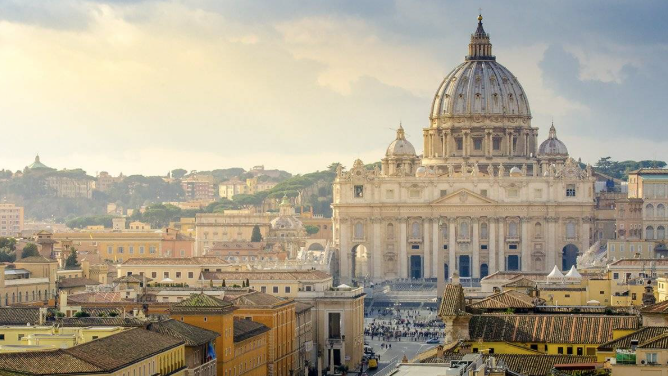
When people hear "Vatican Bank," finance is rarely the first thing that comes to mind. Yet with the launch of two new equity benchmarks—the Morningstar IOR US Catholic Principles Index and the Morningstar IOR Eurozone Catholic Principles Index—the Institute for the Works of Religion (IOR) has officially entered the world of modern index investing.
These are not symbolic or charitable initiatives. They are fully fledged stock indexes, each composed of 50 mid- and large-cap companies selected according to Catholic ethical principles. The stated goal is to provide a global reference point for Catholic-aligned investments, but the implications go well beyond religious circles.
For investors, this move intersects with three powerful trends:
- The evolution of thematic and values-based investing
- Growing skepticism toward traditional ESG products
- The search for equity strategies that combine ethics, transparency, and risk control
In short, the Vatican’s initiative is less about faith and more about rules-based capital allocation.
Catholic values vs ESG: a response to investor fatigue?
The timing of the launch is particularly interesting. ESG investing—once the fastest-growing segment of asset management—has entered a more difficult phase. According to Morningstar data, funds with ESG mandates experienced global net outflows last year, a first for the industry.
Analysts point to several reasons: inconsistent scoring methodologies, political backlash, and widespread accusations of greenwashing. Against this backdrop, Catholic-value indexes offer a simpler and more rigid framework.
Instead of complex ESG ratings, these benchmarks apply clear exclusionary criteria, avoiding companies involved in activities deemed incompatible with Catholic social teaching, while favoring firms with responsible business practices. This approach reduces subjectivity and may appeal to investors who want ethical coherence without analytical opacity.
From a portfolio construction perspective, that clarity matters. As one European thematic-investing analyst noted in recent interviews, "Indexes with strict rules tend to deliver more predictable factor exposure, even if they sacrifice some flexibility."
Read more: ESG Risks: What They Are and How to Manage Them Best
What’s inside the indexes—and why it matters for performance
Despite common assumptions, Catholic-value investing does not exclude large technology or financial firms. The US index includes global leaders in digital platforms and e-commerce, while the Eurozone version features major industrial and telecom names.
This composition is important for two reasons.
First, it dispels the myth that ethical investing necessarily means lower-quality or niche companies. On the contrary, these indexes remain anchored to firms with strong balance sheets, global reach, and significant pricing power.
Second, the sector allocation tends to tilt toward less cyclical, cash-generative businesses. Historically, portfolios with these characteristics have shown better resilience during market stress—an aspect that aligns closely with wealth protection strategies.
That said, there are trade-offs. Excluding certain industries—such as defense-related technologies or controversial entertainment segments—can lead to underperformance during speculative bull markets. For investors chasing maximum upside in risk-on phases, these indexes may feel conservative.
But for long-term allocators, conservatism can be a feature, not a flaw.
Strategic implications for Italian and European investors
For Italian investors, the Vatican Bank’s move carries both symbolic and practical relevance. Italy is one of Europe’s largest markets for ethical savings, and demand for values-aligned products remains structurally strong, even as ESG labels lose appeal.
If these indexes gain adoption, analysts expect several knock-on effects:
- New ETFs or funds benchmarked to Catholic principles
- Hybrid strategies blending ESG metrics with faith-based exclusions
- Increased competition among European asset managers in ethical indexing
From a macro standpoint, values-driven capital tends to be longer-term and less reactive, which can dampen volatility and improve portfolio stability. In uncertain economic environments—marked by geopolitical risk, high interest rates, and uneven growth—this stability is increasingly valuable.
Read more: How Much Does the Pope Make? The Salary of Pope Francis (and Cardinals)
Niche product or strategic signal?
The Vatican Bank’s Catholic stock indexes are unlikely to reshape global markets overnight. But they send a clear signal: ethical investing is evolving, moving away from vague labels toward more transparent, rule-based frameworks.
For investors, the opportunity is not about religion—it is about discipline, diversification, and downside awareness. Whether these benchmarks become investable products or remain reference tools, they highlight a broader shift in how capital is being allocated.
In a market crowded with noise and short-term narratives, clarity—of rules, values, and objectives—can itself become a competitive advantage. And that may be the Vatican Bank’s most unexpected contribution to modern finance.