

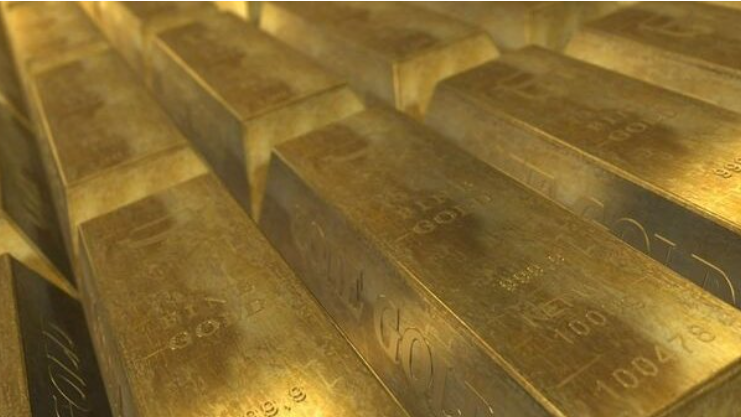
If you had invested $10,000 five years ago, would you have been better off choosing gold or Apple?
At first glance, the answer seems obvious. Apple represents innovation, cash generation, and one of the strongest balance sheets in corporate history. Gold, by contrast, is often viewed as a defensive asset — something investors buy when they are worried.
Yet the last five years tell a more nuanced story.
Between early 2021 and early 2026, gold delivered a cumulative return that, in several time frames, exceeded Apple’s total shareholder return. While Apple experienced strong rallies — especially tied to AI enthusiasm and services growth — it also went through periods of significant volatility, regulatory pressure, and valuation compression.
Gold, meanwhile, benefited from:
- Persistent geopolitical tensions
- Structural inflation concerns
- Central bank accumulation at record pace
- Rising fiscal deficits in developed economies
In other words, what many investors considered “boring insurance” ended up competing with — and at times beating — one of the world’s most admired growth stocks.
Read more: Why Investors Keep Turning to Gold When Markets Start Feeling Unpredictable
Volatility vs Stability: What the Numbers Really Show
The key difference is not just performance. It’s the path of returns.
Apple remains a high-quality equity asset. Revenue diversification, recurring services income, and ecosystem lock-in provide structural support. However, as a mega-cap tech stock, Apple is exposed to:
- Earnings revisions
- Product cycle risk
- Antitrust scrutiny
- Market-wide multiple contractions
Gold does not generate cash flow. It has no earnings growth. But it responds differently to macro stress. During periods of equity drawdowns, gold often acts as a hedge, dampening overall portfolio volatility.
Portfolio strategists increasingly describe gold not as a “bet,” but as a risk-management tool. In multi-asset portfolios, a 5–10% allocation to gold has historically improved risk-adjusted returns during inflationary or unstable geopolitical regimes.
Over the past five years, that insurance component proved valuable.
For an investor focused purely on aggressive capital appreciation, Apple may still represent long-term innovation exposure. But for those prioritizing capital preservation and smoother equity curves, gold demonstrated surprising resilience.
Read more: Golden times for gold fans
Is This a Structural Shift or a Temporary Rotation?
The critical question for 2026 is whether this outperformance is cyclical — or structural.
Gold’s rally has been fueled not only by crises but by central banks diversifying reserves away from dollar concentration. Meanwhile, large-cap technology stocks face higher scrutiny over valuations and growth sustainability after years of outperformance.
That said, investors should avoid binary thinking.
Apple remains a cornerstone of global equity indices and a dividend payer with massive free cash flow. Gold, while protective, can stagnate in low-inflation, strong-growth environments.
The lesson is not “gold beats tech.”
The lesson is diversification.
A $10,000 comparison highlights something deeper: in uncertain macro regimes, protection and growth can alternate leadership. Investors who blend both assets — rather than chase whichever performed best last year — are often better positioned for long-term wealth preservation.
In 2026, portfolio construction is less about choosing sides and more about balancing resilience with opportunity.
Beyond the headline comparison, the broader implication concerns asset allocation discipline. Over the past decade, many portfolios became increasingly concentrated in mega-cap technology, largely because it worked.
However, 2026 reminds investors that leadership rotates. Analysts interviewed by major asset managers stress that regimes of higher inflation, fiscal expansion, and geopolitical fragmentation tend to favor real assets alongside equities.
That does not imply abandoning quality growth names like Apple, but rather complementing them. A portfolio blending innovation-driven equities with strategic gold exposure may prove more resilient across cycles.
The $10,000 thought experiment is not about declaring a winner — it is about recognizing that capital protection and growth are not mutually exclusive. Investors who integrate both dimensions, instead of chasing past performance, are typically better positioned to navigate structural uncertainty.


