

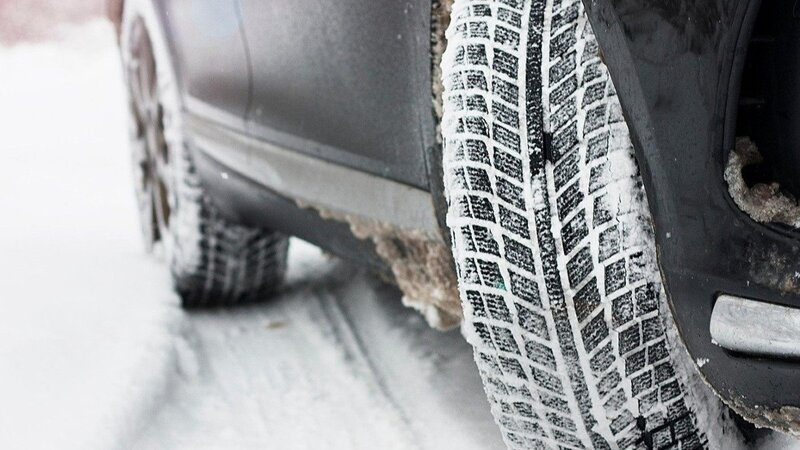
For many drivers, the idea of installing all-season tires is increasingly attractive compared to a decade ago: no more double tire changes, compliance with regulations in every season, greater convenience, lower installation and storage costs. But behind this convenience lies a very dangerous myth: thinking that all-season tires are maintenance-free.
In reality, these hybrid tires, designed to withstand both the heat of summer and the cold of winter, require specific care to maintain safety and performance. While they offer the flexibility of remaining installed year-round, their continued use can cause problems if left unchecked. And many drivers—due to lack of knowledge or, perhaps, lack of time—can fall into this trap.
All-Season Tires: The Common Mistake Almost Everyone Makes
A widespread misconception is that, once installed, all-season tires don’t require any further maintenance for years. But this belief is decidedly misleading: thinking you can “forget” about all-season tires is a mistake, because without proper maintenance you risk poor handling, premature wear, and even safety issues.
Experts explain that regular tire rotation is essential because tires wear at different rates depending on the axle: the front tires, subjected to braking and steering forces, tend to wear out more quickly than the rear tires.
If they aren’t rotated between the axles, uneven wear occurs, which worsens driving performance and accelerates tire degradation. And this is common to all types of tires, without a doubt; Drivers who regularly rotate their tires from summer to winter, however, are effectively circumventing the problem, as they are forced to perform tire maintenance every 6-7 months (November and April). With all-season tires, you risk forgetting the best practices for caring for your car.
It’s advisable to rotate them on average every 10,000-15,000 kilometers, even sooner if your car is heavy, travels short distances frequently, or is powered by an electric motor.
Rotating your tires “front-to-back” and other good habits to adopt
Therefore, the basic mistake when installing all-season tires is simply one: subconsciously thinking that these tires require less attention than a set of seasonal tires.
But rotating your tires isn’t enough: it’s essential to regularly check tire pressure and tread depth, tasks that are too often overlooked in everyday life. Incorrect tire pressure can cause uneven wear, compromise the car’s stability, and even increase fuel consumption. As tire maintenance guidelines indicate, it’s best to check tire pressure at least every 3-4 weeks, and always when the tires are cold, to avoid false readings due to air expansion during driving.
At the same time, tread depth should be monitored. When the tread depth drops below the tread wear indicators (TWI), the tire loses some of its braking and wet grip, a variable that is even more risky in snow, effectively undermining all the advantages of all-season tires. Some car manufacturers recommend not exceeding a 2 mm depth difference between tires on the same axle and, if necessary, moving the wheels to even out wear.
Finally, it’s also worth considering balancing and alignment when rotating tires or noticing uneven wear. In short, small adjustments like these can make a big difference: not only for tire life, but also for safety, especially in difficult conditions like rain or cold.
In the end, are all-season tires “to be thrown away”? Absolutely not, on the contrary. Today, they are undoubtedly the right solution for most drivers: they offer convenience, savings, and good performance, but only if carefully cared for. Neglecting maintenance is not an option: it’s the key to turning a comfortable compromise into a safe and long-lasting investment.
Original article published on Money.it Italy. Original title: Gomme 4 stagioni, c’è un falso mito che in pochissimi conoscono