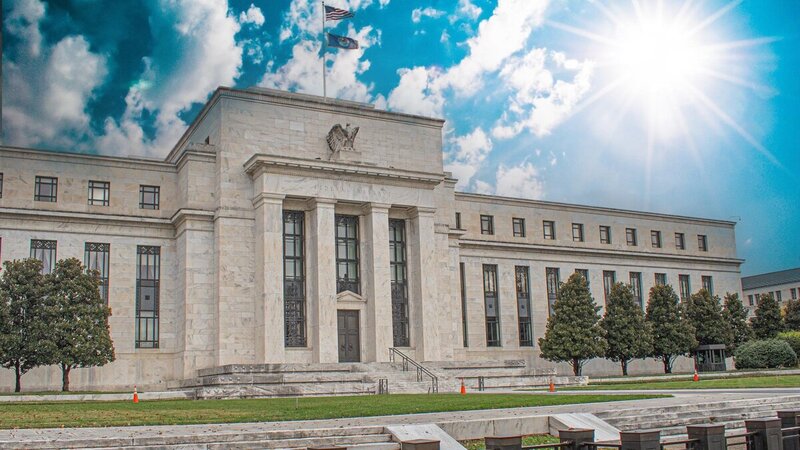
Inflation in the United States is no longer the shock it was at the peak of the tightening cycle. Recent data confirm that price pressures have eased from their highs. The sense of urgency that once dominated Federal Reserve meetings has softened. Yet policymakers are not declaring victory.
The Fed continues to emphasize that inflation remains above its 2% target and that policy decisions will remain data-dependent. Officials have been careful to avoid signaling a premature pivot. From the central bank’s perspective, credibility depends on patience. Cutting too early could undo hard-won progress. Waiting too long, however, risks tightening financial conditions more than necessary.
For now, the official message is steady: restrictive policy remains appropriate.
But the bond market seems to be listening differently.
A Subtle Shift in the Yield Curve
In recent weeks, movements in the U.S. Treasury market have suggested that investors are recalibrating their expectations. The spread between 2-year and 10-year yields — often treated as a barometer of economic sentiment — has shifted meaningfully. In fixed-income markets, even moves of 25 to 40 basis points can signal a change in outlook.
After a prolonged inversion, any steepening of the yield curve draws attention. Historically, such moves often indicate that markets believe the most restrictive phase of policy is behind them, or that growth risks are increasing.
This does not mean traders expect immediate rate cuts. Rather, it suggests that investors are positioning for a scenario in which inflation continues to ease and economic momentum gradually slows.
The bond market is not forecasting crisis. It is adjusting probabilities.
Growth Signals Are Mixed
The broader economic picture supports this cautious repositioning.
Inflation has moderated, but core measures remain sticky. Wage growth has cooled, though it is not collapsing. Meanwhile, parts of the economy are beginning to reflect the cumulative impact of higher rates. Housing activity has softened compared with earlier cycles. Corporate borrowing is more expensive. Credit conditions have tightened at the margins.
Monetary policy operates with delays. The aggressive rate increases of previous quarters are still working their way through the system. Investors are increasingly focused on those delayed effects.
If inflation continues to trend lower while economic data show incremental signs of fatigue, the pressure for eventual policy adjustment grows. The bond market appears to be reflecting that possibility before the Fed formally acknowledges it.
Different Mandates, Different Timing
The divergence between the Fed and the Treasury market is less a disagreement and more a difference in function.
The Federal Reserve must rely on confirmed trends. It cannot pivot on tentative improvements. Its role is to manage stability and expectations, not to anticipate every market fluctuation.
Bond investors operate under a different logic. They trade forward-looking probabilities. If the likelihood of slower growth increases, yields adjust — sometimes well before policymakers shift their language.
That dynamic has played out in previous cycles. Treasury markets often move ahead of official policy changes, not because they are more powerful, but because they respond faster to shifts in sentiment and risk.
Equities Are Holding Their Ground
Notably, equity markets have not mirrored the bond market’s caution. Major indices remain relatively firm, and risk appetite persists, particularly in growth and technology sectors.
This divergence is common during transitional phases in the economic cycle. Bonds tend to react first to changes in interest rate expectations. Equities adjust later, once earnings expectations begin to shift.
For now, markets are sending mixed signals. The Fed projects patience. Stocks reflect resilience. Bonds suggest a gradual turn.
Positioning for What Comes Next
It would be premature to describe this moment as a standoff. The Fed has not altered its stance. Inflation is still above target. The economy has not stalled.
Yet the Treasury market is leaning forward.
Inflation is cooling. Growth is moderating. Policy remains tight. In that environment, investors are beginning to position for a future in which restrictive rates cannot remain indefinitely if the disinflation trend holds.
Whether the bond market is moving wisely or prematurely will depend on upcoming inflation and labor data. For now, the adjustment is incremental, not dramatic.
But in financial markets, incremental moves often precede larger ones.
The Fed is signaling patience.
The bond market is signaling possibility.
And between those two signals lies the next phase of monetary policy
Read more: Bitcoin reacts to US inflation data as Fed expectations shift