

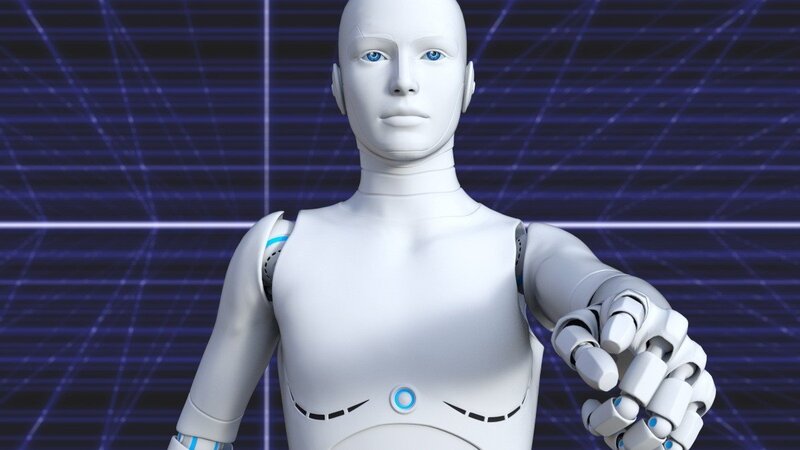
Will humanoid robots replace us? Probably. In the not-too-distant future, many purely manual jobs could be performed by structurally programmed and expertly designed machines. But this trend isn’t bad news for all workers—quite the opposite. There’s already a business behind it that’s underway and doesn’t seem likely to stop anytime soon.
Of course, we’re talking about those who design these robots that resemble—but are merely human laborers. Behind the scenes, thousands upon thousands of engineers, programmers, testers, and high-level technical workers are at the heart of the fortunes (or otherwise) of companies, which may find themselves having to pay a few highly skilled employees rather than paying many low-skilled workers poorly. And that’s what’s happening at UBTECH, one of the world’s leading humanoid robot companies, which has decided to publish a very unique job ad: what’s unique? A salary that can reach 500,000 yuan a day, or approximately 62,000 euros. A salary that can make anyone a millionaire with just a month’s work, with a simulation of over 15 million euros a year?
It goes without saying that the requirements are highly exclusive. But fear not: this is just one of the many signs that this sector is still on the rise.
UBTECH is seeking a Chief Scientist worth 15 million euros a year
The position open at UBTECH is essentially a very high-level strategic role: the Chinese company is seeking a Chief Scientist of Embodied Intelligence, a figure called upon to define the very future of humanoid robots. It’s not just about supervising teams or developing code, but about leading the entire technological roadmap in the fields of artificial intelligence and advanced robotics, with direct responsibility for designing the AI models that allow robots to interact with the real world.
The announcement is global and deliberately inclusive: the company stated that it does not consider passport, age, or gender, but only the ability to “define the future”. This suggestive formulation, however, hides a very concrete reality: the talent shortage in this sector is such that companies are seeking the best minds wherever they can be found. The number of available positions is extremely limited, likely only one top executive, precisely because this is a key role in the company structure.
But it’s on the economic front that the numbers are impressive: salaries start at around 15 million yuan per year (over 1.9 million euros) and can reach up to 124 million yuan, equivalent to approximately 15 million euros per year, which translated to a daily basis means approximately 500,000 yuan per day, or more than 62,000 euros per day. This figure represents approximately 6.2% of the company’s annual revenue, a clear sign of the value placed on these types of skills. They are crucial to the very future of the company’s core business.
Why you should consider robotics as the business of the future (and present)
A salary of this level is a direct reflection of a market with a severe imbalance between supply and demand for skills, not a provocation. In the humanoid robotics sector, the difficulty of finding top-level personnel is now structural: according to various estimates, in the coming years there could be a shortage of up to 1 million qualified professionals across the entire supply chain, from data collectors to engineers specializing in robot collaboration.
This imbalance is part of a context of extremely accelerated growth. Today, humanoid robots are still a niche—approximately 13,000 units shipped in 2025—but forecasts point to an explosion in volumes: over 250,000 units by 2030 and up to 1.4 million by 2035. By 2050, some estimates even project over 1 billion humanoid robots in use. These numbers explain why governments and companies are investing massively: in China alone, the creation of hundreds of dedicated research centers and an industry worth hundreds of billions, if not trillions, of yuan are expected.
Such high salaries will become strategic tools, not exceptions. They serve not only to attract talent, but to retain it and transform human capital into a competitive advantage. Humanoid robotics, in fact, is no longer a futuristic exercise: it is already a sector that promises productivity increases of up to 10 times compared to traditional automation and a drastic reduction in operating costs.
In other words, while some jobs are disappearing, others, much more lucrative, are emerging. And those who know how to position themselves in this industry today may find themselves, tomorrow, not competing with robots, but designing them.
Original article published on Money.it Italy. Original title: Stipendio da €60.000 al giorno. Un’azienda cinese assume personale nella robotica