

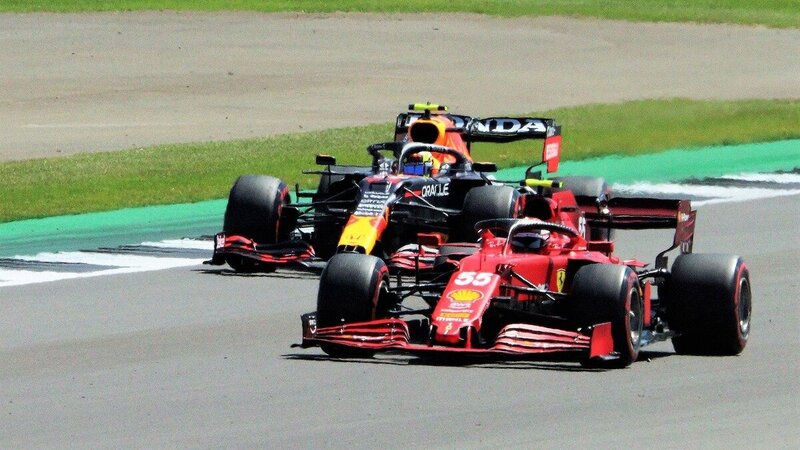
Formula 1, as we know, is an environment often associated with luxury and wealth. It's no coincidence that drivers reign supreme on the track and top the earnings charts, with salaries in the tens of millions of dollars a year. Max Verstappen and Lewis Hamilton stand out, with salaries exceeding $60 million.
But salaries aren't the only reasons an F1 driver is considered rich: prize money also plays a role. Winning the world championship certainly brings fame and prestige, but also generous bonuses in contracts and, of course, the prize money dedicated to the world champion, as well as the opportunity to tap into an even higher level of sponsors and partnerships.
But how much is this prize money? The 2025 world championship is coming to a close, and the upcoming Abu Dhabi GP, the final one of the season, will decide the winner of an unprecedented three-way battle, especially considering the recent seasons (dominated by Verstappen): Max Verstappen, with Red Bull, Oscar Piastri, and Lando Norris, with McLaren, will compete in a weekend that will be worth the year, with Norris, based on the standings, the favorite over the other two, even though the gap between first and third (Piastri) is just 16 points.
A true sporting battle that also offers a dream prize pool that could change an entire career. Here's how much the winner of the 2025 F1 world championship wins and how much the winning teams in the dedicated rankings earn.
How much does the world championship winner take home? F1 Prize Money
Often, when we think of F1 prize money, we imagine a million-dollar check going straight to the driver who wins the championship. In reality, the truth is different: all the official prize money is distributed to the teams, not the drivers.
<quote>The mechanism works like this: a significant portion of F1's commercial revenues—television, sponsorships, image rights—is allocated to a fund that, through the Concorde Agreement, is then divided among the teams based on their position in the Constructors' Championship.</quote>
To give you an idea: in 2024, the fund distributed to the teams was estimated at approximately $1.266 billion. That sum determines the "booty" that each team can collect and, therefore, also the amount that will be shared with the driver, if provided for in the internal contract.
Here's a sample table, based on current estimates, to understand how much the team could receive based on its final placing.
| Team's standings | Estimated team prize money (in dollars) |
|---|---|
| 1st | $140 million |
| 2nd | $131 million |
| 3rd | $122 million |
| 4th | $113 million |
| 5th | $104 million |
| 6th | $95 million |
| 7th | $87 million |
| 8th | $78 million |
| 9th | $69 million |
| 10th | $60 million |
Be careful, though: these figures represent how much the team receives. As mentioned, there is no "automatic" payment from F1 to the world champion driver. If a driver "wins in money," it's only because that team, buoyed by his placing or title, decides to pay him a share through a personal contract, bonus, or internal agreements.
How much do the winning teams in the F1 constructors' championship win
For a team, winning the Constructors' title isn't just a matter of sporting pride: it's above all a huge financial paycheck, essential for covering the costs of technical development, engines, personnel, and preparation for the following season. Every year, thanks to the financial pact that governs F1, tens or hundreds of millions of dollars flow back into the coffers of the winning team, in a virtuous circle that aims to maintain high revenues for all stakeholders.
<quote>According to the most recent estimates, the champion team (first in the standings) receives around 14% of the total prize money allocated to the constructors, while the team that finishes tenth settles for around 6%.</quote>
Regardless of their placing, some "historic teams" can benefit from additional shares as a bonus for continuing to enter the championship.
McLaren has already won the 2024 and 2025 constructors' titles, meaning their earnings are staggering (almost $300 million across the years) and are used not only to balance the books but also to invest in engines, aerodynamics, simulations, and young talent. In short, the winners can reinvest to stay at the top.
Contracts and bonuses for world champion drivers: here's why winning the championship is important (beyond prize money)
If the official prize money doesn't end up in the hands of the driver, how does a champion really earn tens of millions in a season? The answer lies in the aforementioned parallel economic mechanisms: base salaries, performance bonuses, personal agreements, and sponsorships.
F1's top drivers have contracts signed with their teams that provide a fixed salary, with very high starting figures.
But how do bonuses work? Typically, every GP victory, every podium, and every final standings result in an additional income established by the contract. But the real "treasure" comes with winning the championship: champions can receive very substantial additional prizes, often in the order of several million dollars. In some cases, according to estimates based on public contracts or leaks, these title bonuses even exceed $10-15 million, as is the case, for example, with Max Verstappen's salary (which reaches $65 million annually including bonuses).
Beyond direct compensation, however, winning a world championship means becoming much more attractive on the market: new sponsors, endorsement deals, merchandising, image licenses, public events, personal licenses. For many drivers, this income—often personal, separate from the team—can even exceed their racing salary. And it can shape their future, perhaps even post-career, even on an entrepreneurial level.
Original article published on Money.it Italy. Original title: Montepremi Formula 1, ecco quanto guadagnano pilota e team vincenti