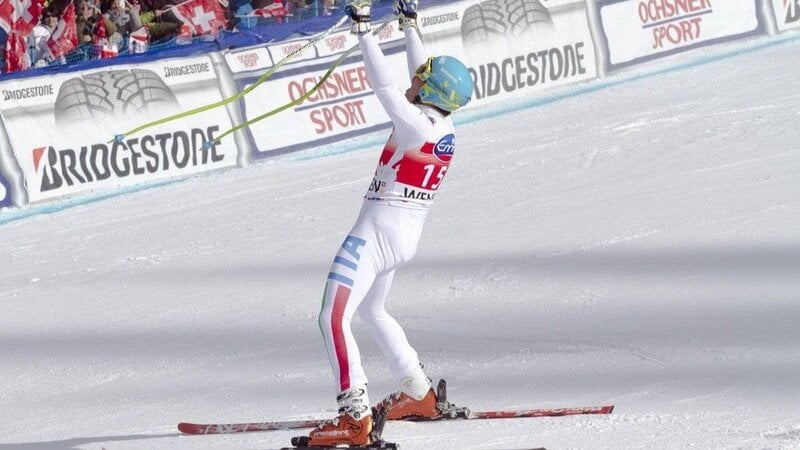
The World Cup season is entering its decisive phase, but in 2026, attention will inevitably be focused on the Milan-Cortina Winter Olympics, scheduled for February 6-22. This only seems to be a hiatus for major international skiing, culminating in the most prestigious event of the four-year period, with Italy at the center of the world stage.
Among the disciplines that most closely concern Italians is, of course, alpine skiing, a sport in which the Italians are aiming for the podium in several specialties.
Alpine skiing, however, remains a global powerhouse, with absolute champions and world-famous faces like Mikaela Shiffrin and Marco Odermatt, who dominated recent World Cup seasons and are among the favorites for Olympic medals. And they also lead the way when it comes to prize money.
But how much do skiers earn? What are the prizes offered for a victory or a place in World Cup races, and how much of an impact do sponsors have on their overall earnings? And, above all, what financial rewards are up for grabs for a podium finish at the 2026 Milan-Cortina Winter Olympics, the most anticipated and media-heavy event for a professional skier? Let's try to sort things out and answer every question.
How Much Does a Professional Alpine Skier Earn?
To understand how much a skier earns, let's start with the prize money for the World Cup races, the most frequent ones (on average, a couple per week throughout the winter season). Prizes are distributed to the top 30 in the final rankings, meaning those who earn points for the overall World Cup standings.
In recent years, the FIS award system for the 2025-2026 season has been updated, and the winner of a single Alpine Ski World Cup race will receive a prize of approximately €54,709, with a decreasing progression for placings up to 30th place. The second-place finisher also receives over €25,600, the third-place finisher just under €14,000, and gradually smaller amounts are awarded to the following athletes, up to the prizes for 30th place. In total, the official prize money for each race amounts to €167,619 in total, distributed among all athletes who earn points counting towards the final ranking.
In terms of fairness between venues, although the FIS structure is uniform for each stage, some iconic locations offer different prize money, thanks to additional sponsorships and extra bonuses to attract high-profile athletes. An example? The legendary Kitzbühel downhill race—the Streif, the most extreme downhill race in the world—offers a total of €350,000, of which more than €100,000 goes to the winner.
Alongside race prizes, top skiers earn seasonal prizes and additional recognition from national federations, personal sponsors, and, in the case of World Cup Crystal Globe victories (overall and specialty rankings), which can translate into additional annual sums often exceeding individual race victories.
To put this into perspective, in the 2025/2026 season, considering the World Cup races held so far, on the eve of the Olympics, the top earners in terms of prize money from competitions alone are:
- among the men, Swiss Marco Odermatt, who has taken home more than €657,000 from 28 available races;
- among the women, American Mikaela Shiffrin, who has collected €492,000 from 25 races.
Skiers' Earnings Beyond Prize Money: Salaries, Reimbursements, and Sponsors
In addition to race prizes, World Cup skiers receive direct financial support from national federations, which varies based on the athlete's results and status. In Italy, for example, athletes in the elite groups of the national team receive reimbursements, performance bonuses, and full expense coverage (travel, materials, and technical staff).
The Italian Winter Sports Federation (FISI) provides progressive bonuses for podiums, victories, and high placings, with prizes that can reach tens of thousands of euros for a single result in major races.
The main source of income for skiers, however, comes—at least for top athletes—from sponsors. The figures available to understand the amount of this income are few and vary greatly. But they undoubtedly have a significant impact on individual athletes' budgets: it's no coincidence, for example, that many skiers always highlight the brand of their skis or the drink they sip during interviews. Indeed, the world's best skiers sign multi-year contracts with brands of technical clothing, helmets, skis, boots, and non-sports brands (cars, watches, energy drinks).
For the most well-known champions, the contracts can be staggering.
<quote>According to market estimates and industry analyses, a top international athlete can earn between 1 and 3 million euros a year from sponsorships alone, while absolute champions far exceed these figures, especially in an Olympic year.</quote>
For second-tier athletes, however, sponsors often only cover materials and a portion of the seasonal costs, making their careers sustainable but not necessarily profitable.
Original article published on Money.it Italy. Original title: Quanto guadagna uno sciatore professionista?