

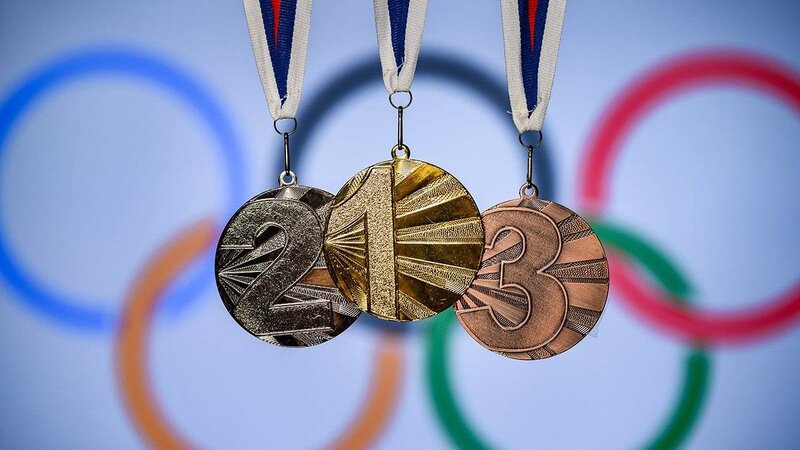
The curtain has risen on the Milan Cortina 2026 Winter Olympics, with these Games coming two years after the summer Olympics in Paris and effectively marking the return to Italy after the legendary Turin 2006 Olympics.
From February 4 to 22, 2026, Milan, Cortina, Val di Fiemme, and other Alpine venues will become the center of the sporting world, welcoming over 3,500 athletes from approximately 90 countries and awarding 116 Olympic titles, seven more than at Beijing 2022.
As always at the Games, the public's attention focuses on the sporting achievements, the medals, and the personal stories of the athletes. But alongside the glory and prestige, there is a question that recurs at every Olympics: How much is an Olympic medal really worth? And above all, beyond its symbolic value, how much is it worth in economic terms?
In the case of Milan-Cortina 2026, the answer is particularly interesting. The medals awarded to the winners will go down in history as the most expensive ever, at least in terms of the value of the precious metals they are made of. This record is linked not to design choices or a greater use of gold, but to the soaring gold and silver prices recorded on international markets over the past two years, immediately following the Paris 2024 Olympics.
But the value of a medal isn't limited to the weight of the metal. For many athletes, reaching the podium also means prize money, bonuses, sponsorship deals, and visibility that can radically change a career. And this is where individual country policies come into play, because the International Olympic Committee does not recognize any direct compensation: it is the national committees that decide how much a medal is "worth," even from a financial perspective.
Let's see, then, in detail, how much the medals from Milan-Cortina 2026 are materially worth and how much the athletes who manage to reach the podium earn, in Italy and around the world.
How much are gold, silver, and bronze medals materially worth?
Let's start with a fundamental fact: Olympic medals have not been made of solid gold since 1912, the year of the Stockholm Games. Since then, their material value has always been lower than their symbolic value. At Milan-Cortina 2026, this tradition will also be respected, but with a substantial difference compared to the recent past: the price of precious metals has exploded.
<quote>According to FactSet data, since the 2024 Paris Olympics, gold spot prices have increased by approximately 107%, while silver prices have increased by nearly 200%. This increase is linked to specific global factors: geopolitical instability, the rush to safe-haven assets, the increase in central banks' gold reserves, and strong demand for silver from retail investors.</quote>
Going into the details of the composition, the Milan-Cortina 2026 medals will be made with metals recycled by the Istituto Poligrafico e Zecca dello Stato, an element that reinforces the Games' sustainability message.
- Gold Medal: weighs 506 grams (approximately 16 troy ounces). Of this, only 6 grams are pure gold, while the rest is silver. Based on current prices, the value of the metal contained in a gold medal is around 2,100–2,300 euros, more than double that of Paris 2024.
- Silver medal: Made entirely of silver, it has a material value of almost 1,300 euros at current prices, about three times that of two years ago.
- Bronze medal: Made primarily of copper (with a small percentage of zinc), it weighs about 420 grams. Its purely material value remains symbolic: about 5-6 euros.
For comparison, at the Tokyo and Paris Olympics, a gold medal was worth, in metal terms, around 400–500 euros. The Milan-Cortina leap is therefore clear and certifies a record that is difficult to dispute.
A key concept must be reiterated, however: material value is almost never the reason why an Olympic medal is considered "precious." When they end up on the collectors' market—a rather rare occurrence—they can fetch much higher prices. A gold medal from Stockholm 1912 sold at auction for around €22,000, while a bronze medal from the 1920 Antwerp Games, with no intrinsic value, fetched over €700 simply because of its historical connection to the event.
The vast majority of athletes, however, do not sell their medals, which remain a priceless personal and sporting memento.
How much do athletes earn at the Olympics?
Having clarified the material value, the other big question remains: how much do athletes who win an Olympic medal earn? A fundamental premise is necessary here: the International Olympic Committee does not pay prize money. No athlete receives compensation directly from the IOC. Everything depends on the policies of individual countries.
From this perspective, Italy confirms its position among the most generous nations. CONI has set prize money for Milan-Cortina 2026 identical to those for Paris 2024, with an important innovation announced by Minister of Sport Andrea Abodi: the prize money will be tax-exempt.
- €180,000 for a gold medal
- €90,000 for a silver medal
- €60,000 for a bronze medal
<quote>An often overlooked aspect concerns team sports: the prize money is not split, but goes in full to each athlete on the winning team.</quote>
On the international scene, however, the differences are enormous. Some examples reported by Sport e Finanza are emblematic.
- Singapore: up to $745,000 for gold (although rarely awarded, given the limited Olympic presence).
- Hong Kong: approximately $768,000 for gold, $384,000 for silver, and $192,000 for bronze.
- United States: Much smaller prizes – $38,000 for gold, $23,000 for silver, and $15,000 for bronze – but with a private initiative that will guarantee athletes $100,000 at age 45, plus another $100,000 for their families.
- France: About $87,000 for gold.
- Germany: Just over $22,000.
- Norway, Sweden, and Great Britain: No monetary prizes tied to medals.
Alternative reward systems also exist: Kazakhstan awards apartments to medalists, South Korea guarantees a lifetime salary to Olympic gold medalists, while in other countries prizes include cars or material goods.
Ultimately, however, for most athletes, these rewards serve primarily to recoup the personal investments made over the years in training, travel, and equipment. Because, despite the numbers and records, the true value of an Olympic medal remains symbolic: representing your country on the world's most important sporting stage.
Original article published on Money.it Italy. Original title: Quanto vale una medaglia olimpica d'oro, argento o bronzo?