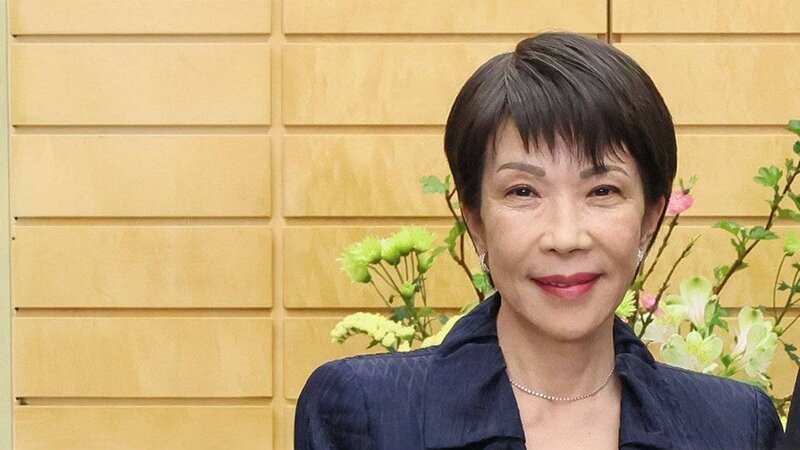
Japan returns to the polls on February 8, 2026 for snap general elections, an event that shakes up the national and international political scene and marks a crucial milestone in the country’s modern history, albeit in an unusual way. Less than four months after being appointed Prime Minister, Sanae Takaichi dissolved the House of Representatives, kicking off one of the shortest and most unusual election campaigns in decades, with less than 16 days between the dissolution of Parliament and the vote itself.
This decision, which surprised analysts and a large portion of the public, is not a simple administrative act: it represents a strategic attempt to consolidate one’s leadership and gain a strong popular mandate to address profound economic challenges, international tensions, and an increasingly fragmented domestic political landscape. The vote is eagerly awaited, not only in Asia but around the world, because it could determine Tokyo’s future direction on fiscal policy, national security, relations with Beijing and Washington, and even social issues such as immigration and the demographic balance of a society that has faced economic stagnation and unique demographic challenges for decades. At stake, therefore, are not only parliamentary seats, but the very direction of Japan’s political agenda for the coming years.
Japan’s snap elections in February 2026: why are we going to the polls?
The official reason behind the decision to hold snap elections in Japan on February 8, 2026, lies in a combination of political, strategic, and personal factors. Prime Minister Sanae Takaichi, who took office last October as the first woman to lead Japan’s government, announced the dissolution of the Lower House on January 19, 2026, launching one of the fastest-paced election campaigns in history.
Takaichi’s primary reason is the need to secure democratic confirmation of her mandate to advance an ambitious policy agenda, including expansionary fiscal policies, tax cuts, and a more robust security strategy. The move was motivated by the argument that recent legislation and the current government structure lack solid parliamentary support, and that the popular vote can provide the legitimacy needed to undertake significant reforms.
This early election, however, is much more than a simple confirmation formality: it comes at a time of profound political transformation. The historic alliance between her Liberal Democratic Party (LDP) and the centrist Komeito Party, which had dominated Japanese politics for over 25 years, broke down last year, leaving Takaichi and the LDP without their traditional moderate support in Parliament. The breakup of this coalition weakened the governing majority and created a climate of political instability that, according to many analysts, prompted the prime minister to seek a new mandate before the situation deteriorated further.
Strategically, the decision to dissolve the House of Representatives right at the start of the regular session—an event not seen in over sixty years—and to schedule the vote in the dead of winter highlights how Takaichi is betting on his personal approval ratings, which in recent polls hovered between 60 and 70 percent before dropping slightly in recent weeks. The stated goal is to transform this popularity into broader support in Parliament, thus consolidating his leadership and strengthening the currently fragile and divided government majority.
Finally, there is also a defensive motivation behind the announcement of the early vote: by bringing forward the elections and preventing months of potential parliamentary conflict over budget approval and economically sensitive reforms, Takaichi is attempting to shield his agenda from internal and external criticism that could erode consensus. This vote is therefore not only a test of internal strength, but also an open game for Japan’s political future in an increasingly complex international (and not just regional) context.
What are the issues on the agenda in the election campaign
The campaign for the 2026 Japanese elections is dominated by a series of issues that reflect the daily concerns of Japanese citizens and the government’s strategic priorities, which, in some ways, aims to push the accelerator. At the heart of the debate is the economic situation, characterized by years of stagnant real wages and rising consumer prices, particularly for food and energy. The burden of inflation continues to create frustration among families, especially those with middle and lower incomes, who are increasingly turning to low-cost stores to make ends meet.
Takaichi’s response to this situation has been a package of expansionary fiscal policies, most notably the proposal to temporarily suspend the food consumption tax—currently at 8%—to ease the burden of prices on the population. This measure, though very popular among voters, has been criticized by economists who warn that it could increase public debt, already among the highest in the world in relation to GDP, with risks of long-term financial instability.
Alongside the economy, the election campaign is heavily influenced by the issue of national security. In a regional context marked by rising tensions with China and perceived instability in the Indo-Pacific region, the prime minister has promoted a strengthening of Japan’s defense capabilities, discussing a significant increase in military spending (up to 3% of GDP). This approach has sparked intense debate, as Japan, a pacifist nation by constitution since the postwar period, has historically maintained limitations on its armed forces.
The issue of immigration and foreign presence is another key issue in the campaign. While some political forces propose more restrictive policies to control the entry and employment of foreigners, other opposition groups advocate greater openness, emphasizing that a more inclusive approach could help address demographic challenges, such as an aging population and labor shortages.
Finally, the reorganization of the Japanese political landscape—with the formation of the Centrist Reform Alliance (CRA) (a merger between the Constitutional Democratic Party and Komeito) to counter the government stalemate—has added an element of uncertainty, raising questions of political identity and the country’s future direction. This new alliance aims to offer an alternative platform based on social inclusion, moderation, and international cooperation, mobilizing voters who favor a balance between tradition and reform.
How does the electoral system work in Japan?
Japanese elections follow a mixed electoral system that combines elements of majoritarian and proportional representation to ensure a balance between territorial representation and national political strength. The House of Representatives, the lower chamber of the Diet, is composed of 465 seats: 289 of these are assigned through single-member constituencies where the candidate with the most votes wins, and 176 are distributed through proportional representation within 11 regional blocs.
Each voter is entitled to two separate ballot papers: with the first, they cast a vote for a candidate in their single-member constituency, and with the second, they vote for a party list under the proportional system. This mechanism allows for a balance between direct representation and that of political parties, offering space for both individual candidates and party platforms.
The Japanese political system assigns a central role to the House of Representatives: it is this chamber that elects the prime minister and has the final say on the state budget, making it crucial to the national political direction. This means that obtaining a majority in this chamber is essential to govern effectively and pass key legislation, including budget plans and strategic reforms.
A peculiarity of this year’s elections is the extremely short campaign period: just 16 days between the dissolution of the Chamber and the day of the vote, a period that favors well-organized parties and consolidated political forces, while penalizing emerging movements or lists with less local roots. This compressed timeframe increases pressure on candidates and requires rapid and effective mobilization of political resources.
Finally, Japanese elections also allow for post-election coalition formation, as one party almost never obtains an absolute majority alone. Consequently, the ability to negotiate alliances, maintain internal unity, and attract votes in key constituencies becomes crucial for any political force aspiring to govern with stability and for the entire legislative session.
Who are the favorites for the February 2026 snap elections
The latest political poll analyses show an evolving situation, with several key indicators reflecting the uncertainty and dynamism of the upcoming vote, but also a certain degree of leadership. According to a summary of the most recent surveys, Sanae Takaichi’s personal popularity is still relatively high, with approval ratings averaging between 60% and 67% in various polls, although this has gradually declined from the peaks recorded in the months immediately following his inauguration.
The Liberal Democratic Party (LDP), led by Takaichi, remains the main governing party and continues to be among the most cited political forces in polls, with around 29-30% voting intentions in the proportional component.
However, not all surveys show a stable situation: the most recent survey by the Kyodo agency indicates that the prime minister’s approval has dropped from 67.5% in December to 63.1%, and that support for the LDP, while still leading, is not overwhelming.
One of the most significant developments of this election is the formation of the Centrist Reform Alliance (CRA)—a new political grouping born from the alliance between the Constitutional Democratic Party (CDP) and Komeito, once a historic ally of the Liberal Democrats. This group currently represents the main opposition bloc, with a structure capable of competing in many constituencies and candidates capable of effectively challenging government representatives in key districts.
Other parties—such as the Japan Innovation Party (JIP), an ally of the LDP in the new governing coalition, and smaller formations like Sanseito—contribute to a fragmented and competitive electoral landscape. In particular, the JIP has proven competitive in numerous constituencies, especially in the Kansai and Osaka areas, where it can play a key role in dividing up majority seats.
Equally interesting is the generational dynamic of the electorate: various polls indicate that young voters tend to show increasing attention to economic and social programs, although it is not yet clear to what extent these preferences will translate into actual voting. Some observers point out that the younger generation’s response could be decisive in the most contested constituencies, especially when combined with the impact of issues such as the cost of living and job prospects.
The latest polling trends therefore show a still open and competitive election, with no clear frontrunner and potential surprises in the final outcome. The ability of political leaders to mobilize voters in the days immediately preceding February 8th will likely be crucial in shaping the balance of power in parliament in the months following the election.
What will happen after February 8, 2026?
The outcome of the 2026 Japanese elections will have profound repercussions on the country’s political, economic, and international trajectory. If Sanae Takaichi and her governing bloc—composed of the LDP and the Japan Innovation Party—were to win a solid majority in the House of Representatives, the prime minister would be in a strong position to advance her agenda. This would include expansionary economic policies, measures to stimulate domestic growth, and a strengthening of national security policies in response to rising tensions in the Indo-Pacific region. Confirming a strong mandate could also strengthen Tokyo’s position in relations with key international partners, such as the United States and the European Union.
However, the possibility of an indecisive outcome or a narrow majority would lead to a phase of intense political negotiations. In such a scenario, the ability to form post-election alliances and achieve parliamentary compromises will become crucial. Parliamentary weakness could slow the passage of key legislation—including budget plans and strategic reforms—and could expose the government to internal and external pressure on sensitive issues such as fiscal policy and defense.
In the event of a resounding defeat for the ruling bloc or a strong advance by the Centrist Reform Alliance (CRA), Takaichi’s political future itself would be called into question. Already during the election campaign, the prime minister declared she would resign if her party failed to regain or maintain a parliamentary majority. A defeat could therefore trigger a period of internal transition within the LDP leadership and lead to a significant reduction in Takaichi’s personal political influence.
From an international perspective? A more focused and moderate government could certainly seek to restore balance in relations with China, which have been strained in recent years due to territorial and diplomatic disputes. A confirmation of Takaichi’s leadership could strengthen the strategic defense orientations shared with the United States and other partners in the Indo-Pacific Quadrilateral. In any case, therefore, the February 8, 2026, election is destined to be a watershed moment for Japan, from every perspective.
Original article published on Money.it Italy. Original title: Elezioni Giappone 2026, perché si va al voto e chi sono i favoriti