When it comes to politics and money, public attention often focuses on the personal wealth of world leaders. However, wealth and salary do not necessarily coincide. Many heads of state or government possess considerable wealth accumulated before entering politics or through parallel business careers, while others have relatively modest assets but receive very high salaries for their institutional roles.
Analyzing the earnings of political leaders therefore allows us to better understand how different countries evaluate the economic value of leading a state. Some political systems offer very high salaries to attract high-level professionals and reduce the risk of corruption. In other cases, however, salaries are lower for cultural or political reasons.
It should also be considered that official salaries represent only part of the overall picture. Many leaders also receive indirect benefits and advantages, such as official residences, service personnel, security, official cars, and funds earmarked for institutional activities. In some cases, after their mandate ends, they can earn significantly more through conferences, books, or private sector positions.
<sommaire|title=Who are the highest-paid political leaders in the world>
The ranking of the highest-paid political leaders in the world
Salary rankings for heads of state and government are periodically compiled by economic research institutes and international news sources, based on official data published by their respective governments. Overall, a clear trend emerges: the leaders of major Western democracies receive high but relatively similar salaries, while there is one truly exceptional case. This is Singapore, where the prime minister's salary is far higher than that of other political leaders worldwide. So, let's take a look at the 10 highest-paid political leaders in the world, how much they earn, and some interesting facts about their careers.
Lawrence Wong – Prime Minister of Singapore
The highest-paid political leader in the world is Prime Minister of Singapore, Lawrence Wong. His salary exceeds $1.6 million a year, or approximately 1.5 million euros. This is significantly higher than that of any other head of government. Singapore has adopted a very unique salary system for its public officials: the salaries of ministers and the prime minister are linked to those of private sector executives. The idea behind this model is simple: pay political leaders well to attract highly qualified people and minimize the risk of corruption.
Guy Parmelin – President of the Swiss Confederation
In 2026, the President of the Confederation is Guy Parmelin. Switzerland, remember, has a collegiate government composed of seven members, and the presidency rotates annually. His annual salary is approximately CHF 475,000, equivalent to approximately 520,000 euros, making him among the highest in Europe. This figure reflects the high cost of living and the country's economic strength. His role is primarily one of representation and chairing Federal Council meetings.
Donald Trump – President of the United States
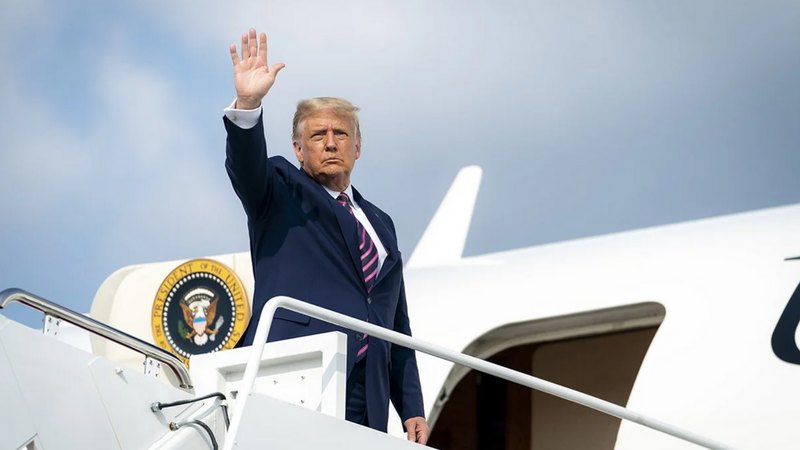
The President of the United States earns an official salary of $400,000 per year, or approximately 368,000 euros per year. This figure has not changed since 2001, but the role includes numerous benefits, such as residence at the White House, permanent Secret Service security, a presidential staff, and various funds for institutional activities. Interestingly, during his first term, Donald Trump declared his intention to forgo his presidential salary, symbolically receiving one dollar per year.
Anthony Albanese – Prime Minister of Australia
The Australian prime minister receives a salary of more than $390,000 annually, or approximately 360,000 euros. Australia is one of the leading economies in the Indo-Pacific region, and the prime minister also plays an important role in international politics, especially in relations with the United States, China, and Asian countries.
Friedrich Merz – Chancellor of Germany
Having become Chancellor in 2025, Friedrich Merz receives a total compensation of approximately 360,000 euros. Germany pays its leader a salary that combines his Chancellor's salary with his parliamentary allowance, reflecting his role as leader of the Eurozone's largest economy. Merz, with a high-level background in the financial sector, perfectly embodies the profile of a leader who combines technical and political expertise.
Mark Carney – Prime Minister of Canada
Successor to Justin Trudeau, Mark Carney currently earns a salary of approximately 420,000 CAD, equivalent to approximately €285,000 annually. Carney, however, is not a new name. Former Governor of the Bank of Canada and the Bank of England, he took over the country's leadership in 2025, bringing with him a highly skilled technical background. His compensation reflects the complexity of managing the world's tenth-largest economy at a time of great transformation, keeping Canada in the top tier of G7 salaries.
Keir Starmer – Prime Minister of the United Kingdom
The British Prime Minister earns approximately 170,000 pounds, approximately €200,000, to lead one of the world's oldest and most influential parliamentary democracies. The role includes official residence, staff, and national and international representation functions. Despite the post-Brexit economic challenges, Starmer's role remains one of the most prestigious and complex, with a salary that includes managing the historic residence of 10 Downing Street.
Emmanuel Macron – President of France
With approximately €180,000 per year, the French president ranks in the middle of the pack. Although Macron wields vast executive powers, especially in foreign policy and defense, his salary has been deliberately kept modest to avoid excessive internal controversy while still ensuring a high-level institutional lifestyle.
Vladimir Putin – President of Russia
The Russian president earns approximately $140,000, or approximately €129,000 per year. However, this figure is considered by most international analysts to be purely symbolic. The debate over Putin's real wealth, which is believed to be among the largest in the world thanks to indirect holdings in major energy giants, completely overshadows the state payroll data.
Giorgia Meloni – Prime Minister of Italy
The Italian Prime Minister receives a relatively modest salary, with a base institutional salary of approximately €80,000 gross annually as Prime Minister. This is much lower than most other Western leaders. However, reimbursements and allowances can contribute to increasing this amount.
Why Leaders' Salaries Differ So Much Around the World
Looking at the rankings, an interesting fact emerges: how the remuneration of political leaders depends greatly on the country's institutional model and political culture. Singapore is the most extreme example, with salaries comparable to those of top managers in the private sector. In Europe, however, salaries are generally lower, and the political role is often considered primarily a public service.
In any case, leading a country means taking on enormous responsibilities, from managing the economy and national security to international relations. And it is precisely this complexity that makes the issue of leaders' salaries a topic that continues to spark public debate.
Original article published on Money.it Italy. Original title: I 10 leader politici più pagati al mondo. Dove sono gli italiani?