
What really makes one city better than another? It’s a seemingly simple question, but in reality, it’s enormously complex. Some people answer by citing job opportunities, others by the quality of services, others by beauty, culture, safety, or that indefinable atmosphere that makes a place feel “just right.” Precisely to provide as objective an answer as possible to such a multifaceted question, in 2026, Resonance Consultancy has also published its highly anticipated World’s Best Cities Report, one of the most authoritative and closely watched urban rankings in the world.
The report examines over 270 global cities and selects the 100 best, based on a “unique fusion of data-driven analysis and real-life perception”.
In practice, the colder numbers—economic, infrastructural, and social statistics—are combined with indicators related to reputation, perceived livability, and global attractiveness. The result is an extremely relevant snapshot of cities that not only function today, but are also able to captivate, retain talent, and attract investment.
A total of 34 factors are analyzed, organized around three main pillars: livability, which includes transportation, safety, access to services, and environmental quality; amenity, which evaluates culture, restaurants, museums, nightlife, and iconic locations; and finally prosperity, linked to the economy, employment, universities, large companies, and entrepreneurial dynamism. No city can excel by ignoring just one of these areas.
The 2026 report confirms a now clear trend: metropolises capable of reinventing themselves, investing in infrastructure, and decisively addressing current challenges—from climate to housing, from mobility to sustainability—continue to dominate the global scene. But there’s no shortage of surprises, shakeups, and interesting signs, especially on the European front.
The 10 best cities to live in 2026 in the world
The top 10 features a lot of Europe (6 out of 10) and even a bit of Italy. Here is the updated ranking of the world’s best cities overall, based on cross-referencing data across various parameters.
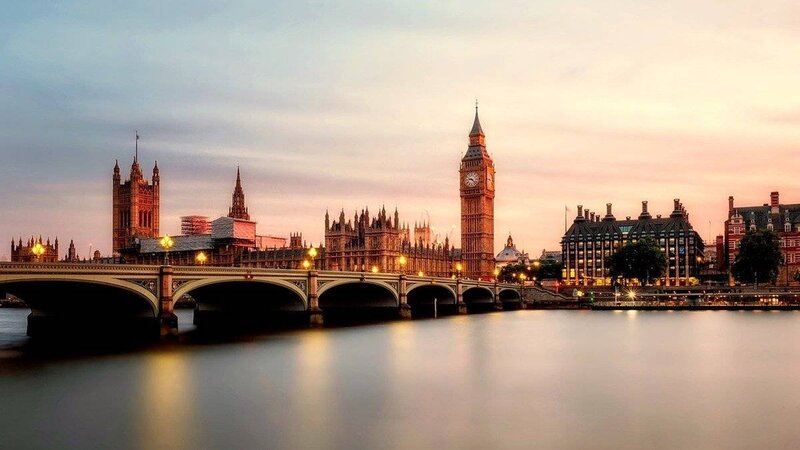
1) London
For the eleventh consecutive year, London confirms its position as the best city in the world. A primacy that arises not from inertia, but from a rare ability to evolve without losing its identity. The British capital dominates the rankings for prosperity, airports, and the presence of large companies, demonstrating an economic strength that continues to attract global investment.
In 2024, international travel spending exceeded $22 billion, while Heathrow and Gatwick recorded record numbers, returning above pre-pandemic levels.
But London is not just numbers. It is a city reshaping its skyline like it hasn’t seen since the post-fire reconstruction of the 17th century, with hundreds of new skyscrapers approved or in the planning stages. At the same time, it is investing in transportation, public spaces, and sustainability, with projects like the Elizabeth Line and the future Camden Highline. The result is a magnetic metropolis, capable of remaining at the center of the world even in a phase of profound global transformation.
2) New York
New York holds its second place and remains the beating heart of America. The city excels in global visibility, online interest, and its ability to attract large companies. After challenging years, the real estate and job markets are showing signs of renewed vitality, while tourism has returned to record highs, with over 65 million annual visitors.
2026 will also be a key year politically and infrastructurally, with major projects underway such as the new JFK terminal and ambitious office-to-residence conversions. New York remains a complex, often contradictory city, but this constant tension makes it one of the most influential and desirable urban centers in the world.
3) Paris
Paris maintains its third place and strengthens its image as a global cultural capital. After the 2024 Olympics, the city has accelerated a profound urban transformation: more space for pedestrians, hundreds of kilometers of bike paths, and an increasingly extensive transportation network thanks to the Grand Paris Express.
The French capital continues to shine with its museums, historical heritage, and international appeal, despite still having to contend with marked social inequalities. However, it remains one of the most complete cities on the planet, capable of combining elegance, innovation, and a constantly improving quality of life.
4) Tokyo
Tokyo is proof that a megacity can function with almost surgical precision. Leading the world in restaurants and museums, the Japanese capital is also experiencing a boom in tourism, boosted by a weak yen and impeccable infrastructure.
The city is investing in autonomous mobility, elevated green spaces, and major urban redevelopment projects like Shibuya. Tokyo succeeds where many others fail: remaining humane, orderly, and surprisingly livable despite its colossal size.
5) Madrid
Madrid makes a decisive leap and ranks among the top five thanks to a winning mix of quality of life, sustainability, and cultural vitality. Major urban reforestation and railway regeneration projects are reshaping the Spanish capital, making it increasingly green and welcoming.
The city excels in nightlife, public transportation, and future investments, demonstrating how balanced growth can become a true global competitive factor.
6) Singapore
Singapore remains an almost unique model in the world. Ranked first in living standards and among the best in universities and economic prosperity, the city-state continues to invest in technology, sustainability, and urban quality.
From its expanding waterfront to major port and airport projects, Singapore demonstrates how long-term planning and vision can translate into real well-being for citizens and businesses.
7) Rome
Rome takes seventh place globally and remains in the global top 10. The Jubilee of 2025 has triggered a season of investment, renovations, and new openings that have restored momentum to the capital. Its iconic sites, museums, and cultural offerings remain among the most appreciated in the world.
Despite historical challenges related to mobility and services, Rome is now benefiting from renewed international attention, new infrastructure projects, and a booming tourism and hospitality sector.
8) Dubai
Dubai returns to the top 10 thanks to continued growth. Record-breaking airports, new neighborhoods, colossal investments, and a highly engaged workforce make the city one of the most dynamic economic hubs on the planet.
The downside remains uneven livability, but its development trajectory remains impressive.
9) Berlin
Berlin continues to stand out for its inclusiveness, culture, and innovation. The German capital excels in sustainable mobility, cycling, and quality of urban living, while maintaining more affordable costs than other major European capitals.
Major regeneration projects and a growing role in the tech and creative sectors strengthen its global positioning.
10) Barcelona
Barcelona closes the top 10 with a strong Mediterranean identity and an increasingly resident-oriented urban vision. The completion of the Sagrada Família in 2026 represents a symbolic moment, as housing and tourism policies seek a delicate but necessary balance.
The complete ranking of the 100 best cities in the world
The 2026 top 10 confirms a strong European and North American presence, with the United States, the United Kingdom, Germany, and France among the most represented nations. Asia is also growing, driven by Japan, Singapore, and China, while the Middle East consolidates its influence with Dubai and Abu Dhabi, but the other centers lack space in the top rankings. But what does the complete ranking tell us? Here are the 100 best cities to live in 2026.
| Location | City | State |
|---|---|---|
| 1 | London | United Kingdom |
| 2 | New York | United States |
| 3 | Paris | France |
| 4 | Tokyo | Japan |
| 5 | Madrid | Spain |
| 6 | Singapore | Singapore |
| 7 | Rome | Italy |
| 8 | Dubai | United Arab Emirates |
| 9 | Berlin | Germany |
| 10 | Barcelona | Spain |
| 11 | Sydney | Australia |
| 12 | Los Angeles | United States |
| 13 | Seoul | South Korea |
| 14 | Amsterdam | Netherlands |
| 15 | Beijing | China |
| 16 | Shanghai | China |
| 17 | Toronto | Canada |
| 18 | São Paulo | Brazil |
| 19 | Hong Kong | China |
| 20 | Istanbul | Turkey |
| 21 | Melbourne | Australia |
| 22 | Bangkok | Thailand |
| 23 | Osaka | Japan |
| 24 | Oslo | Norway |
| 25 | Stockholm | Sweden |
| 26 | Miami | United States |
| 27 | Vienna | Austria |
| 28 | San Francisco | United States |
| 29 | Bengaluru | India |
| 30 | Mexico City | Mexico |
| 31 | Munich | Germany |
| 32 | Dublin | Ireland |
| 33 | Copenhagen | Denmark |
| 34 | Zurich | Switzerland |
| 35 | Chicago | United States |
| 36 | Milan | Italy |
| 37 | Lisbon | Portugal |
| 38 | Prague | Czech Republic |
| 39 | Buenos Aires | Argentina |
| 40 | Mumbai | India |
| 41 | Vancouver | Canada |
| 42 | Rio de Janeiro | Brazil |
| 43 | Warsaw | Poland |
| 44 | Hamburg | Germany |
| 45 | Shenzhen | China |
| 46 | Montreal | Canada |
| 47 | Budapest | Hungary |
| 48 | Brussels | Belgium |
| 49 | Riyadh | Saudi Arabia |
| 50 | Kuala Lumpur | Malaysia |
| 51 | Bogotá | Colombia |
| 52 | Guangzhou | China |
| 53 | Jakarta | Indonesia |
| 54 | Delhi | India |
| 55 | Las Vegas | United States |
| 56 | Boston | United States |
| 57 | Washington D.C. | United States |
| 58 | Houston | United States |
| 59 | Auckland | New Zealand |
| 60 | San Jose | United States |
| 61 | Helsinki | Finland |
| 62 | Orlando | United States |
| 63 | Taipei | Taiwan |
| 64 | Frankfurt | Germany |
| 65 | Lima | Peru |
| 66 | Atlanta | United States |
| 67 | Seattle | United States |
| 68 | Perth | Australia |
| 69 | Manchester | United Kingdom |
| 70 | Cape Town | South Africa |
| 71 | Krakow | Poland |
| 72 | Valencia | Spain |
| 73 | Ottawa | Canada |
| 74 | Athens | Greece |
| 75 | Santiago de Chile | Chile |
| 76 | Medellín | Colombia |
| 77 | Cologne | Germany |
| 78 | Dallas | United States |
| 79 | Brisbane | Australia |
| 80 | Hangzhou | China |
| 81 | San Diego | United States |
| 82 | Hyderabad | India |
| 83 | Chengdu | China |
| 84 | Denver | United States |
| 85 | Calgary | Canada |
| 86 | Abu Dhabi | United Arab Emirates |
| 87 | Austin | United States |
| 88 | Philadelphia | United States |
| 89 | Baltimore | United States |
| 90 | Stuttgart | Germany |
| 91 | Rotterdam | Netherlands |
| 92 | Lyon | France |
| 93 | Ruhr (metropolitan area) | Germany |
| 94 | Busan | South Korea |
| 95 | Düsseldorf | Germany |
| 96 | Mecca | Saudi Arabia |
| 97 | Porto | Portugal |
| 98 | Bucharest | Romania |
| 99 | Birmingham | United Kingdom |
| 100 | Doha | Qatar |
Statistically, the nation with the highest representation is the United States, with over 20 cities in the ranking, confirming its extraordinary urban diversity and the economic and cultural importance of American metropolises. They are followed by Germany and China, both highly represented thanks to a highly developed, polycentric urban network. The best-performing regions are Western Europe, North America, and East Asia, where infrastructure, innovation, and quality of life tend to grow in tandem.
The almost total absence of cities from Sub-Saharan Africa (with only Cape Town) and the poor representation of the Middle East outside of the major global capitals are striking. This is a clear sign of the still-very marked urban inequalities worldwide.
Original article published on Money.it Italy. Original title: Le 100 migliori città dove vivere nel 2026. 2 italiane in classifica