

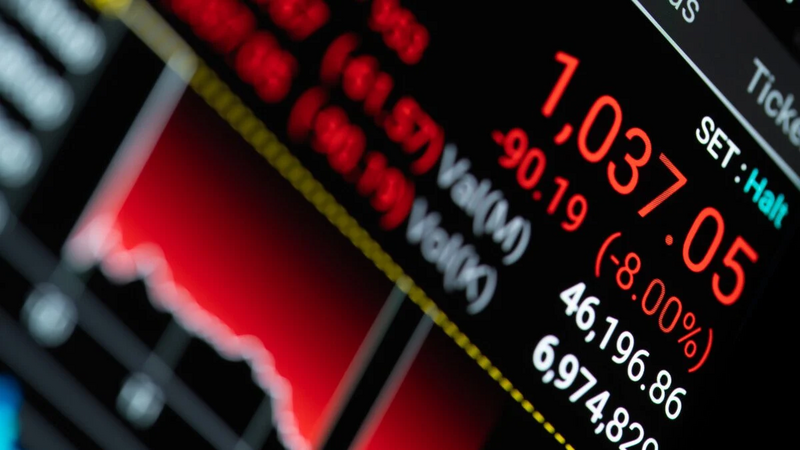
While the market’s attention is focused on the AI bubble, American dynamics, or the fragile European recovery, the main systemic risk may be coming from one country in particular.
This is uncomfortable, hard-to-digest, almost counterintuitive evidence. Yet, if we look at monetary policy movements, diplomacy, and geopolitical tensions in this area, the picture suddenly becomes clear.
That’s where the spark could come from. Here’s what’s really happening.
The political–monetary policy clash shaking the markets
The first crack appears at home. In Japan. A disagreement that’s making markets extremely nervous: the meeting between the Japanese prime minister and the governor of the Bank of Japan.
The prime minister explicitly expressed his desire to keep rates low until inflation stably reaches the 2% target. A political position, obviously. Aimed at supporting growth, wages, and competitiveness.
But almost orthogonal to the message coming from the BoJ.
In the previous weeks, Ueda had hinted at the concrete possibility of raising interest rates as early as December. This marked a radical departure from years of ultra-accommodative monetary policy, negative interest rates, and yield curve control.
This institutional mismatch was enough to reignite volatility that had been dormant for years. The market began to price in a Japan that was far less predictable than usual.
And for a country that is the backbone of global fixed-income markets, the concept of “unpredictability” is never a good sign.
The geopolitical threat the market cannot ignore
As if that weren’t enough, another statement weighed like a millstone: Prime Minister Takaichi, speaking before Parliament, declared that a possible Chinese attack on Taiwan would pose an “existential threat” to Japan.
These are words that no institutional investor can dismiss as background noise. They are an official endorsement of a traumatic risk for supply chains, trade routes, regional stability, and energy balances.
The result? Japanese 10-year bonds have seen yields skyrocket. A number that might seem modest compared to the West, but for Japan it represents an earthquake.
A distortion so severe that it threatens one of the world’s most important financial pillars: the yen carry trade.
Why the market fears the collapse of the carry trade
The carry trade is a mechanism as simple as it is powerful. For years, it has moved trillions in global markets. And it works like this: investors borrow yen at extremely low rates and invest them in higher-yielding assets, such as the S&P 500, emerging markets, corporate bonds, or high-beta assets.
The profit arises from the spread between the cost of Japanese borrowing and foreign yields.
It’s a perfect game... as long as the yen remains weak and Japanese rates remain low. But if the BoJ raises rates, or if Japanese bonds see their yields soar, the whole structure risks collapsing.
In practice, what happens is this: investors must close positions financed in yen, buy yen to repay the loan, and sell the assets they had invested in.
The result is a chain of forced liquidations that could affect not only Tokyo, but also European stock markets, Wall Street, and all emerging markets financed through this scheme.
It’s the domino effect of deleveraging. A dynamic that market history knows well, and which has amplified several global shocks in the past.
The Nikkei 225 as a barometer of instability
Another signal that markets cannot afford to ignore comes from the Nikkei 225’s behavior.
The Japanese index, fresh from a historic rally fueled by a weak yen, “controlled” inflation, and a steady flow of foreign capital, has begun to show obvious cracks.
In recent weeks, it has experienced a significant correction, with declines that have called into question the straightforward market narrative built around Japan.
It’s not just physiological profit-taking: it’s a direct response to the new volatility in yields, geopolitical risk, and fears that the yen might reverse direction.
The Nikkei, in fact, is extremely sensitive to the dynamics of Japanese bonds: if rates rise and the yen strengthens, exporting companies’ margins are compressed and the index reacts violently.
And if the Nikkei trembles, global investors understand that something is moving much deeper within the Japanese economy. A crack that could be just the beginning.
The real subtle risk: a regime shift
Japan isn’t just a market. It’s a key liquidity provider. A global volatility buffer. An entire financial infrastructure built on the predictability and rigidity of its monetary policy.
If this balance is disrupted, we’re not talking about a normal correction: we’re talking about a regime shift.
And the most ironic thing?
While everyone is focused on AI, the risk of a US recession, or European dynamics, Tokyo could be the point where the entire architecture of global markets cracks.
In essence?
This isn’t a call to fear. Nor is it a catastrophic warning. It’s a call to clarity.
Markets don’t collapse because of what everyone is looking at, but because of what no one observes.
Japan has always been a silent, predictable, immobile giant. But today it’s changing. And when a giant shifts position, even the floor beneath us can begin to move.
Original article published on Money.it Italy 2025-11-23 15:38:00. Original title: La nuova crisi globale potrebbe arrivare da un Paese insospettabile