
Amid the military escalation in the Middle East, the Strait of Hormuz is now on everyone's lips as a key hub for the global economy (and beyond). It's no coincidence. This is where energy interests, military strategies, and economic fragilities that extend far beyond the Gulf region intersect. The attacks conducted by the United States and Israel against targets in Iran and Tehran's response have had an immediate and tangible effect: naval traffic in the strait has drastically reduced, oil and gas prices have skyrocketed, and markets have begun to price in a scenario that until a few weeks ago seemed remote but has become increasingly predictable since Trump's initiative.
The numbers speak for themselves. In the first hours following the attacks, Brent crude rose as much as 14%, settling above $80 a barrel, its highest level in over a year. European gas, measured by the Amsterdam TTF index, jumped 25%. Behind this surge is not only fear of a wider conflict, but a specific decision by Iran: to limit maritime traffic in the Strait as a lever for geopolitical pressure.
Hormuz is much more than a maritime passage. It's an energy funnel that accounts for approximately one-fifth of global oil and liquefied natural gas consumption. Simply slowing its operation, even without a formal closure, can trigger ripple effects on fuel, utility bills, inflation, and economic growth. A scenario that has become reality.
<sommaire|title=Strait of Hormuz: what it is and why it's important for the economy>
Where is the Strait of Hormuz located? A strategic geographic location
The Strait of Hormuz is a stretch of sea that separates the southern coasts of Iran from the Musandam peninsula, an exclave of Oman, nestled between the United Arab Emirates.
<quote>It is the essential link between the Persian Gulf and the Gulf of Oman, and therefore between the main hydrocarbon-producing countries and the open ocean.</quote>
From a purely geographical perspective, the strait measures approximately 60 kilometers in length and narrows to 33 kilometers at its narrowest point. However, the actual usable shipping lanes are even more limited: just three kilometers in each direction, separated by a central security zone. This makes Hormuz not only strategic, but also extremely vulnerable. Any incident, attack, or political decision can quickly turn it into a chokeneck.
On the Iranian side, just off the coast, lies the Island of Hormuz, which gives the strait its name and has historically been a key control point. To the south, the rugged Musandam Peninsula dominates the passage with a series of rocky promontories that make the area easily monitored, but also militarily complex.
In 1975, Iran and Oman agreed to a maritime traffic separation scheme, still in force, to reduce the risk of collisions in one of the world's busiest shipping lanes. Every day, under normal conditions, dozens of oil tankers and LNG carriers pass through this narrow and restricted corridor. It is precisely this combination of territory, volume, and lack of equivalent alternatives that makes the Strait of Hormuz an unparalleled focal point in global trade.
Who controls the Strait of Hormuz?
This is precisely the question that leaves much uncertainty. Control of the Strait of Hormuz is as much a legal as it is geopolitical. Formally, the territorial waters belong to Iran and Oman, but the strait is considered an international navigation route, subject to the right of innocent passage.
Tehran exercises direct control over the northern coast and the island of Hormuz, as well as maintaining a significant naval presence, particularly through the Revolutionary Guards. Over the years, Iran has repeatedly demonstrated its ability to interfere with navigation: oil tanker seizures, military exercises, threats of closure, and disruptive operations have marked the most tense phases of relations with the West.
On the other hand, Oman maintains a more neutral and diplomatic position, seeking to preserve freedom of navigation. However, Muscat's role is not sufficient to balance Iranian influence in the event of a crisis. For this reason, the navies of the United States and allies also operate regularly in the Strait, with the stated aim of ensuring safe shipping.
The countries directly affected are not only Iran and Oman. Saudi Arabia, the United Arab Emirates, Kuwait, and Iraq depend almost entirely on Hormuz for their oil exports. The major Asian economies - China, India, Japan, and South Korea - also monitor every development closely, as a significant portion of their energy imports pass through here.
Oil, gas, and maritime traffic: this is why the Strait between Iran and Oman is important
Let's look at the real, tangible numbers. Every day, over 20 million barrels of oil and petroleum products pass through the Strait of Hormuz, equal to about a fifth of global consumption. Added to this is approximately 20% of global liquefied natural gas (LNG) trade, largely from Qatar and the United Arab Emirates. These numbers alone explain why Hormuz is considered the most critical "energy chokepoint" on the planet.
The main destinations for these flows are East and South Asia. China and India absorb enormous volumes of Gulf crude; India, in particular, imports about half of its oil through the Strait. China also purchases nearly 90% of Iran's oil exports, despite international sanctions. A prolonged blockade would therefore directly affect the supply chains of major emerging economies.
<quote>It's not just energy that passes through. According to various analyses (The Conversation), up to a third of the world's fertilizer trade uses routes that pass through Hormuz. This means that a disruption would also have effects on agriculture and food prices, amplifying the global inflationary impact.</quote>
Alternatives exist, but they are limited. Land-based pipelines in Saudi Arabia and the Emirates can partially bypass the Strait, but even pushing them to their limits would block about two-thirds of Gulf exports. This is why, as several analysts point out, access to maritime routes is now more important than production levels themselves.
The impact of the war on the Strait of Hormuz: what's happening
Without going too far, the world has changed in the last 24-36 hours, and, especially for us Europeans, some current effects could only be the beginning of a period of strong economic instability linked to the prices of energy, oil, and everything else that travels along the Strait of Hormuz, both directly and indirectly.
Why is the Strait of Hormuz at the center of all economic and financial analyses?
The Strait of Hormuz concentrates an unparalleled amount of economic value within just a few kilometers. This is why every crisis in the Middle East—especially when it directly involves Iran—immediately draws attention to this essential passage. The ongoing war has transformed a theoretical threat into a concrete risk.
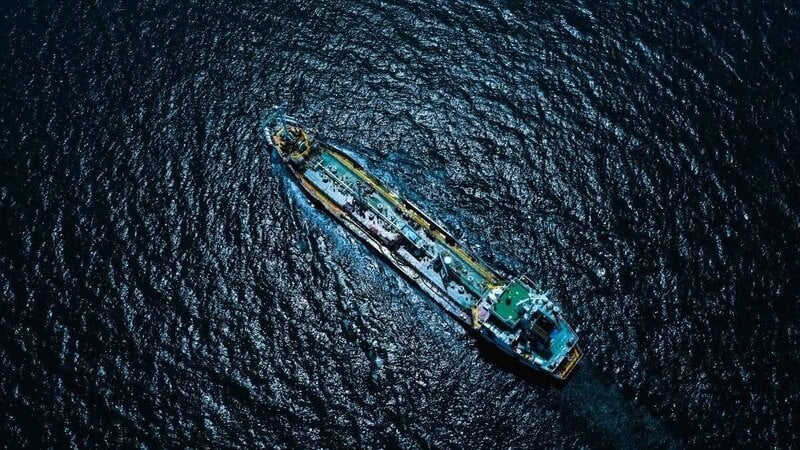
According to data cited by S&P Global Commodity Insights, ship traffic in the Strait dropped by 40-50% in a matter of hours. Ships already in transit accelerated to exit the area, while those arriving preferred to stop or divert. This behavior, dictated by insurance and security considerations, has an effect similar to a closure: energy flows are interrupted.
<quote>Analysts estimate that, if the situation were to continue, up to 15 million barrels per day could be lost, approximately 30% of global seaborne crude oil trade. Even using all available alternative infrastructure, the net loss would be between 8 and 10 million barrels per day, a level sufficient to trigger a global oil shock.</quote>
As mentioned, Iran has often threatened to close Hormuz, but has never done so openly, aware of the potential international retaliation. Today, however, the strategy seems to be focusing on ambiguity: making the passage so risky as to discourage traffic, without formally assuming responsibility for a total closure. A powerful weapon, which is already proving its effectiveness on the markets.
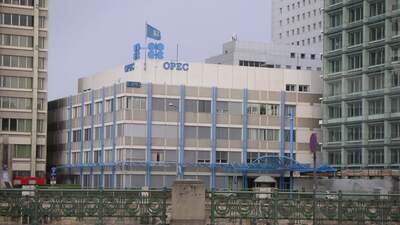
How did OPEC+ respond?
Faced with soaring prices and the risk of a supply shortage, OPEC+ announced a larger-than-expected increase in production quotas. The move, led by Saudi Arabia, aims to calm the markets and demonstrate the ability to respond in a coordinated manner.
However, as several analysts point out, the effectiveness of this decision is limited. If the main problem is not production but the inability to export oil, increasing output is of little use. Access to shipping routes remains the real issue.
Saudi Arabia nevertheless increased its exports in the weeks preceding the attacks, reaching approximately 7.3 million barrels per day, the highest level since April 2023. This strategy is interpreted as an attempt to build a short-term reserve in anticipation of potential tensions. Iran, according to Bloomberg, had also increased exports in anticipation of negotiations with the United States.
These stockpiles, however, are by definition temporary. As experts at Rystad Energy point out, they are designed to absorb short-term shocks, not to compensate for prolonged structural disruptions.
<quote>In other words, OPEC+ can buy time, but it cannot solve the problem if Hormuz remains paralyzed.</quote>
Original article published on Money.it Italy. Original title: Dov'è lo Stretto di Hormuz e perché è così importante per il futuro dell'economia mondiale