

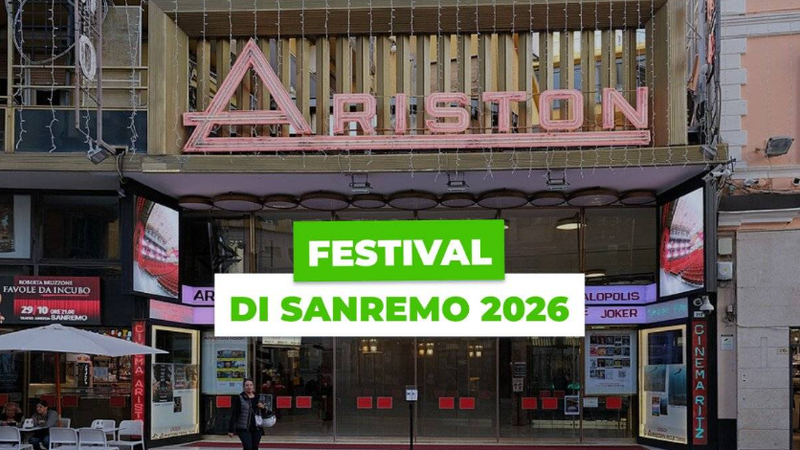
The Festival di Sanremo is widely recognized as Italy’s most iconic music event, but beyond the stage lights and prime-time performances lies a sophisticated economic ecosystem.
According to a recent economic analysis conducted by EY, the 2026 edition generated an overall economic impact of approximately €252.1 million, up from €245 million the previous year. The steady growth confirms that Sanremo is not merely a television success, but a structurally relevant economic driver.
The breakdown of that €252.1 million reveals the scale of the multiplier effect:
Nearly €102 million stems from direct production value.
Around €110 million comes from indirect economic activities across related industries.
Close to €40 million derives from induced effects linked to broader spending cycles.
Altogether, this translated into roughly €96 million in value added to Italy’s GDP.
For a single-week cultural event, these figures position Sanremo among the most economically impactful recurring events in Southern Europe.
Read more: How much does the Sanremo Festival 2025 cost between earnings, expenses and salaries
Tourism, Advertising and Job Creation
The Festival’s economic relevance rests on three primary pillars: visitor spending, advertising revenues and production-related services.
Visitor Spending
Sanremo attracts thousands of visitors, industry professionals and media representatives. Attendees are estimated to spend around €500 per day on accommodation, dining, transportation and related services. With multi-night stays — averaging more than five nights in recent editions — the cumulative impact on the local hospitality sector is substantial.
In 2025, estimates pointed to approximately 35,000 tourist stays during the Festival period. Hotels often reach full occupancy, short-term rental prices surge, and restaurants operate at peak capacity. For a city of Sanremo’s size, this represents a concentrated and high-value economic injection.
Advertising and Sponsorship
Media monetization represents another major component of the Festival’s value chain.
Advertising and sponsorship revenues exceeded €70 million in 2026. Prime-time broadcasting, combined with strong digital and streaming performance, allows media partners to command premium advertising rates. For brands, Sanremo provides rare access to mass simultaneous viewership across demographic groups.
In a fragmented media landscape, events capable of generating nationwide attention have become increasingly valuable assets for advertisers. As traditional TV struggles with declining audiences, Sanremo remains one of the few programs capable of reversing that trend — a factor that directly supports rising ad pricing.
Production and Employment
Behind the scenes, Sanremo activates a complex supply chain that includes:
- Stage production companies
- Technical crews and lighting specialists
- Broadcasting and media services
- Security and logistics providers
According to EY’s estimates, the 2026 edition supported more than 1,300 jobs across direct, indirect and induced employment categories. For the regional economy, this translates into both temporary and recurring professional opportunities in the entertainment and event management sectors.
Read more: How much does Laura Pausini earn? The net worth of the italian singer
Where the Economic Value Is Created
The Festival’s value creation extends well beyond ticket sales or TV ratings.
Tourism and Hospitality
Hotels, restaurants, transport operators and local retailers are among the primary beneficiaries. The concentration of high-spending visitors during a limited timeframe amplifies per-capita revenue. For small and medium-sized enterprises in Liguria, the Festival often represents the most profitable week of the year.
Media and Advertising
Broadcasters and digital platforms leverage Sanremo’s strong audience performance to reinforce their annual advertising strategies. The event’s cross-platform exposure — including social media engagement — increases brand visibility and extends the monetization window beyond the live broadcast.
Music and Creative Industries
Record labels, streaming platforms and artists benefit from a measurable "Sanremo effect." Songs presented at the Festival frequently experience immediate spikes in streaming volumes and chart rankings. This boosts long-term monetization potential and reinforces the event’s role as a launchpad within the Italian music industry.
Why Investors and Companies Should Pay Attention
Sanremo’s economic significance extends beyond entertainment metrics.
Regional GDP and Economic Multiplier
Major cultural events contribute meaningfully to local GDP, particularly in service-based economies. The €96 million in estimated value added demonstrates how concentrated media events can generate measurable macroeconomic spillovers.
Advertising Investment Trends
In an era where attention is fragmented, large-scale live events offer premium advertising inventory. Rising ad revenues at Sanremo reflect a broader strategic shift by brands toward high-impact, culturally relevant platforms.
International Brand Visibility
Although primarily an Italian event, Sanremo attracts growing international attention through digital channels. Sponsors benefit not only from domestic exposure but also from broader European visibility, strengthening brand positioning across markets.
If advertising demand and tourism flows maintain current momentum, the Festival’s economic footprint could reach €270–€280 million by 2028. Increased digital monetization and international streaming distribution could further enhance its value.
A decline in viewership or visitor spending could moderate the multiplier effect, particularly for hospitality and local services. In this case, economic impact would likely stabilize rather than contract sharply, given the event’s structural role in Italy’s media calendar.
Ultimately, large-scale cultural events like Sanremo function as economic engines with tangible effects on consumption, employment and corporate revenues. For investors analyzing media, tourism and advertising sectors, the Festival offers a clear example of how entertainment can translate into measurable economic performance.