

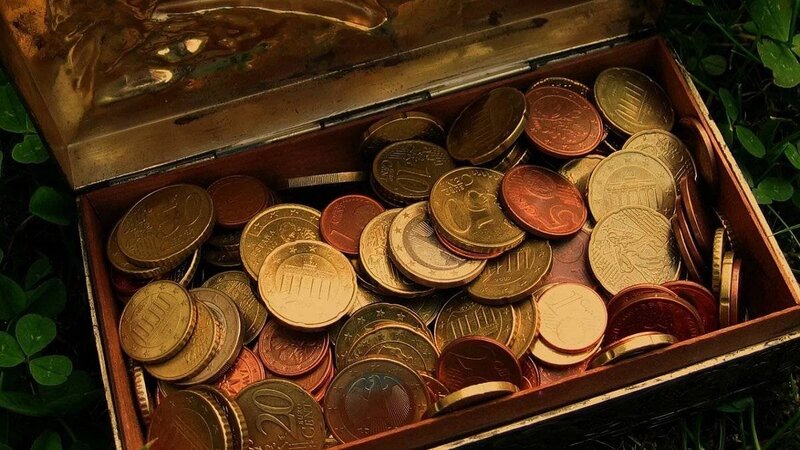
Rare coins can attract the attention not only of collectors, but also of numismatic enthusiasts and newcomers to the field. The idea of finding a treasure hidden in an old dresser drawer or in the attic is tempting for many of us.
Getting rich with a few pennies found around the house, however, is a remote possibility. However, don't give up. You might just find a rare coin worth much more than you think. But what are the 10 most expensive rare coins in the world? Let's delve into the details to find out which ones they are.
Below is a selection of 10 of the most valuable rare coins in the world, which are true masterpieces of numismatic art and history. Each of them tells a story of the past and today represents a dream for collectors and investors, thanks to their extraordinary economic and cultural value.
All this while keeping in mind that the values indicated for each coin are estimates based on the most recent public sales and may vary significantly depending on the state of preservation and specific characteristics of each piece.
<sommaire|title=Rare Coins: Here Are the Most Expensive in the World>
1933 Double Eagle
Known as the "Queen of American Coins," the 1933 Double Eagle represents a unique chapter in the history of the gold dollar. Minted but never released into circulation due to President Roosevelt's decision to withdraw gold from the market, almost all copies were melted down. A few surviving examples, however, were illegally removed from the mint and became objects of legend.
Suffice it to say that in 2021, one specimen sold for over $18.9 million, becoming the most expensive coin ever auctioned. More than just a piece of precious metal, as one might imagine, the Double Eagle is the symbol of an era of economic crisis and change. But more than that, it is a tangible testament to the complex relationship between trust, money, and power.
1794 Flowing Hair Silver Dollar
The Flowing Hair Dollar is considered the first official silver dollar minted by the United States. It depicts Lady Liberty with her hair blowing in the wind, an emblem of nascent freedom. On the reverse, however, is an eagle holding a wreath. With fewer than 1,800 coins produced, it is now one of the rarest pieces in American numismatics.
In 2013, one of these dollars sold at auction for approximately $10 million. Beyond its economic value, this coin embodies the pride of a young and ambitious nation, determined to make its mark on the world.
Brasher Doubloon of 1787
Designed by New York goldsmith Ephraim Brasher, the Brasher Doubloon is a privately minted gold coin struck before the United States had a federal mint. The obverse features a rising sun with the inscription "Nova Eboraca Columbia Excelsior," while the reverse features a shield-bearing eagle and the famous "EB" stamp.
Each piece is a masterpiece of craftsmanship and patriotic symbolism. Depending on the position of Brasher's signature, extremely rare variants exist: one of them exceeded $9 million. It is considered a milestone in American collecting and a true bridge between art, precious metal, and the dawn of US national coinage, symbolizing the transition from colonial currency to that of the newly independent nation.
Umayyad Gold Dinar of 723
Mint in 723 AD during the Umayyad Caliphate, this dinar is considered a true gem of Islamic numismatics. Made from gold from mines owned by the caliph, it bears inscriptions mentioning the Arabian Peninsula. This was a unique feat for the time. Only a dozen examples are known to exist today, carefully preserved in museums and private collections. The rarity and beauty of this coin have given it extraordinary value.
Suffice it to say that in 2011, one of these specimens was sold at auction for over £3.7 million. But its allure goes far beyond its price! The Umayyad dinar tells a story of power, religion, and trade in the early Islamic world, embodying faith, prestige, and the ability of an era to leave an indelible mark through the art of minting.
Edward III Florin (“Double Leopard”) of 1343
Minted during the reign of Edward III of England, the Double Leopard is one of the rarest medieval coins ever discovered. Only three known examples exist, two held by the British Museum and one discovered by chance in 2006 by a prospector with a metal detector.
The obverse features the sovereign depicted on a throne flanked by two leopards, symbols of strength and royalty. The reverse features an elaborate cross that completes the design. Valued today at approximately $6.8 million, the Edward III Florin is a fragment of gold that speaks to the power and magnificence of the medieval English monarchy.
1943 Bronze Lincoln Cent
During World War II, copper became a strategic metal, and the United States decided to produce cents from galvanized steel. Some proof dies, however, were accidentally struck in bronze, and thus the 1943 Bronze Lincoln Cent was born.
There are very few genuine copies, about twenty. One of them, according to recent news, was sold for $1.75 million. This coin, therefore, demonstrates how even a simple cent can become a treasure, reminding us that sometimes error is the very key to value.
2007 Canadian Gold Maple Leaf
With its 100 kilograms of 99.999% pure gold, the Big Maple Leaf is the largest gold coin ever produced. Produced by the Royal Canadian Mint in 2007, it has a face value of one million Canadian dollars, but its real market value exceeds four million.
Only five were ever minted, and one was even stolen from the Berlin museum in 2017. Beyond its titanic size, the coin represents a triumph of modern metallurgical technology and Canadian national pride.
1913 Liberty Head Nickel
The 1913 Liberty Head Nickel is a coin shrouded in mystery. The U.S. Mint was supposed to discontinue that series, but some specimens were minted secretly, likely by an employee.
Only five pieces are known, and each has an adventurous history, passed through collectors, museums, and record-breaking auctions. One mint-condition specimen fetched over $4 million. This coin, more than any other, represents the fine line between legality, fortune, and legend in collecting.
1849 Double Eagle Proof
Considered by many to be the rarest American coin ever, the 1849 Double Eagle Proof was created as a prototype at the height of the California Gold Rush. Only two examples exist, one of which is preserved at the Smithsonian Institution in Washington.
The design, featuring Lady Liberty surrounded by stars, symbolizes the prosperity that gold promised the young nation. Estimated at over $20 million, it is considered the quintessential numismatic rarity. A coin designed to mark an era and never intended for circulation, it recounts the gold rush and the optimism of the era.
S Morgan Dollar of 1893
The Morgan Dollar minted in San Francisco in 1893 is considered the "key" of the series, the rarest and most desirable version. Just over 100,000 were produced, many of them remelted. In perfect condition, or MS-67, one example fetched over $2 million.
The coin depicts the profile of Liberty and the American eagle, symbols of strength and national unity. It is an object that blends aesthetics and history, proving to be the ideal conclusion to the great era of US silver dollars.
Original article published on Money.it Italy. Original title: Le 10 monete rare più costose del mondo