

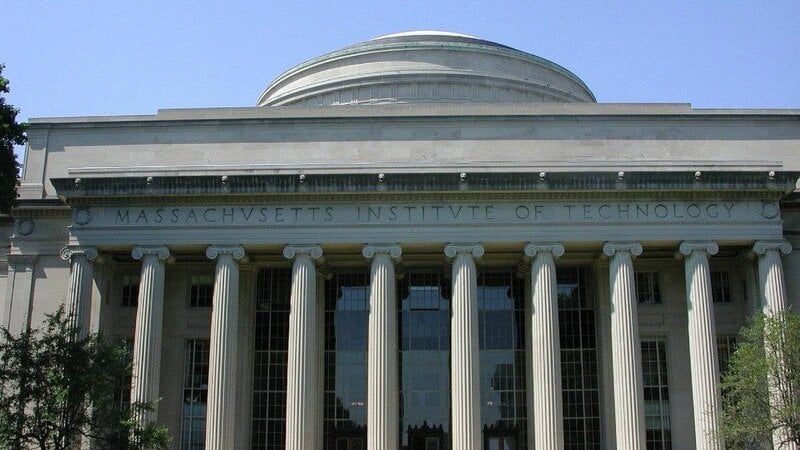
Determining which is truly the best university in the world is never easy. The quality of a university depends on many factors, from the level of research to academic reputation, including the employability of its graduates and its international impact. Yet, every year, one of the most anticipated and consulted global rankings attempts to provide the most objective answer possible to this question, offering an up-to-date snapshot of global academic excellence. It is the QS World University Rankings 2026, a reference point for students, families, faculty, and policymakers.
The 2026 edition confirms consolidated trends, but also brings with it interesting signals. The United States and the United Kingdom continue to dominate the top spots, thanks to historically solid university systems and constant investment in research. At the same time, Asia’s influence is growing, with universities in Singapore, China, and South Korea increasingly competitive. In this ever-evolving global landscape, continental Europe is attempting to carve out a prominent role for itself, while Italy remains in a challenging position: present, but still with limited numbers in the top ranks.
The QS World University Rankings 2026 is not just a ranking, but a useful tool for understanding how higher education systems are transforming around the world and which countries are truly investing in the future of knowledge. This is especially true at a time when there is much debate, particularly in the West, about the role that education could play in the near future.
The ranking of the most prestigious universities in the world: the QS World University Rankings 2026
The QS World University Rankings 2026, published by the British organization Quacquarelli Symonds, is one of the most authoritative university rankings internationally. This year’s edition is also the most comprehensive ever: it examines over 1,500 universities across 105 higher education systems worldwide, offering an extremely detailed overview of the global academic landscape.
The ranking is based on a multi-level methodology that combines quantitative and qualitative indicators. Among the most relevant parameters are academic reputation, measured through one of the largest global surveys of faculty and researchers, reputation among employers, research impact assessed through scientific citations, and the faculty-student ratio. These are joined by increasingly key indicators such as internationalization, sustainability, and graduate employability.
One of the distinctive aspects of the QS ranking is its ability to convey not only the historical prestige of universities, but also their ability to adapt to the transformations of the contemporary world. Universities that invest in interdisciplinary research, attract international talent, and collaborate with the manufacturing sector tend to improve their performance. It’s no coincidence that the QS ranking is increasingly used as a compass to guide university policies and student choices globally. It is, therefore, not a mere ranking but a true statistic that captures the academic landscape.
The ranking of the best universities in the world for 2026
The QS ranking of the 100 best universities in the world for 2026 paints a picture of an academic elite highly concentrated in a few countries, yet increasingly international.
The top spots are dominated by iconic institutions such as the Massachusetts Institute of Technology (MIT), Imperial College London, Stanford, Oxford, and Harvard, which have been a benchmark for global research and innovation for decades.
Alongside the historic giants of the Anglo-Saxon world, Asian universities such as the National University of Singapore, Tsinghua University, and the University of Hong Kong are emerging forcefully, now firmly in the top spots. Continental Europe is gaining ground thanks to outstanding institutions such as the ETH Zurich, the EPFL Lausanne, and several major French and German universities.
Here is the complete ranking (with scores).
| Ranking | University | State | Total Score (out of 100) |
|---|---|---|---|
| 1 | Massachusetts Institute of Technology (MIT) | United States | 100 |
| 2 | Imperial College London | United Kingdom | 99.4 |
| 3 | Stanford University | United States | 98.9 |
| 4 | University of Oxford | United Kingdom | 97.9 |
| 5 | Harvard University | United States | 97.7 |
| 6 | University of Cambridge | United Kingdom | 97.2 |
| 7 | ETH Zurich | Switzerland | 96.7 |
| 8 | National University of Singapore (NUS) | Singapore | 95.9 |
| 9 | UCL – University College London | United Kingdom | 95.8 |
| 10 | California Institute of Technology (Caltech) | United States | 94.3 |
| 11 | The University of Hong Kong | Hong Kong SAR | 94.2 |
| 12 | Nanyang Technological University (NTU Singapore) | Singapore | 93.7 |
| 13 | University of Chicago | United States | 93 |
| 14 | Peking University | China | 92.6 |
| 15 | University of Pennsylvania | United States | 92.5 |
| 16 | Cornell University | United States | 91.6 |
| =17 | Tsinghua University | China | 91.2 |
| =17 | University of California, Berkeley (UCB) | United States | 91.2 |
| 19 | The University of Melbourne | Australia | 90.8 |
| 20 | The University of New South Wales (UNSW Sydney) | Australia | 90.7 |
| 21 | Yale University | United States | 90.4 |
| =22 | EPFL – École polytechnique fédérale de Lausanne | Switzerland | 90.2 |
| =22 | Technical University of Munich | Germany | 90.2 |
| 24 | Johns Hopkins University | United States | 89.7 |
| =25 | Princeton University | United States | 89.4 |
| =25 | The University of Sydney | Australia | 89.4 |
| 27 | McGill University | Canada | 88.9 |
| 28 | Université PSL | France | 88.6 |
| 29 | University of Toronto | Canada | 88.5 |
| 30 | Fudan University | China | 88.4 |
| 31 | King’s College London | United Kingdom | 88.3 |
| =32 | Australian National University (ANU) | Australia | 87.4 |
| =32 | The Chinese University of Hong Kong (CUHK) | Hong Kong SAR | 87.4 |
| 34 | The University of Edinburgh | United Kingdom | 87.2 |
| 35 | The University of Manchester | United Kingdom | 86.4 |
| =36 | Monash University | Australia | 85.8 |
| =36 | The University of Tokyo | Japan | 85.8 |
| =38 | Columbia University | United States | 85.6 |
| =38 | Seoul National University | South Korea | 85.6 |
| 40 | University of British Columbia | Canada | 85.5 |
| 41 | Institut Polytechnique de Paris | France | 85.4 |
| =42 | Northwestern University | United States | 85.1 |
| =42 | The University of Queensland | Australia | 85.1 |
| 44 | The Hong Kong University of Science and Technology | Hong Kong SAR | 84.8 |
| 45 | University of Michigan-Ann Arbor | United States | 84.7 |
| 46 | University of California, Los Angeles (UCLA) | United States | 84.4 |
| =47 | Delft University of Technology | Netherlands | 84.3 |
| =47 | Shanghai Jiao Tong University | China | 84.3 |
| 49 | Zhejiang University | China | 84 |
| 50 | Yonsei University | South Korea | 82.9 |
| 51 | University of Bristol | United Kingdom | 82.5 |
| 52 | Carnegie Mellon University | United States | 82.3 |
| 53 | University of Amsterdam | Netherlands | 81.5 |
| 54 | The Hong Kong Polytechnic University | Hong Kong SAR | 81,2 |
| 55 | New York University (NYU) | United States | 81.1 |
| 56 | The London School of Economics and Political Science (LSE) | United Kingdom | 80.5 |
| 57 | Kyoto University | Japan | 80,2 |
| =58 | Ludwig-Maximilians-Universität München | Germany | 80.1 |
| =58 | Universiti Malaya (UM) | Malaysia | 80.1 |
| 60 | KU Leuven | Belgium | 79.7 |
| 61 | Korea University | South Korea | 79.6 |
| 62 | Duke University | United States | 79 |
| =63 | City University of Hong Kong (CityUHK) | Hong Kong SAR | 78.9 |
| =63 | National Taiwan University (NTU) | Taiwan | 78.9 |
| 65 | The University of Auckland | New Zealand | 77.5 |
| 66 | University of California, San Diego (UCSD) | United States | 76.9 |
| 67 | King Fahd University of Petroleum & Minerals (KFUPM) | Saudi Arabia | 76.5 |
| 68 | University of Texas at Austin | United States | 76.4 |
| 69 | Brown University | United States | 76.2 |
| =70 | University of Illinois Urbana-Champaign | United States | 75.9 |
| =70 | Université Paris-Saclay | France | 75.9 |
| =72 | Lund University | Sweden | 75.7 |
| =72 | Sorbonne University | France | 75.7 |
| 74 | The University of Warwick | United Kingdom | 75.2 |
| 75 | Trinity College Dublin | Ireland | 73.9 |
| 76 | University of Birmingham | United Kingdom | 73.8 |
| 77 | The University of Western Australia | Australia | 73.7 |
| 78 | KTH Royal Institute of Technology | Sweden | 73.6 |
| 79 | University of Glasgow | United Kingdom | 73.4 |
| 80 | Heidelberg University | Germany | 73 |
| 81 | University of Washington | United States | 72.7 |
| =82 | University of Adelaide | Australia | 72.6 |
| =82 | Pennsylvania State University | United States | 72.6 |
| 84 | Universidad de Buenos Aires (UBA) | Argentina | 72.3 |
| 85 | Tokyo Institute of Technology | Japan | 72.1 |
| 86 | University of Leeds | United Kingdom | 72 |
| 87 | University of Southampton | United Kingdom | 71.2 |
| =88 | Boston University | United States | 71.1 |
| =88 | Free University of Berlin | Germany | 71.1 |
| =88 | Purdue University | United States | 71.1 |
| 91 | Osaka University | Japan | 71 |
| 92 | The University of Sheffield | United Kingdom | 70.9 |
| 93 | Uppsala University | Sweden | 70.3 |
| =94 | Durham University | United Kingdom | 70.1 |
| =94 | University of Alberta | Canada | 70.1 |
| 96 | University of Technology Sydney | Australia | 69.9 |
| 97 | University of Nottingham | United Kingdom | 69.4 |
| =98 | KIT – Karlsruhe Institute of Technology | Germany | 69.1 |
| =98 | Politecnico di Milano | Italy | 69.1 |
| 100 | University of Zurich | Switzerland | 68.5 |
Original article published on Money.it Italy. Original title: Le 100 migliori università al mondo, la classifica 2026