

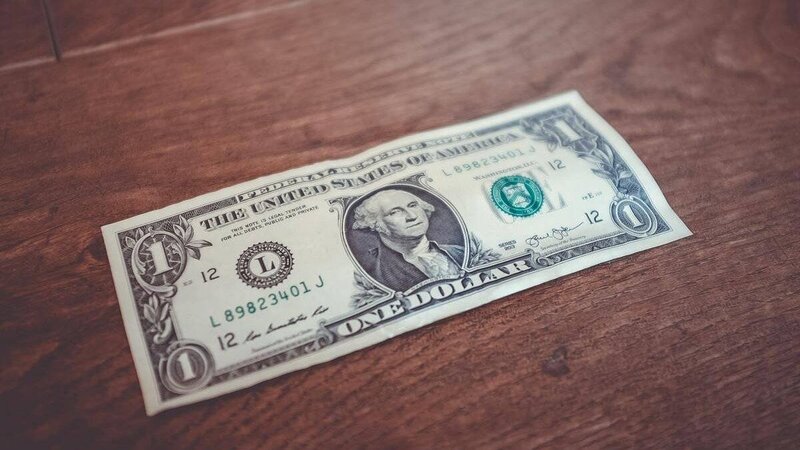
Everyone looks at the dollar and sees only one thing: weakness. The prevailing narrative points to a loss of structural strength, excesses accumulated over the past decade, and a global system gradually reducing its reliance on the US currency. Yet this interpretation is rooted in a fundamental misconception: the dollar is being analysed as if it were a linear asset, whereas in reality it is driven by far more complex cyclical dynamics.
Market consensus has converged on a single idea, that of structural decline. But foreign exchange markets rarely move in straight lines or follow tidy narratives. Instead, they respond to regime shifts, relative macroeconomic performance and, above all, capital flows—often well before those flows are reflected in the dominant story. It is precisely at such moments that apparently outdated frameworks regain relevance.
The Dollar Smile has not disappeared. It was set aside just when it seemed least relevant—and that is exactly what makes it dangerous again for those who choose to ignore it.
What the Dollar Smile really is
The Dollar Smile is an interpretive framework that explains the behaviour of the US dollar across the global economic cycle. Its core premise is that the dollar tends to strengthen in two distinct and seemingly opposite phases, while weakening in the intermediate phase.
On one end of the curve, the dollar strengthens when the US economy outperforms the rest of the world. In this environment, the United States attracts capital through higher interest rates, stronger earnings growth and a perception of institutional and financial stability. The currency appreciates as global investors increase demand for dollars to gain exposure to US assets.
On the other end, the dollar also tends to strengthen when the global cycle deteriorates. Here the mechanism is less intuitive but critical: the dollar functions as the primary funding and reserve currency of the international financial system. A significant share of global debt is denominated in dollars, and during periods of stress the demand for dollar liquidity and high-quality collateral rises sharply. As a result, the dollar acts as a systemic anchor, regardless of the relative performance of the US economy.
Between these two extremes lies the centre of the smile, where US growth broadly converges with that of the rest of the world. Historically, this is the phase in which the dollar tends to weaken—and also the phase that generates the greatest analytical errors.
The 2025 illusion
In 2025, the dollar did indeed lose ground. US growth expectations gradually converged toward the global average, while Europe and several emerging economies showed signs of cyclical recovery. This reinforced the perception that the dollar had already exhausted its upside and entered a phase of sustained weakness.
The problem is that this conclusion confuses a cyclical phase with a structural shift. The Dollar Smile does not describe a continuous trend, but a nonlinear relationship between relative growth, risk conditions and capital flows. When the dollar weakens at the centre of the smile, it is not deviating from the model—it is behaving exactly as the model would predict.
The most common mistake is to treat this phase as permanent, overlooking the fact that even modest changes in the macroeconomic backdrop can be sufficient to push the dollar back toward one end of the curve.
Entering 2026 with a less clear picture
As 2026 approaches, macroeconomic data are beginning to paint a far more nuanced picture than consensus suggests. US growth projections remain higher than those of many advanced economies, the labour market continues to exhibit historically low and stable unemployment, and domestic demand is decelerating without signs of an abrupt downturn.
At the same time, the Federal Reserve is maintaining a restrictive policy stance. The Fed Funds rate remains well above estimates of neutral—that is, the level consistent with neither stimulating nor restraining economic activity. This translates into still-elevated real interest rates, meaning inflation-adjusted returns, a critical variable for currency markets as it directly shapes global capital allocation.
This combination may not be sufficient to generate bullish enthusiasm for the dollar, but it is equally insufficient to justify a narrative of structural depreciation. Heading into 2026, the dollar remains overvalued in real terms by many long-term valuation measures, yet it continues to be supported by high real yields and persistent inflows into US assets—particularly equities, credit and bonds.
Why it takes very little to reactivate the “smile”
In this environment, the Dollar Smile does not require extreme shocks to reassert itself. A downside surprise in global growth, a sharper slowdown in Europe or China, or a renewed increase in risk aversion could all prove sufficient. Even a relatively modest repricing of interest rate expectations may be enough to redirect capital flows and strengthen the dollar.
The key point is that the dollar does not need a triumphalist narrative to appreciate. It merely needs to revert to its role as the default reference currency in a context of rising uncertainty—particularly within a financial system that remains deeply dollar-centric.
The real mistake
The real risk today is not misjudging the direction of the dollar. It is assuming that the dollar moves in simple, linear ways.
The Dollar Smile offers an uncomfortable but essential lesson: it is possible to be right over the long term and still lose money in the short term if one ignores when—and why—the market shifts phase. Perhaps the more relevant question now is not whether the dollar will rise or fall, but whether the current environment is truly as stable and predictable as consensus assumes.
Original article published on Money.it Italy 2026-01-26 20:12:00. Original title: C’è un errore che tutti stanno facendo sul dollaro USA (e che tu puoi evitare)