
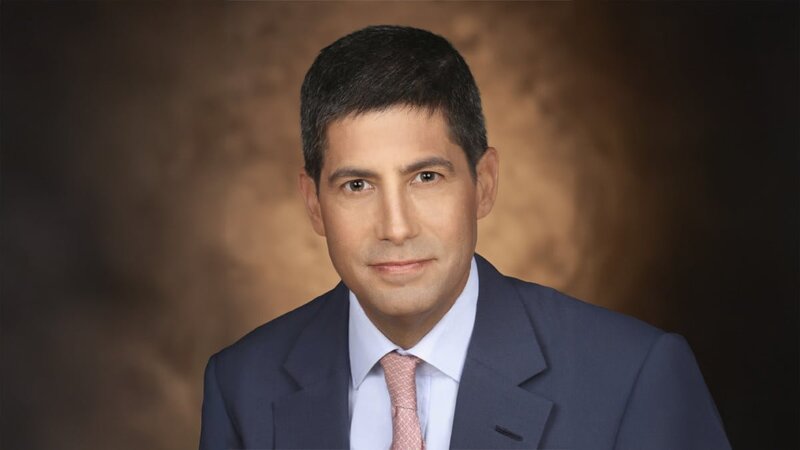
For US interest rates and the path the Fed will take under its new chair Kevin Warsh — who is set to take over in a matter of days — a hawkish signal has just landed. April’s Non-Farm Payrolls (NFP, the monthly US payroll report) showed that nonfarm payrolls rose by 115,000 in April, down from the 185,000 jobs added in March, but well above the 55,000 increase forecast by analysts polled by Dow Jones.
The unemployment rate held steady at 4.3%, confirming that the US labor market has reached a point where only modest job creation is enough to keep the number of unemployed stable.
The translation: the US economy isn’t doing all that badly — at least not badly enough to need the rate cuts that outgoing Fed Chair Jerome Powell has long resisted, drawing repeated public attacks from President Donald Trump.
That is why Trump tapped Kevin Warsh to take the helm at the Fed — Powell’s term ends within days — in the hope that he might finally see US interest rates come down.
But Warsh will not have an easy time. The proof came right away from the final FOMC meeting of the Powell era, which closed with the highest number of dissenting votes since 1982 — exposing a deeply split central bank.
Will Fed rates stay frozen for a long time, even under Warsh?
One small consolation for Warsh: average hourly earnings — the wage gauge buried inside the NFP that economists watch as an inflation tell — rose 0.2% month-over-month and 3.6% year-over-year in April, both below the 0.3% and 3.8% forecasts.
But the trend is still robust, at a moment when fears of an inflation re-acceleration are very much alive.
In the best-case scenario, several analysts argue, US interest rates will stay on hold for a long while yet — and a few commentators are already predicting that, after spending more than a year attacking Powell, Trump will eventually turn against Warsh’s monetary policy too.
«On monetary policy, the Fed has retained maximum flexibility», commented Daniel Siluk, Portfolio Manager and Head of Global Short Duration & Liquidity at Janus Henderson Investors, after the most recent FOMC meeting, adding that «the Committee again referred to the magnitude and timing of additional rate adjustments, avoiding any explicit signal that cuts are imminent».
Looking ahead, Siluk added: «Overall, the April statement suggests a Federal Reserve that is patient, cautious and increasingly sensitive to inflation shocks, particularly those linked to energy and geopolitics. There is a recognition that the labor market is cooling, but not yet decisively. Growth remains resilient. And confidence on inflation, while not lost, is clearly incomplete. The message to markets is clear: this is not a statement that paves the way for near-term easing. On the contrary, it reinforces the idea that the Fed is willing to wait, and to tolerate slower progress, until it is sure that inflation risks — both domestic and global — are firmly contained».
Markets themselves are now pricing in a Fed that holds US rates steady through all of 2026, with an economy still grappling with stubbornly elevated inflation and a labor market that — as today’s Non-Farm Payrolls confirmed — remains, after all, resilient.
Editor’s note
This article was originally published in Italian on money.it by Laura Naka Antonelli on May 08, 2026 as «Mercato lavoro USA molto più solido delle attese. Su tassi USA la Fed di Warsh non avrà vita facile». It has been translated and adapted for an international audience by the Money.it International desk.