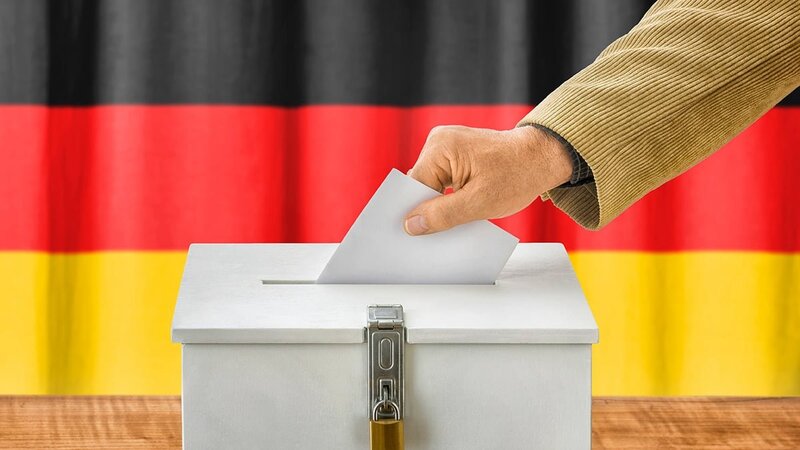
The Alternative for Germany (AfD) won regional elections in Saxony-Anhalt with 43.8% of the vote, the best result the party has ever achieved in a state-level contest. The provisional count released overnight by the regional election commission in Halle gave the Christian Democratic Union (CDU) of outgoing state premier Sven Schulze just 17.2%, down sharply from the 37.1% it won in 2021, when the AfD had taken 20.8%.
Turnout reached roughly 78% of the state’s 1.7 million eligible voters, the highest level recorded since Saxony-Anhalt was reconstituted as a state in 1990. Five years ago turnout had stopped at 60.3%; the previous record was 71.7%, set in 1998.
The AfD, led in Saxony-Anhalt by Ulrich Siegmund, more than doubled its share of the vote but fell short of an absolute majority of seats — and that shortfall is now the pivot around which everything that happens in the coming weeks in Magdeburg, the state capital, will turn.
The election result in Saxony-Anhalt
Besides the AfD and the CDU, four other parties enter the regional parliament, the Landtag:
- Social Democratic Party (SPD): 9.3%
- Greens: 8.9%
- Left Party (Die Linke): 8.6%
- Sahra Wagenknecht Alliance (BSW), the party founded by Sahra Wagenknecht: 5.3%
The Free Democratic Party (FDP) fell out of the Landtag altogether, stuck at 2.6% after 6.4% in 2021. It was also a symbolic defeat for the CDU: Sven Schulze, who has led the state government only since January, after taking over from Reiner Haseloff, failed to win his own constituency seat in Magdeburg III, where he stopped at 31.7% against 35.2% for the AfD’s Christian Mertens.
Why 43.8% isn’t enough for the far right to govern
The new Landtag has 83 seats, and the threshold for a majority is 42. The AfD holds 39. A coalition of the CDU, SPD, Greens, Left Party and BSW would reach 44 seats — but so would an alliance between the AfD and the BSW. The BSW’s five seats are therefore decisive in either direction.
The BSW, which ran with a joint ticket of Thomas Schulze and Claudia Wittig, has already said it will not join what it called a «firewall coalition» and will abstain in any third round of voting for the state premier, where a simple majority is enough to win. The party’s federal chair, Amira Mohamed Ali, has proposed a cross-party premier who would govern with shifting majorities drawing on the whole parliament.
Siegmund rejected the idea, calling the BSW’s proposal «a mess» and ruling out any «tricks, toleration deals or minority governments, because they aren’t stable» — raising the prospect of fresh elections if the standoff continues. AfD co-leader Alice Weidel called the result «historic» and said it gave the party «an unmistakable mandate to govern», arguing that the party with the most votes should always get first shot at forming an executive. On the other side, the CDU’s state secretary at the Chancellery, Philipp Amthor, reiterated that his party will not work with the AfD, adding that it is now up to a party that has topped 40% to prove it can govern responsibly.
What’s at stake: the “firewall” against the far right
What sets this vote apart from the AfD’s previous strong showings in Germany’s eastern states is the real possibility that, for the first time since 1945, a far-right party could take on governing responsibility in a German state.
Saxony-Anhalt’s AfD chapter has been classified by the state’s Office for the Protection of the Constitution as «confirmed right-wing extremist» since November 2023. The same classification was applied to the federal party last year by Germany’s domestic intelligence service, a designation the AfD is contesting in court. That classification underpins the so-called firewall (Brandmauer) — the refusal of every other party to cooperate with the AfD.
The Magdeburg result puts that principle under real strain without yet breaking it. The CDU has reaffirmed its refusal to work with the AfD, the BSW has said it will join neither an anti-AfD coalition nor one with the AfD, and the only path to a third-round vote runs through Siegmund agreeing to lead a government without a stable majority — an option he has so far rejected. Under these conditions, a prolonged stalemate is the most likely near-term outcome.
The effect on Berlin: AfD now leads national polls
The regional vote lands on a federal picture already turned upside down since the February 2025 national election. In the average of major pollsters updated as of September 5, the AfD stands at 27.6%, ahead of the CDU/CSU alliance at 20.6%, with the Greens at 15%, the SPD at 12.6% and the Left Party at 11.8%. In last year’s federal election the AfD won 20.8% and the CDU/CSU bloc 28.5%: in eighteen months the two have essentially swapped positions, with the AfD gaining roughly seven points and the CDU/CSU losing about eight.
That is why a result from a state of just over two million people has immediately triggered a serious debate at the federal level. Thorsten Frei, who leads the CDU/CSU group in the Bundestag, called it a «disruptive event» while ruling out any debate over Chancellor Friedrich Merz’s leadership. Chancellery Minister of State Nina Warken used the word «watershed»; the CDU’s general secretary, Franziska Hoppermann, admitted the result «hits us emotionally».
Within the SPD, Vice Chancellor Lars Klingbeil also called it a «watershed» and «a signal to Berlin». Parliamentary group leader Dirk Wiese attributed part of the AfD’s success to the chancellor’s rhetoric toward working people. Ralf Stegner warned his own party against questioning its role in the governing coalition, laying out three alternatives that would follow: a CDU-AfD partnership he considers unlikely, a right-leaning minority government, or early elections. Amthor countered that reopening the coalition’s reform agenda would be «exactly the wrong response».
Josef Schuster, president of the Central Council of Jews in Germany, said he was shaken by the result and added that responsibility lies with those who voted for the party. The foundation that runs the Buchenwald and Mittelbau-Dora concentration camp memorials called it a possible «historic turning point», warning that those who challenge the memorials’ work today could one day be in a position to decide their funding.
Markets, for now, have shrugged off the news. The Dax closed Friday at 26,046 points, up 0.17%, and was little changed at around 26,014 on Monday; the euro traded near $1.1614. In German trading-floor commentary the election featured as a talking point but without any visible market impact, in a session thinned further by Wall Street’s Labor Day holiday. In investors’ eyes, what matters for sovereign risk remains the federal government, where the CDU/CSU-SPD coalition is still in charge — it is the coalition’s durability, not the Magdeburg vote itself, that would be the channel through which this result could eventually reach financial markets.
Reactions in Italy
On the Italian side, the only member of the governing majority to congratulate the AfD was Matteo Salvini. «Congratulations to my friend Alice Weidel and all of AfD for the triumphant win in Saxony-Anhalt», wrote the deputy prime minister and leader of the League, calling it «a resounding success that shows the strong demand for change, security and jobs» and adding: «Fear? Terror? Danger? No — it’s called democracy. A different Europe is possible». Roberto Vannacci, leader of the Futuro Nazionale party, was blunter, commenting on the exit polls that «Merz has an ulcer». It is worth noting that the League and the AfD do not sit in the same group in the European Parliament in Strasbourg, and the Italian party has distanced itself from its German counterpart over the past two years.
Foreign Minister Antonio Tajani struck a very different note. «The outcome of the vote in Saxony-Anhalt is the affirmation of a political force that is the opposite of the liberal, Western values that Forza Italia stands for», he said, calling it «very bad news that we hope remains a local exception» and calling on Europe’s liberal and popular parties to change course on EU policy.
From the opposition, Giuseppe Conte read the result through a social lens, arguing that rearmament spending has displaced the fight against inequality. Angelo Bonelli called it «a warning sign for all of Europe, which risks being swept up by nationalism and racial supremacism», while Più Europa secretary Riccardo Magi spoke of «a black cloud» that «is turning increasingly black in Italy too».
Reactions across Europe
In Austria, Freedom Party of Austria (FPÖ) leader Herbert Kickl read the vote as the end of the “cordon sanitaire” isolating the far right: «Voters today didn’t just vote for the AfD, they above all voted no confidence in the establishment parties’ united front», he said, predicting the shift in Germany will culminate in a Chancellor Alice Weidel. Former Hungarian prime minister Viktor Orbán, who left office after losing the April 12 election to Péter Magyar, called it «a huge night for Germany and for Europe» and said the result was only the beginning. Congratulatory messages also arrived from right-wing Czech politicians and other nationalist parties across the continent.
Notably absent was the Rassemblement National (National Rally). As of this writing, Marine Le Pen and Jordan Bardella’s party has issued no official position — a caution that reflects the “normalization” strategy it has pursued ahead of France’s presidential election. Reactions from France instead came from the center and the left. European Affairs Minister Benjamin Haddad called the outcome a serious moment for Europe, arguing that social anxieties must be taken seriously but that nationalism and xenophobia cannot be the answer. Gabriel Attal, president of the Renaissance party, called it a warning sign and urged a strategy that goes beyond merely containing the far right. Jean-Luc Mélenchon called the result a catastrophe and added a note touching the most sensitive EU dossier of all: in his view, Germany’s plan to build Europe’s largest conventional army is now unacceptable to France.
The vote also comes as the EU’s Migration and Asylum Pact has entered full implementation, as of June 12, 2026, across all 27 member states, including pre-entry screening, border procedures to be completed within twelve weeks, and a linked returns regulation. The European Commission’s third implementation report, dated May 8, flagged widespread delays. A result of this scale in the country that funds the largest share of the EU’s common budget shifts the center of gravity in the debate over returns and “safe third countries” well beyond Saxony-Anhalt’s borders.
What happens next?
Germany votes again on September 20, in Mecklenburg-Vorpommern and in Berlin. In the northeastern state, a Forsa poll for the Ostsee-Zeitung published on September 2 put the AfD at 37%, ahead of the SPD of state premier Manuela Schwesig at 23%, the CDU at 13% and the Left Party at 11%. In 2021 the SPD had won with 39.6% and the AfD had stopped at 16.7%. In Berlin, governed by a CDU-SPD coalition, polls place the AfD second behind the Christian Democrats.
If Mecklenburg-Vorpommern were to repeat the Magdeburg pattern, Germany would find itself with two states effectively ungovernable without the AfD — and a federal coalition under pressure at the midpoint of its term.
Editor’s note
This article was originally published in Italian on money.it by Flavia Provenzani on September 07, 2026 as «AfD vola al 43,8% in Sassonia-Anhalt. Il boom dell’estrema destra scuote la Germania». It has been translated and adapted for an international audience by the Money.it International desk.