

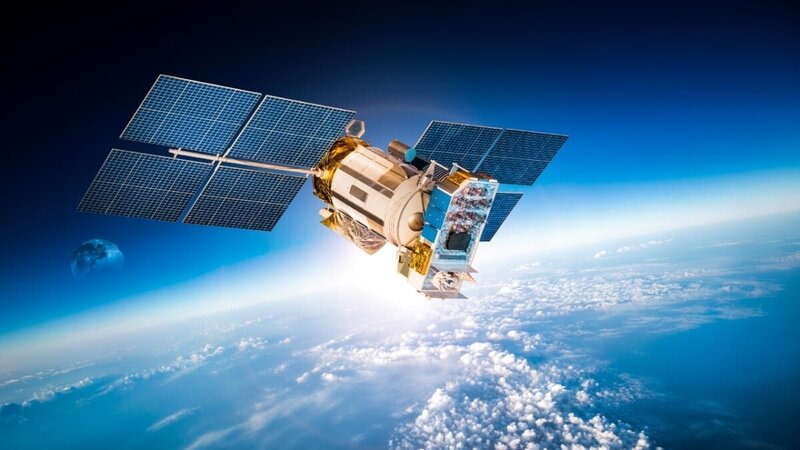
In a press release, Amazon Leo — the satellite broadband constellation formerly known as Project Kuiper — announced a deal with Herotel, South Africa’s largest internet service provider. The goal is to deliver satellite connectivity to households and small businesses through Evry, a brand-new service that aims to expand quickly over the next few years.
The commercial launch is slated for 2027 and will target millions of residential users across South Africa. Amazon Leo’s satellites orbit roughly 590 kilometers (about 370 miles) above the Earth, far closer than traditional geostationary satellites parked at more than 35,000 kilometers. That proximity means lower latency and a potentially better connection than Starlink, the dominant player in this segment.
Amazon Evry lands in South Africa
Herotel currently counts more than 350,000 active customers across over 550 towns and cities, served through fiber-optic and wireless networks. It is a significant piece of national infrastructure, and it will now be tasked with supporting Amazon by handling local installation, customer service, and on-the-ground work. The stakes for the tech giant are high: the plan is to bring connectivity to millions of South Africans living on farms, in small towns, and in rural communities that lack reliable access to a network.
Amazon Leo has already deployed more than 390 satellites into orbit — enough, at least, to begin offering service at certain latitudes. The American company’s ambition, of course, is to expand further and ramp up its satellite count in short order.
The move deepens Amazon’s commitment to South Africa, a relationship that spans more than two decades. With Evry, the company aims to narrow the technology gap across southern Africa, where nearly a quarter of the population still lives outside network coverage. If the project succeeds, consultancy Access Partnership estimates a potential annual economic return of $16.9 billion.
It’s worth noting why Amazon is entering through a local partner: Starlink has so far been unable to launch commercial service in South Africa, having yet to secure the electronic communications license required by the national regulator. By supplying the network while Herotel manages the license and customer-facing operations, Amazon sidesteps a hurdle that has kept Musk’s service out of the market.
The challenge to Starlink
The contest between Amazon Leo and Starlink is entering a new chapter. While Musk’s company has more years of experience and millions of users already active, the e-commerce giant is in the middle of an unprecedented buildout and plans to launch hundreds of new satellites in the coming months. That milestone will let Amazon switch on commercial operations, with the first services set to debut by the end of 2026.
To dislodge Starlink, Amazon Leo is betting on a set of technical advantages — starting with integration into AWS, Amazon’s cloud arm, to give business customers computing speed and security that would be hard to match elsewhere. Upload speeds, too, are expected to come in higher than Starlink’s.
Then there’s price. Although the fees have not yet been confirmed, Amazon is expected to offer three tiers of package and terminal. Ultra is aimed at large enterprises and infrastructure, with download speeds above 1 Gbps; Pro is the model for families and small and midsize businesses, with speeds up to 400 Mbps; and Nano is a compact, portable dish that reaches 100 Mbps.
Editor’s note
This article was originally published in Italian on money.it by Pasquale Conte on July 16, 2026 as «Elon Musk ha un nuovo rivale in orbita. Amazon lancia Evry in Sudafrica». It has been translated and adapted for an international audience by the Money.it International desk.