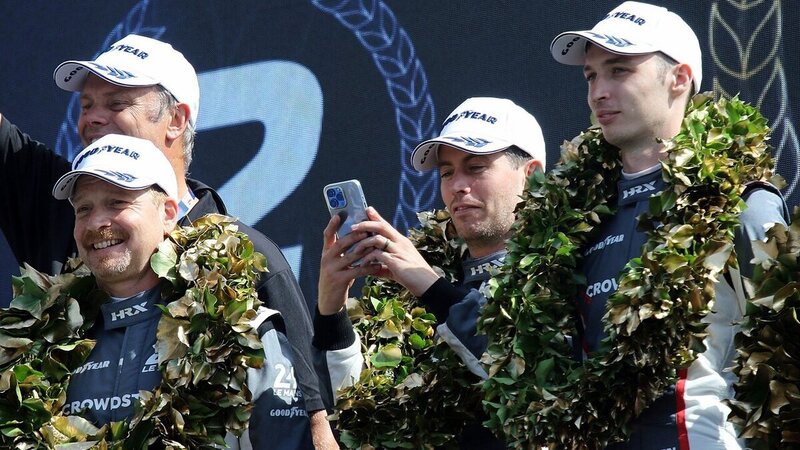
George Kurtz, the 55-year-old chief executive of cybersecurity giant CrowdStrike, reported total compensation of $247,579,143 for fiscal year 2026, according to the company’s DEF 14A proxy statement filed with the U.S. Securities and Exchange Commission on May 5, 2026. It’s an 85.78% jump from the roughly $35.2 million he made the year before, and multiple compensation trackers now rank it as the largest pay package disclosed by any CEO in the United States for fiscal 2026 — a title that puts Kurtz in the same conversation as the names on the Top 15 highest-paid CEOs in the world list.
Where Does George Kurtz’s Money Actually Come From?
The breakdown in the filing is almost comically lopsided. Kurtz’s base salary was $1.1 million and his bonus came to $1,614,938 — pocket change next to the $242,124,351 he received in stock awards, which alone account for 98% of the total package. Add $2,739,854 in other compensation, and the number rounds up to that $247.6 million headline.
The stock award itself is a new performance-based grant: a target of 300,000 performance stock units that can pay out anywhere between zero and 600,000 shares of CrowdStrike Class A stock, depending on how the company’s total shareholder return stacks up against the S&P 500 over the next three years. In other words, the number reported today is an accounting estimate of a bet that hasn’t been settled yet — a structure that’s become increasingly common at the top of the pay charts, from Kurtz all the way to Axon’s founder in Who is Rick Smith, the world’s highest-paid CEO, and how much does he earn?, whose own record-breaking package was built the same way.
How George Kurtz Built His Fortune
Kurtz’s path to the top of the pay charts started well before CrowdStrike existed. He founded the security firm Foundstone, sold it to McAfee in 2004, and spent the following years as McAfee’s worldwide chief technology officer. In February 2012, he co-founded CrowdStrike with Dmitri Alperovitch and Gregg Marston, took the company public on Nasdaq in 2019, and has run it ever since as one of the most closely watched names in cybersecurity — a sector that, alongside software peers, has produced its own crop of new fortunes, as seen in The World’s Richest Tech Billionaires. 2025 Ranking.
Kurtz still owns roughly 7.9 million CrowdStrike shares, a stake of about 0.89% of the company. Last year, he made headlines for a different reason: gifting more than $1 billion worth of stock into family trusts and philanthropic causes, a move that cut his voting power from 31% down to 2.5% and eliminated CrowdStrike’s supervoting share structure entirely. When reports suggested he was quietly cashing out, Kurtz pushed back directly, insisting he remains one of the company’s largest individual shareholders. “Not a chance,” he said when asked if he was stepping back. “I’m all in. I’m not going anywhere.” It’s a very different kind of executive story than Who is Ted Sarandos, co-CEO of Netflix, and how much does he earn?, where the compensation itself, rather than a wealth-transfer plan, has been the main talking point.
What’s Next for George Kurtz’s Pay in 2026
Wall Street, for now, is betting the stock keeps climbing: 13 analysts have issued “buy” ratings on CrowdStrike in recent months with zero sell calls, and price targets cluster between $450 and $550 a share. Because the bulk of Kurtz’s wealth sits in that same stock rather than in cash, share-tracking estimates of his personal net worth swing accordingly — from roughly $1.7 billion to about $2.2 billion depending on the valuation date used. The real number to watch isn’t the $247.6 million on this year’s filing; it’s what CrowdStrike’s stock is doing three years from now, when those 300,000 performance units finally convert into an actual payout — or don’t.