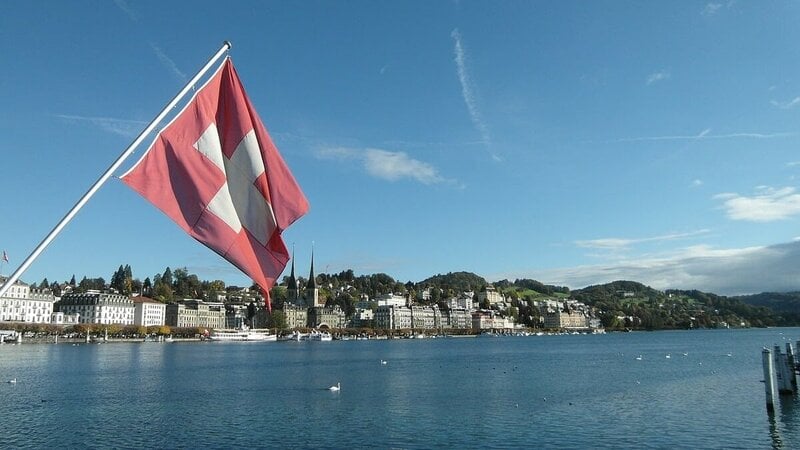
Italy’s three lowest-income municipalities are not in the Calabrian interior. They are Gurro, Cavargna and Val Rezzo, small settlements in two valleys of the Verbano and Como areas that look out toward Switzerland, where average declared income does not reach EUR 9,000 a year, according to Ministry of Economy and Finance data on 2024 tax returns.
Scroll the ranking of declared incomes across Italy’s 7,896 municipalities from the bottom up and you expect depopulated Apennine villages, or some other dot lost on the map. You find them. They are just not first.
Anyone who has spent years living in Canton Ticino, as this article’s author has, already knows where the story goes. It is worth telling in order, because it says a great deal about how numbers, even numbers taken from official sources such as the MEF, always need to be discounted.
How much people earn in Italy, town by town
The data cover IRPEF (personal income tax) returns for tax year 2024. Weighted by the number of taxpayers, the average total income of an Italian filing a return is roughly EUR 25,100 gross a year (about USD 27,100).
That is IRPEF taxable income, so it is already net of social security contributions and of other income taxed separately, such as financial investment returns and rental income handled under the cedolare secca, Italy’s flat-rate tax option on rental income. Another reason to discount the figure.
The average also tells you little on its own. The Roman poet Trilussa made the point more than a century ago with his famous statistics on chicken consumption: if one man eats two chickens and another eats none, the statistics say they each ate one. What the average hides here is a gap that has never closed.
Lombardy stands at EUR 29,420, Trentino-Alto Adige at EUR 27,978, Emilia-Romagna at EUR 27,434. At the bottom are Calabria, in Italy’s far south, with EUR 18,474 (about USD 19,950), Molise with EUR 19,889, and Puglia and Sicily side by side just under EUR 20,000. Nearly EUR 11,000 separates the top region from the bottom one. A Calabrian taxpayer declares on average 37% less than a Lombard one.
Among cities with more than 50,000 inhabitants, Milan is the only one above EUR 40,000 (EUR 40,316, about USD 43,540). Monza follows at a distance with EUR 35,628, then Bergamo (EUR 34,263) and Pavia (EUR 32,821). Rome is tenth, at EUR 31,423.
The provincial capital with the lowest average income is Andria, at EUR 17,429, then Barletta (EUR 18,527) and Trani (EUR 20,379). The entire BAT province, in the southern region of Puglia, occupies the bottom of the capitals ranking.
Which municipalities are the richest
At the top of the overall ranking are the usual names, with a few statistical oddities. First place goes to Maccastorna, in the Lodi area of Lombardy: 67 inhabitants and an average income of EUR 72,157 (about USD 77,930), a figure a single large return is enough to move. Next come Lajatico, in the province of Pisa (EUR 67,519), and Portofino (EUR 65,836).
Then the wealthy belt around Milan: Basiglio, home to the Milano 3 development, at EUR 52,885, Cusago at EUR 43,328, Segrate at EUR 40,234. And the places where people vacation more than they work: Courmayeur (EUR 43,850), Forte dei Marmi (EUR 43,697), San Vito di Cadore (EUR 41,554).
Just 44 municipalities in all are above an average of EUR 35,000. A total of 283 are below EUR 15,000.
The cross-border commuter paradox
Back to Gurro (EUR 7,959, about USD 8,600), Cavargna (EUR 8,020) and Val Rezzo (EUR 8,938). Next come Valle Cannobina, San Bartolomeo Val Cavargna and San Nazzaro Val Cavargna, all between EUR 9,000 and EUR 11,900.
These are not poor villages. They are villages where a large share of working-age adults, if not nearly all of them, crosses the border every morning and comes home in the evening with a Swiss salary.
For anyone classed as an “old” frontaliere (cross-border commuter), that salary is not declared in Italy. The 1974 agreement remains in force for those already working across the border before July 17, 2023 (the rules have since changed-). Under it, the income of cross-border commuters resident within 20 kilometers of the border is taxed only in Switzerland, which then passes part of the tax back to the Italian municipalities where they live through the so-called ristorni, the tax rebates Switzerland pays back to the Italian border municipalities.
The new tax agreement changed the rules for new hires, introducing concurrent taxation and a EUR 10,000 (about USD 10,800) exemption. But for years to come, Italian statistics will keep portraying these municipalities as pockets of poverty.
It is a genuine optical illusion, and the same one distorts every ranking built on declared incomes. IRPEF income is not wealth. It leaves out exempt foreign income, most financial investment returns taxed at source, rental income under the cedolare secca, and, of course, whatever escapes the tax authorities altogether.
The South that declares little
Leave out the cross-border commuters and limit the list to municipalities with at least a thousand inhabitants, and the bottom of the ranking looks the way you would expect. Mazzarrone, in the province of Catania, is at EUR 11,431. Dinami, in the Vibo Valentia area of Calabria, is at EUR 11,827, Goro, in the Ferrara area, at EUR 11,917, then Verbicaro, Zapponeta, Platì and Capizzi.
These are farming or fishing economies, where people work a lot and declare little. Seasonality explains part of it, day-labor contracts another part, and the rest is the plain fact that the income passing through the tax return (Form 730) tells only part of the story. In many of these places the ever-rising share of retirees also weighs heavily: many small incomes that, taken together, add up to a great deal, perhaps already too much.
Among the 50 municipalities with the lowest average income, seven are in the province of Cosenza and four each in Reggio Calabria, Campobasso and Como. Como, precisely: the same province that, at the top of the national ranking, contains the lakeside towns where a villa is worth millions.
What these numbers really teach us
Rankings of Italy’s richest municipalities are a much-loved journalistic genre, and they do have a point. The North-South divide is real, and nobody invented the 37 percentage points that separate a Lombard from a Calabrian.
But read them knowing what they measure. They measure the IRPEF tax base, which is to say employees’ salaries and pensions, far more than the actual wealth of a territory.
Italy’s poorest municipality, according to the tax authorities, is a village where people earn in Swiss francs. If the state struggles to see even that, it is one more reason to distrust any policy that claims to measure Italians’ well-being by looking only at their tax returns.
Editor’s note
This article was originally published in Italian on money.it by Dimitri Stagnitto on October 25, 2026 as «Il comune più «povero» d’Italia è sul confine svizzero. Cosa nascondono le classifiche dei redditi». It has been translated and adapted for an international audience by the Money.it International desk.