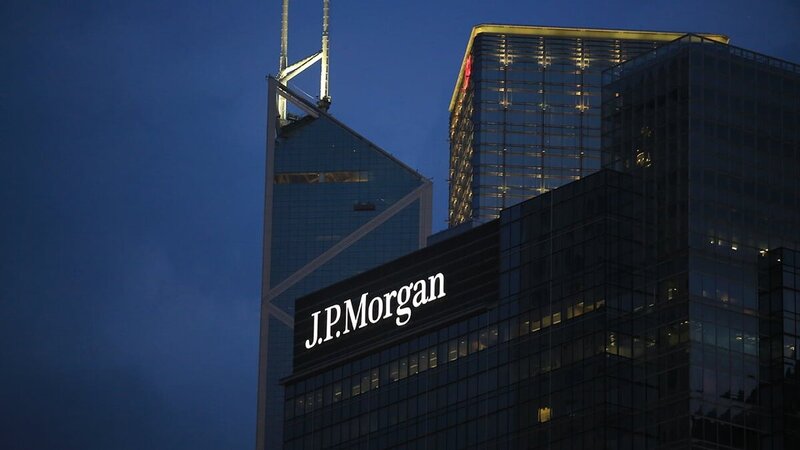
Thousands of Chase customers opened their banking app on Monday, November 16, and found a message no account holder wants to see: “Some services aren’t available. We’re working on them. Please try back later”. Behind the disruption was a technical failure- at JPMorgan Chase, the largest US bank, which slowed transactions, transfers and payments for much of the day. The effects spilled over to customers of other banks and to the payment platform Zelle.
What happened
The first problems appeared in the morning, according to a source close to the matter cited by NBC News. Reports on Downdetector, the site that tracks user complaints about online services, began climbing fast around noon Eastern time.
By 1:35 p.m. in New York there were more than 4,400 reports for Chase, over 1,300 for Bank of America, more than 650 for U.S. Bank and 380 for Wells Fargo. Twenty minutes later Chase was close to 5,000. The peak came around 2 p.m. Eastern, and the curve slowly fell after that.
Customers could not log in, could not see an updated balance, or were left with a payment stuck in limbo. Half of the Chase complaints concerned balances and transactions, according to Downdetector data reported by Al Jazeera. Others said they could not cash checks or withdraw cash. The trouble was not confined to online banking: some teller operations in physical branches were affected as well.
Service returned to normal in the evening. Around 6:30 p.m. local time, a Chase spokesperson said transactions were once again being processed normally. Restoring the systems does not mean every pending payment went through at that same moment, and the bank has not said how many accounts were affected.
The bug in the “on-premise” systems
The official explanation came in a message posted on X, later confirmed to the Associated Press by spokesperson Joe Evangelisti. JPMorgan Chase described a “temporary issue related to a software bug in on-premise hardware systems,” said there was no evidence of a cyberattack, and noted that serving some customers was taking longer than usual. Account holders still had access to their accounts and their funds, the bank added, even though some of them said for a few hours that they could not reach their money.
“On-premise” means IT systems installed and run by the company itself, on its own machines and in its own data centers, rather than rented from an outside cloud provider. The detail matters, because by the bank’s own account the problem started in infrastructure Chase manages. Other disruptions to US payments have been traced to an outside vendor, as with technology group Fiserv, whose failure blocked Zelle payments for customers at several banks.
Why customers at other banks got caught up in it
The most delicate passage in the statement concerns other institutions. Chase acknowledged that other banks may have felt the effects in transactions where it was one of the two counterparties, but ruled out a systemic problem. In practice, a Bank of America or Wells Fargo customer could see a payment slowed simply because the recipient banked with Chase, or because the money was coming from there.
The same mechanism explains the slowdowns at Zelle, the person-to-person instant payment service widely used in the United States. Zelle is run by Early Warning Services, an Arizona-based company owned by seven large banks, among them JPMorgan Chase, Bank of America, Wells Fargo and U.S. Bank. The platform said its own network was operating normally, but customers reach it through their banks, and when one of those seizes up, payments stall.
U.S. Bank said its systems had not been hit directly, while warning that Zelle transfers to other institutions could be delayed. Capital One and Truist said their services were working normally.
A week of outages in the United States
The Chase failure came days after two other large-scale disruptions. The previous week, a global outage at Microsoft knocked out services including Outlook. The following day, the Federal Aviation Administration ordered a nationwide ground stop over a failure in air traffic control communications.
No connection has been established between these episodes, which have different causes. The sequence has still raised questions about the resilience of the infrastructure Americans depend on day to day.
Among the sharpest voices is Jody Westby, chief executive of consulting firm Global Cyber Risk. She called it deeply troubling that incidents of this kind are immediately dismissed as simple technical problems or software bugs, and called for deeper investigations into the reliability and security of critical infrastructure.
What affected customers can do
Chase has announced no refunds, but customers who suffered harm are not without recourse. Guidance from the Consumer Financial Protection Bureau, the federal consumer finance watchdog, suggests contacting your bank first and checking that automatic debits and scheduled payments actually went through, using another payment method if necessary. Anyone charged fees for late payments, overdrafts or rejected transactions because of the outage can ask to have them reversed, though the guidelines provide for no automatic refund.
For outright errors, such as an electronic transfer sent wrong or never received, Regulation E- applies. It gives the customer 60 days from the mailing of the statement showing the error to file a dispute. The bank normally has 10 business days to investigate, which can stretch to 45 with an obligation to issue a provisional credit. FDIC deposit insurance, which covers up to $250,000 per depositor per bank, is not relevant here: it protects savers if the institution fails, not in cases of a simple service interruption.
One risk in the days after an outage deserves attention: scams. Anyone exploiting the confusion can pose as the bank and ask customers to move their money “to protect it,” the script the Federal Trade Commission flags as an unmistakable sign of fraud.
Could it happen in Italy?
Chase does not offer retail checking accounts in Italy, and Italian savers were not directly touched by the outage. IT resilience, however, bears directly on European banks, which since January 17, 2025 have had to comply with the DORA regulation-, the Digital Operational Resilience Act. The rules require institutions to manage and test risks tied to information technology and to notify supervisory authorities of the most serious incidents.
Editor’s note
This article was originally published in Italian on money.it by Giacomo Astaldi on November 17, 2026 as «Banche in tilt negli Stati Uniti, un bug di JPMorgan blocca pagamenti e conti correnti. Cosa è successo?». It has been translated and adapted for an international audience by the Money.it International desk.