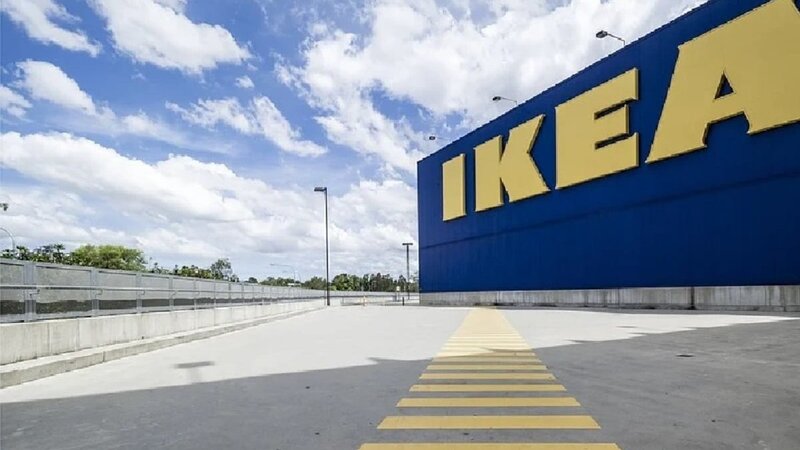
IKEA is bracing for a new wave of layoffs. Inter IKEA, the company that owns the brand and coordinates the Swedish furniture giant’s global supply chain, has announced 850 job cuts worldwide. The decision comes against a backdrop of soft demand, rising costs and consumers increasingly cautious about discretionary spending.
The headcount reduction affects roughly 3% of Inter IKEA’s 27,500 employees and will also hit Sweden, where about 300 positions will be eliminated in Almhult, the symbolic town where the group was founded in 1943. The goal is to lighten the cost base so the company can keep pushing low prices, the cornerstone of its commercial strategy.
Why Inter IKEA is cutting 850 jobs
Over the past two years IKEA has reported a sales decline, in line with the consumer slowdown hitting several home and furnishings categories. The drag comes from inflation, higher energy costs and broader international economic uncertainty.
Henrik Elm, Chief Financial Officer of Inter IKEA, explained that the group is trying to become quicker and more efficient: «We need to become faster, streamline decision-making and concentrate our efforts on these priorities».
According to the manager, the deterioration in consumer confidence intensified with the escalation of the Iran conflict, which has contributed to higher fuel prices and added pressure on household budgets. In this environment, many families are deferring purchases considered non-essential, such as new furniture or home renovation work.
«In periods when consumer confidence is severely hit, disposable income drops sharply for many, especially in the customer segment we serve», Elm said.
The pressure from US tariffs
Beyond the slowdown in demand, Inter IKEA is also contending with rising operating costs and the impact of US tariffs on imported goods. The group manages purchasing of IKEA products from factories around the world and supplies 13 franchisees that operate the brand’s stores in different countries.
In recent months the Swedish giant has launched a deep internal review to recover efficiency and defend price competitiveness — a strategy that inevitably runs through cuts to administrative spending and headcount.
It is not the first round of layoffs announced by the group. Back in March, Ingka Group, the main IKEA franchisee that runs most of the stores worldwide, had already disclosed around 800 administrative job cuts.
Will IKEA’s new model deliver a recovery?
In parallel with the layoffs, IKEA is also reshaping its business model. The group is leaning less on the traditional big-box stores on the outskirts of cities and more on smaller-format stores in urban centers.
The goal is to intercept new customer flows and adapt to consumption habits that shifted after the pandemic years and the growth of e-commerce. Smaller city-center stores allow closer proximity to consumers and more flexible space management.
The transformation, however, lands in a difficult phase for the global furnishings market, where the economic slowdown is putting even the largest international groups under pressure. For IKEA, the challenge will be to keep its promise of affordable prices without compromising profitability — or employment.
Editor’s note
This article was originally published in Italian on money.it by Redazione Imprese on May 18, 2026 as «Ikea taglia 850 posti di lavoro. Domanda in calo, pesano guerra e dazi». It has been translated and adapted for an international audience by the Money.it International desk.