July 21, 2026 was an important day for Germany and, in all likelihood, for the whole of Europe.
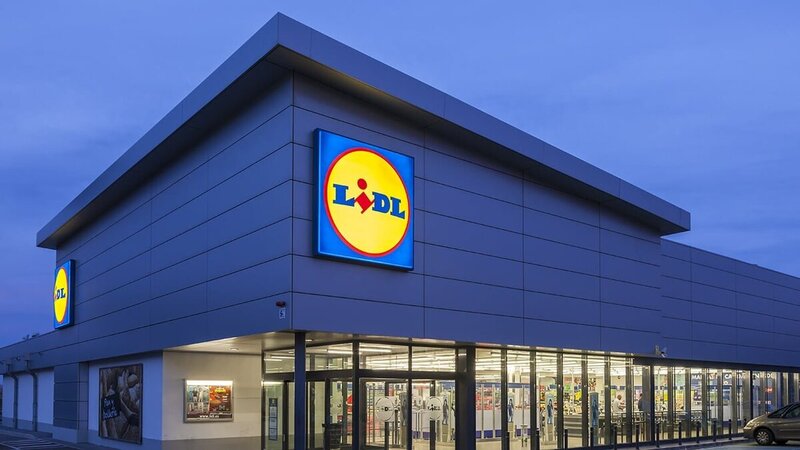
Near the small German town of Bad Friedrichshall, the Schwarz Digits Campus was officially opened — the facility through which Dieter Schwarz, owner of the Lidl supermarket chain and one of the richest men in Germany, intends to challenge giants like Amazon and Google by building a European-flavored Silicon Valley.
The Silicon Valley-style campus and the challenge to Big Tech
The Schwarz Digits Campus is made up of five multi-story buildings perched on a hill and arranged like a honeycomb around a small lake.
It is a facility set in greenery, designed for 3,500 employees and complete with a daycare center, a gym, and a restaurant — in every way reminiscent of the Big Tech headquarters of Silicon Valley. Above all, it is the base from which the Schwarz Group has decided to launch an extremely ambitious challenge: achieving Europe’s digital sovereignty.
Dieter Schwarz’s decision is neither a leap into the void nor a folly. Over the past few years, Schwarz Digits has accumulated data and experience by managing the IT infrastructure of roughly 14,500 Lidl supermarkets around the world, and it has also begun offering cloud solutions to other companies and to major government agencies.
Consider that the group’s current partners include several German ministries, the DFB (the German Football Association) and even the Dutch government.
It is an ambitious project that will be further strengthened by the construction of an €11 billion ($11.9 billion) data center in the Spreewald region.
From supermarkets to cloud computing
Bad Friedrichshall, home to the campus, is a small town in southern Germany a few kilometers from Heilbronn, the birthplace of the 86-year-old Dieter Schwarz, owner of Lidl and one of the richest and most powerful men in the country.
It was in Heilbronn that Schwarz began building his empire, which today counts more than 14,000 stores and employs over 600,000 people in every corner of the world.
It is a colossus whose success is due not to low prices and the sheer density of its stores, but to its ability to manage every stage of production in-house — from food retailing, through waste management, all the way to recycling and, now, digitalization.
That strategy allowed the Schwarz Group to generate around €162 billion ($175 billion) in revenue last year — more than names like Mercedes and Bayer.
The question many are asking is whether Schwarz Digits, beyond the announcements and the colossal investments, can really end up competing with the American giants.
The comparison, at the moment, looks merciless. Last year Amazon generated $135 billion in revenue (€117 billion), while the German company stopped at $2.2 billion (less than €2 billion).
The market, however, could change quickly. The tariff policies imposed by Donald Trump, China’s growing weight in the technology arena, and the arrival of new competitors will force Europe to seek independent IT solutions so as not to remain entirely dependent on foreign suppliers. Schwarz is doing everything it can to be ready.
Editor’s note
This article was originally published in Italian on money.it by Andrea Fabbri on July 31, 2026 as «Il proprietario di Lidl sfida le Big Tech e inaugura un campus stile Silicon Valley in Germania». It has been translated and adapted for an international audience by the Money.it International desk.