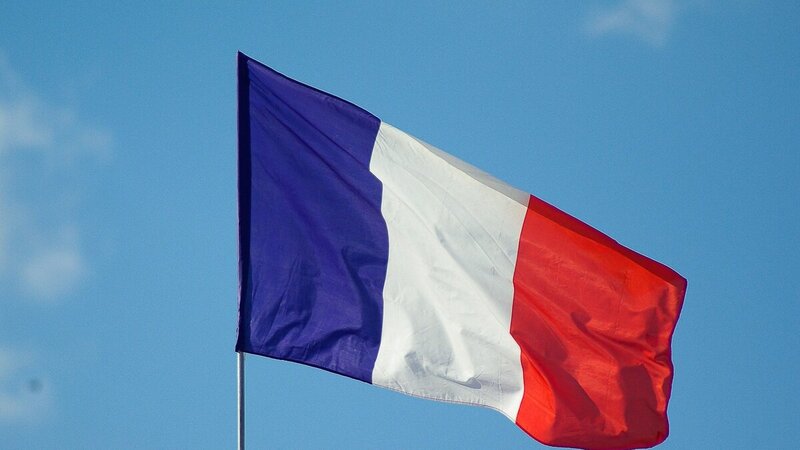
France may have become too big a country for the European Central Bank (ECB) to save amid its debt crisis, according to Nobel Prize-winning economist Paul Krugman.
In a post published on Substack, Krugman wrote that France, grappling with rising interest costs on its public debt, is on a “fiscally unsustainable path,” with its debt-to-GDP ratio worsening because of persistently high deficits.
Is France at a point of no return on deficit and debt?
Among the crucial problems Paris faces, Krugman continued, is its inability to tackle a relatively low retirement age in the context of an aging population.
But if the worst were to happen, a question many have asked for months, could the ECB rescue France by capping the surge in yields on French government bonds (known as OATs) and so banish the specter of higher refinancing costs? Krugman says it could not.
Noting that “France’s dependence on the euro makes it all too easy to imagine how this loss of confidence could turn into a serious, destabilizing crisis,” and recalling that “we’ve seen this movie before, in 2009-2012, first in Greece, then in Portugal, Spain and Italy,” Krugman said the ECB could do little to restore Paris’s fortunes.
The reason, in the Nobel laureate’s view, is that a financial bailout of France would be “extremely costly” for the ECB, at a time when France will, moreover, keep failing to do the homework required by the European Union, drifting ever further, Krugman predicted, “from fiscal discipline.”
Krugman on what happens when a country loses fiscal credibility
Krugman recalled what happened more than a decade ago, when the euro-area sovereign debt crisis erupted, summing up the dynamics that typically unfold when a country loses credibility in the eyes of investors:
«First, investors stop buying the bonds of a euro-area country, raising fears that the government will be forced to default simply because it lacks the cash to pay interest and repay principal on its debt. The fear of default then triggers further capital flight, which in turn feeds solvency fears and pushes interest rates higher, setting off an ever more serious vicious circle.»
Beyond “whatever it takes”: France as too big to fail, or too big to save?
If the euro area survived, Krugman explained, it was because reassurances from then-ECB President Mario Draghi, distilled in his famous “whatever it takes” pledge, were accompanied by a commitment from the hardest-hit countries, those of Southern Europe, to undertake “massive spending cuts.” Krugman does not believe Paris will do the same. That means, in essence, that France may have “crossed the line between too big to fail and too big to save.”
In practice, the Nobel laureate wrote, “it is all too easy to sketch a particularly severe French crisis scenario, one that would cause deep divisions within Europe.”
Meanwhile, on Friday, October 9, 2026, the turmoil in French OATs on the secondary market eased. The yield on the 10-year bond, which in recent sessions had been heading toward the 5% threshold, fell 4 basis points to 4.85%.
The surge is nonetheless notable: over the past month, yields have jumped 52 basis points, and over the past year they have soared 134 basis points.
With German 10-year Bund yields at 3.48%, the France-Germany 10-year spread (also known as the OAT-Bund spread) hovers around 137 basis points, retreating from levels between 150 and 160 basis points, a record since the eurozone sovereign debt crisis of 2011-2012.
Editor’s note
This article was originally published in Italian on money.it by Laura Naka Antonelli on October 09, 2026 as «Francia, Premio Nobel Paul Krugman: “Troppo grande per essere salvata dalla BCE”». It has been translated and adapted for an international audience by the Money.it International desk.