

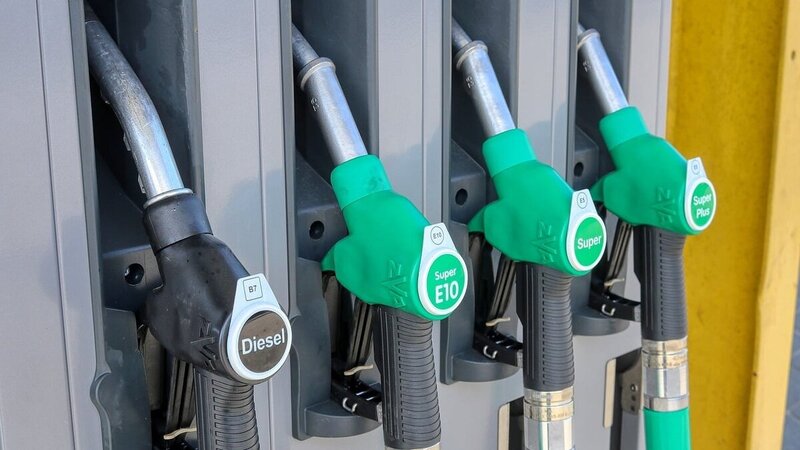
Filling up has become a genuine financial burden for many households, yet a large share of drivers make the situation worse by choosing premium or high-octane fuel out of habit rather than necessity. The idea seems logical enough on the surface: more expensive must mean better quality. In practice, however, this instinct amounts to a commercial and psychological trap that drains wallets without delivering any real benefit under the hood.
Does premium gas actually save you money?
The typical consumer’s perception is built on a simple equation: higher price equals higher quality. This rule of thumb gets applied to virtually every product category, from clothing to fuel. Mónica Marí, a specialist in fuel distribution, points out that the tendency to equate cost with performance is one of the most persistent myths in the industry — so persistent, in fact, that millions of drivers regularly pay a premium for a fuel grade their engine simply does not need.
The appeal of premium or high-octane fuel (in the United States, rated at 91–93 AKI — the Anti-Knock Index used on all American pump labels, as opposed to the RON scale used in Europe) rests on the belief that it delivers more power and reduces engine wear over time. The reality is that for the vast majority of vehicles on the road, regular unleaded — rated at 87 AKI — performs exactly as well for engine protection and energy delivery. Spending more on a special blend yields no practical return.
There is another dimension to consider: modern fuels already leave the refinery with a baseline package of additives, precisely formulated to ensure engine efficiency and protection in compliance with strict federal and state standards (in the US, regulated under ASTM D4814 and applicable EPA requirements).
Knowing your car’s specs is the key to saving money
Regulations are only part of the story. A surprising number of drivers are misled simply by not knowing their own vehicle’s technical specifications. Every modern engine is designed, engineered, and calibrated to perform optimally at a specific octane rating.
For the vast majority of small- and medium-displacement vehicles — including hybrids and many of the best-selling SUVs in the country — automakers explicitly specify regular 87-octane fuel (AKI). Using a higher-octane grade (91 or 93) in an engine built for 87 does no damage, but it produces no benefit either. The car’s electronic control unit (ECU) is not programmed to advance ignition timing beyond the parameters set for the base fuel grade, so the extra knock-resistance of the more expensive fuel goes entirely unused.
The answer is a ten-second check: look at the sticker inside your fuel-filler door, or consult the owner’s manual. Automakers who require premium will say so explicitly — and usually in capital letters. If the label says «unleaded gasoline only» without specifying a minimum octane above 87, regular is all you need.
Are off-brand and discount gas stations risky?
A parallel and equally widespread concern involves independent and off-brand gas stations — places like Costco, Walmart, Murphy USA, and regional no-name chains. The assumption is that a noticeably lower price at the pump must reflect inferior or adulterated fuel that could harm modern fuel-injection systems.
This is a myth, and it collapses quickly under scrutiny of how the fuel supply chain actually works. In the United States, any gasoline or diesel sold for road use must comply with federal and state quality standards (ASTM D4814 for gasoline; ASTM D975 for diesel). Independent stations draw from the same terminals and refineries as the major branded chains. What differs is their business model: no expensive advertising campaigns, heavy reliance on self-service automation, and a deliberate choice to compress per-gallon margins in exchange for higher volume.
Paying less at a Costco pump does not mean putting your engine at risk. It means declining to pay for a brand’s marketing budget — exactly the same logic that applies when choosing a store-brand product over a name-brand one at the supermarket.
The one exception worth noting: if your vehicle’s manual specifies a Top Tier certified fuel (a voluntary industry standard maintained by a consortium of automakers including GM, BMW, Toyota, and others), look for that label at the pump — it certifies a higher detergent additive package. Many major chains and several large independents carry Top Tier fuel; the full list is publicly available at toptiergas.com.
Editor’s note
This article was originally published in Italian on money.it by Emanuela Ceccarelli on July 05, 2026 as «Benzina costosa? Il carburante premium rischia di essere un inganno che ti fa solo spendere soldi». It has been translated and adapted for an international audience by the Money.it International desk.