

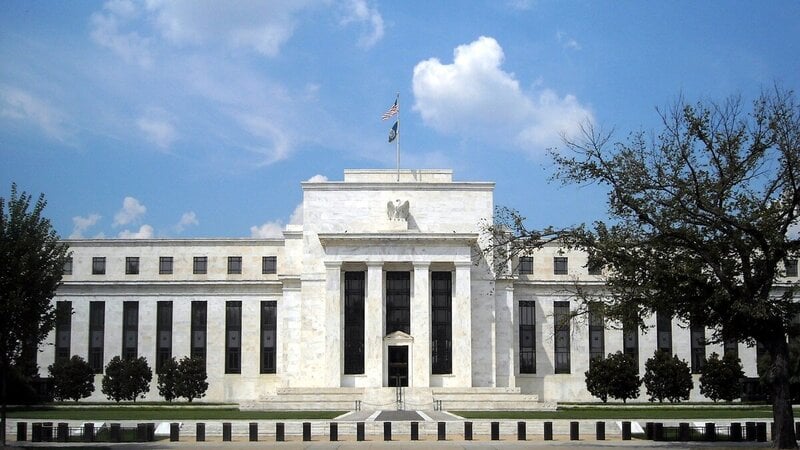
The most important number for US markets tomorrow drops at 8:30 a.m. Eastern. The Bureau of Labor Statistics releases the April Consumer Price Index on Tuesday, May 12, and a hot print would do something the S&P 500 has not yet priced: bury the last serious bid for a Federal Reserve rate cut in 2026.
Consensus from BofA, Goldman Sachs and the major sell-side desks lands at +0.7% m/m for headline CPI and +0.3% m/m for core, translating to a year-over-year headline of 3.8% (up from 3.5% in March) and core of 2.7%. The Cleveland Fed’s Inflation Nowcasting model runs hotter: its April projection sits at 3.89% y/y, the highest reading since the summer of 2023. Options markets price the probability of a headline above 3.5% at roughly 87%.
That is the setup. The reaction function is what matters next.
What Wall Street Expects from Tomorrow’s CPI
April is the first CPI to fully capture tariff pass-through into shelf prices. The 10% Section 122 layer went into effect April 1, and the early read from goods-heavy categories — apparel, household furnishings, autos, recreation — is that retailers absorbed roughly half the cost in March and are passing the rest through now. The Cleveland Fed nowcast has drifted 33 basis points higher in five weeks for exactly that reason.
The street consensus breaks down as follows:
- Headline CPI: +0.7% m/m, +3.8% y/y (March: +3.5% y/y)
- Core CPI: +0.3% m/m, +2.7% y/y (March: +2.6% y/y)
- Shelter: +0.3% m/m, the lowest monthly contribution since 2021
- Energy: +1.4% m/m, Brent above $100 still feeding through to gasoline and jet fuel
- Core goods: +0.4% m/m — the tariff-pass-through line every desk is watching
Anything in line with consensus is, on paper, neutral. The market has bigger problems with the tails.
What Happens to Markets If It Prints Hot — Or Soft
The S&P 500 closed Friday at 7,398.93, the index’s first weekly close above 7,300. Implied volatility into the print is elevated, but the index is priced for a benign outcome. The two tails are not symmetric.
- Hot print (headline ≥3.9%, core ≥2.8%): the August 2026 fed funds future, which still prices a 30% chance of one cut this year, gets repriced to zero. The 10-year Treasury yield gaps 8–12 bp higher, the dollar bid, growth-tech and homebuilders sold. CPI-day S&P moves average 0.9% in absolute terms; expect the high end of that range with a downward bias.
- In-line print (3.7–3.8% headline, 2.7% core): muted reaction at the index level, but rotation under the surface — defensives bid, long-duration tech offered, banks flat. This is the modal case.
- Soft print (headline ≤3.5%, core ≤2.5%): the September rate-cut trade comes back to life immediately. Russell 2000 outperforms by 1.5–2%, the dollar offered, energy and materials catch a bid as inflation-via-growth replaces inflation-via-tariffs.
A soft print is the lowest-probability outcome on the desk. The Cleveland Fed nowcast already sits at 3.89%, and the Bank of America economics team has moved its 2026 rate-cut call to zero, with the first cut now penciled for the second half of 2027.
The Three Sectors with the Most Tariff-Pass-Through Risk
Tomorrow’s print is also the cleanest read on which equity sectors are still eating margin from the tariff layer and which have already passed it through. Three concentrations of risk:
- Consumer discretionary — apparel and home goods: Target, Best Buy and the off-price names have the highest exposure to imported soft goods. A hot core-goods reading hits this basket first; Walmart’s FY27 guide on May 21 is the follow-on confirmation.
- Autos and auto parts: the new-vehicle CPI line has been the cleanest tariff transmitter of 2026. AutoNation, CarMax and the OEMs trade off the print, with a knock-on hit to auto-credit exposure at the regional banks.
- Recreation and consumer electronics: the smallest weight, but the largest beta to the tariff layer — the toy, sport and recreation chains are the cleanest expression of the trade.
Energy is the wild card. With Brent above $100 and the Strait of Hormuz still partially closed, the energy CPI line is a second-order tariff bet — geopolitics, not policy. A hot headline driven by gasoline tells the Fed a different story than a hot core driven by apparel.
What the Fed Watches Beyond the Headline
The headline number is the one the tape trades. The Federal Reserve watches a different stack. Three lines matter most for the FOMC reaction function:
- Core services ex-shelter (“supercore”): the Powell-era favorite. Anything above +0.3% m/m keeps the “no cut in 2026” base case intact.
- Owners’ equivalent rent (OER): the largest single weight in the index. A continued deceleration toward +0.25% m/m is the only ingredient that could rebuild a cut narrative even if headline runs hot.
- Median CPI (Cleveland Fed): less market-moving, but the cleanest measure of underlying inflation breadth. A sticky 3.5%-plus median is the FOMC’s red flag.
The March dot plot still implied two cuts in 2026, but the January and April minutes walked that back. BofA and a growing chorus of street economists now expect zero cuts this year — a reset the equity market has not fully absorbed, because earnings have been good enough to look through the rates path. Tomorrow’s print is the moment those two narratives collide.
What This Means for Your Portfolio
For positioning into Tuesday 8:30 a.m. ET, the operational takeaway is narrow. Do not be max-long equity duration (megacap tech, long-end Treasuries) into the print without a hedge. A modest overweight in energy and short-duration value is the cleanest expression of the hot-tail. Watch the supercore line, not the headline, as the determinant of whether the Fed-cut narrative is dead for 2026 or merely sleeping. And remember: this print does not arrive in isolation — the same week brings the Trump–Xi summit and the first wave of retail earnings, any of which can compound or offset the CPI signal. Plan the bands, not the headline.
Sources: Bureau of Labor Statistics, Schedule of Releases for the Consumer Price Index, April 2026 release (May 12, 2026, 8:30 a.m. ET). Cleveland Fed, Inflation Nowcasting model, update of May 8, 2026 (April CPI nowcast 3.89% y/y). Kiplinger, “What to Expect From the April CPI Report,” May 9, 2026. TradingKey, “U.S. April CPI Preview: Fed May Abandon Rate Cuts Until 2026?,” May 8, 2026. Bank of America Global Research, US Economic Weekly, May 7, 2026 (“Fed unlikely to cut rates until second half of 2027”). Federal Reserve, FOMC Summary of Economic Projections, March 18, 2026; CBS News, “Fed unlikely to cut interest rates until second half of 2027, Bank of America says,” May 2026. CNBC, S&P 500 closing levels for May 8, 2026.