

Reliability has become an increasingly important factor for anyone buying a car. New-car prices have risen sharply in recent years, and so have the costs of spare parts and maintenance.
That is why a dependable vehicle that is easy to repair and built to last is becoming a priority for many drivers, whether they are shopping for a new model or turning to the used market.
Useful guidance comes from the What Car? Reliability Survey 2026, the annual study by the long-established British magazine, conducted among tens of thousands of motorists and published in recent days. Here are the models owners rate as the most and least reliable. There are some surprises.
How the ranking is compiled
What Car? builds the ranking from reports by owners of cars no more than five years old. Each model receives a reliability score expressed as a percentage.
Beyond the number and type of faults, the score takes into account repair costs and the time a car spends off the road in the workshop: two factors that weigh directly on drivers’ daily lives and wallets.
A few caveats come first. Brands such as Peugeot, Citroën, Seat and Renault are less common in the United Kingdom than elsewhere in Europe and may therefore be underrepresented in the sample. And because this is a survey, the results reflect owners’ direct experience, not laboratory testing.
The most and least reliable cars for British drivers
At the top, tied with a perfect score of 100%, are the new-generation Mini Countryman (from 2024) and the 2017-2024 generation of the Suzuki Swift. Right behind them in the top 20 are the Toyota Aygo X, the BMW 4 Series Coupe and Convertible, and the three- and five-door Mini (2014-2024), in a ranking dominated largely by Asian brands.
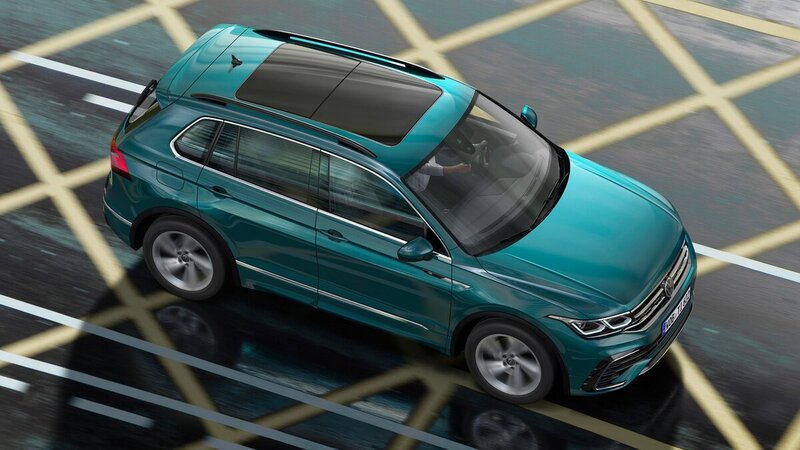
The surprises come further down. The least reliable car overall is the latest-generation Volkswagen Tiguan (from 2024), which scores just 55.3%. It is followed by the Renault Arkana (2018-2025) at 58.5%, and the Mercedes GLE. The wooden spoon goes to the Volkswagen ID.4, at 66.9%.
Rounding out the bottom of the table are the Land Rover Discovery Sport, the Jaecoo 7, the gasoline BMW X3 (2018-2024), the previous-generation gasoline Tiguan (2016-2024), the gasoline Nissan Qashqai (2014-2021) and the Range Rover Evoque (from 2019). Only one Chinese model, the Jaecoo 7, is among the ten worst, while Volkswagen appears twice.
What went wrong with the Tiguan, Arkana, ID.4 and GLE
The Tiguan is weighed down mainly by electrical problems unrelated to the engine, reported by 50% of owners, while 30% complain of faults with the infotainment system.
For the Renault Arkana, the main issue is downtime: 78% of owners of the French SUV were left without their car for more than a week.
A similar fate befell 66% of ID.4 owners. Volkswagen’s electric SUV also landed at the bottom of the ranking because of electric motor problems, reported by around 20% of owners. That figure is surprising, given that electric cars, with fewer moving parts, tend to break down less.
There is bad news for the Mercedes GLE too. Some 43% of owners of the German SUV reported at least one fault, with problems concentrated mainly in the electrical system and the infotainment system.
Editor’s note
This article was originally published in Italian on money.it by Andrea Fabbri on October 10, 2026 as «Un sondaggio britannico svela le auto meno affidabili del 2026 per i conducenti». It has been translated and adapted for an international audience by the Money.it International desk.


