Silver is trading around $41.25 an ounce on the morning of Friday, November 20, 2026, roughly 66% below the all-time high reached in January. UBS, Bank of America and other large international institutions still forecast a recovery in 2027, even as Wall Street and other markets go through a stretch of pronounced weakness.
The S&P 500 fell 2% on Thursday, November 19, the Nasdaq Composite 2.3% and the Dow Jones 2.2%. All three remain positive for the year to date, up 4.8%, 2.7% and 2.2% respectively. Piazza Affari has done better: the Ftse Mib closed November 19 up 11.12% from the end of 2025.
Wall Street has lost more than 8% from its October highs, and analysts are split on 2027. Those counting on corporate earnings growth see room for fresh gains. The more cautious fear further corrections, especially if investment in artificial intelligence fails to deliver the expected financial results.
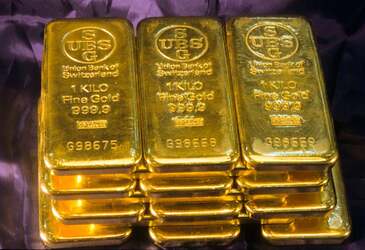
UBS published its Year Ahead 2027 report on November 18. The Swiss bank remains confident about the global economy but has cut its rating on global equities from positive to neutral. Bonds and commodities now pay better for the risk involved, it says, with gold and copper leading its picks for next year and silver among the metals it expects to recover strongly.
Commodities in 2026: oil up, precious metals down
Commodities have each gone their own way this year. Oil was among the biggest gainers, driven by geopolitical tension and supply problems; UBS put prices as of November 18 up 52% since the start of the year, partly because of tension in the Strait of Hormuz, the narrow waterway between Iran and Oman through which a large share of the world’s seaborne crude passes. Coal and soybean oil posted significant gains at various points, and copper benefited from expectations tied to power grids and industrial investment. US natural gas, coffee and, in some periods, nickel fared worse.
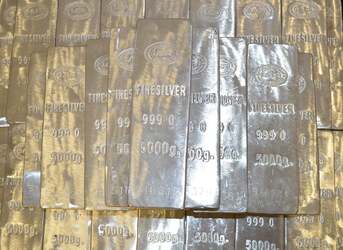
The most violent swings came from precious metals. Gold hit an all-time high near $5,595 an ounce in January and had fallen to around $3,525 by the morning of November 20, roughly 37% below that record. Silver’s decline has been steeper, from about $121.60 to $41.25, a loss of nearly two-thirds of its value.
A stronger dollar, rising bond yields and the expectation of tighter US monetary policy have weighed on both. Silver, which unlike gold ends up in many industrial applications, has also had to contend with concerns about the global economy.
For commodities as a whole, the World Bank’s October 28 report estimates a 23% rise in prices in 2026 and a 7% decline in 2027. That figure covers the basket as a whole and does not rule out gains in individual metals.
Silver forecasts for 2027: UBS sees $65
Measured against November 20 prices, silver has one of the widest margins for recovery of any commodity. In its November 18 report UBS set a target of $60 an ounce by June 2027 and $65 by December. The metal was then trading near $50, and a 30% rise would have been enough to reach $65. At $41.25, silver would now have to gain roughly 57.6% to hit the same target. The target has not changed; the price has moved away from it.
Bank of America goes higher still. Forecasts updated in November point to an average price of $75 an ounce in the second and third quarters of 2027 and a full-year average close to $70, with a market its analysts expect to swing from a surplus of about 910 metric tons in 2026 to a deficit of 852 metric tons in 2027. That deficit assumes industrial demand holds up.
ING’s estimates look less striking on an annual average basis. The Dutch bank sees silver at $71 in the final quarter of 2027 but a full-year average of $66.50, below the $69.50 it estimates for 2026. The Reuters poll of October 27 points the same way, with an average forecast of $66.75 for 2027 against $70.30 for 2026. The very high prices seen early this year inflate the 2026 average, so even a solid recovery from here would leave the 2027 average lower.
UBS calls copper its preferred industrial metal for 2027 and points to $15,500 a metric ton by December. Goldman Sachs has outlined $15,600 by the end of 2027 while still seeing downside risks to an annual average of about $15,400. Power grids and data centers for artificial intelligence sit behind those estimates, and both could absorb less metal than expected if the global economy slows.
On gold, UBS forecasts a recovery toward $5,000 an ounce by December 2027. Morgan Stanley has sketched out a scenario in which that threshold is exceeded, while J.P. Morgan Private Bank remains more cautious, with a reference point of $4,600. For Brent, UBS points to $80 a barrel by December 2027, assuming supply gradually returns to normal.
Silver on the charts: the levels to watch
On long-term charts, the 2026 decline has brought silver back into contact with the 9-period exponential moving average on the annual chart and with the area of the 21- and 50-period exponential moving averages on the quarterly. Those are reference points that could encourage an attempt at stabilization. On their own they do not signal a bullish reversal.
The daily chart is far weaker. Prices remain below the 9-, 21- and 50-period moving averages, and selling over the past two weeks has broken through the $49 area, which had acted as support. Much higher up, in the $62-$63 an ounce area, runs the 200-day exponential moving average, the EMA 200, which would act as dynamic resistance in any recovery. Anyone looking at the 200-day simple moving average may find a different value, because the exponential version gives more weight to recent sessions.
On the downside, the long-term reference point is on the monthly chart, around $35, where the 200-month moving average runs. A further drop could bring that area back into focus.
The first sign of improvement would be a sustained move back above the November 10 high, in the $53.78 area, which would open the way toward the EMA 200 in the $62-$63 zone. A long-term reversal would require higher lows and the recovery of the main moving averages. For now, short- and medium-term charts continue to show lower highs and lower lows, with a price structure that is still bearish.
| DISCLAIMER The information and considerations contained in this article must not be used as the sole or primary basis for making investment decisions. Readers retain full freedom in their own investment choices and full responsibility for making them, since they alone know their risk tolerance and their time horizon. The information contained in the article is provided for informational purposes only, and its publication does not constitute and is not to be considered an offer or solicitation to the public to invest. |
Editor’s note
This article was originally published in Italian on money.it by Gerardo Marciano on November 20, 2026 as «Argento, dopo il crollo del 66% può guadagnare il 58% nel 2027? Le previsioni delle grandi banche e i segnali dei grafici». It has been translated and adapted for an international audience by the Money.it International desk.