
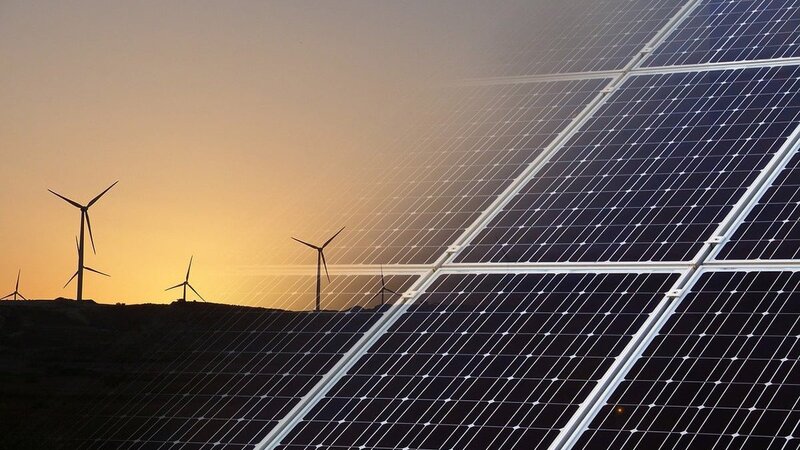
In early 2026, one event shook global energy markets: the closure of the Strait of Hormuz after the United States and Israel struck Iran. The crisis put particular pressure on the oil market, choking off part of the supply coming from the Middle East and driving up prices on the main benchmarks. Over the following months, however, the world discovered a striking paradox: there is now a historic surplus of cheap, clean energy. Solar panels have been produced in enormous quantities — even in excess of demand — and the problem is that the market is now struggling to absorb them.
Economist Adam Tooze put it plainly in the Financial Times: clean energy at a scale that in 2015, at the time of the Paris Agreement, seemed almost utopian is today a concrete reality. China holds a dominant position, above all in the manufacturing of solar panels. After a massive wave of investment that began in 2020, Chinese companies reached a production capacity of close to 1,000 GW of solar panels per year — far beyond global demand, which in 2023 stood at around 451 GW.
The result is what economists call «involution»: competition so aggressive and destructive that it leaves no real winners. More than 40 Chinese manufacturers have gone bankrupt, been acquired, or delisted from the stock exchange. JinkoSolar, the world’s largest supplier of solar panels, closed 2025 with revenue down 29%. A similar pattern has hit other companies in the sector. The price of a solar module fell to as low as $0.10 per watt — below the cost of production itself.
Over fifteen years, China has invested roughly $18 billion to build an industry capable of supplying clean energy in quantities greater than the world can easily take in. Its grip on the supply chain is unprecedented: more than 80% of global production comes from the Asian country.
A production surplus that turned losses unsustainable
The Chinese government stepped in at the start of the year. The tax authority announced that, as of April 1, it would scrap export rebates on photovoltaic products. The move has already had an effect: module prices have risen by as much as 30%, with a further 9% increase forecast over the course of the year. The era of dirt-cheap solar panels, in other words, may be coming to an end.
Beyond the economic and industrial problem, there is also a technical one. China has installed so many solar panels that the power grid struggles to transmit and store all the energy produced. In February, the country’s installed solar capacity passed 1,230 GW, up 33%, but storage infrastructure has not grown at the same pace. The result is that part of the energy is wasted: it is generated, but cannot be properly stored or distributed.
Finally, there is a quality risk. The race to the bottom on prices has pushed some manufacturers to cut corners on testing and materials, raising the concern that the cheapest panels could see a significant drop in performance ten years from now.
In short, 2026 risks being remembered as the year the world found itself with an enormous quantity of solar panels — more than the electricity grids were actually able to absorb.
Editor’s note
This article was originally published in Italian on money.it by Alessandro Nuzzo on June 20, 2026 as «In un solo anno la Cina ha prodotto più pannelli solari di quanti il pianeta possa assorbirne». It has been translated and adapted for an international audience by the Money.it International desk.