

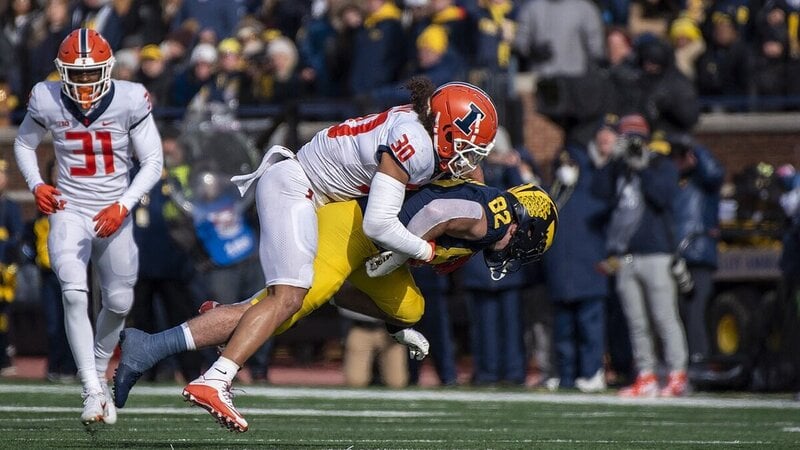
Devon Witherspoon is now the highest-paid defensive back in NFL history. On Saturday, August 15, 2026, the Seattle Seahawks and their star cornerback agreed to a four-year extension worth $132 million, including $101 million guaranteed, as first reported by ESPN and confirmed by NFL.com. Spotrac lists the deal as a «4 year, $132,000,000 contract with the Seattle Seahawks», carrying «an average annual salary of $33,000,000».
The timing is what makes the number so large. Witherspoon was entering the last season of his rookie contract, scheduled to earn a $10.1 million base salary in 2026. Six months after helping Seattle beat the New England Patriots 29-13 in the Super Bowl, he is instead locked in through the 2031 season.
Where Does Devon Witherspoon’s Money Actually Come From?
Almost all of it comes from one place: the Seahawks’ payroll. Unlike veteran stars whose off-field income eventually dwarfs their salary — think of what Tom Brady built after football — Witherspoon is still at the stage where the contract is the fortune.
The new extension resets the cornerback market decisively. Before Saturday, the top of the position looked like this: Sauce Gardner at $30.1 million a year with the Colts, Derek Stingley Jr. at $30 million with the Texans, and Jaycee Horn at $25 million in Carolina. Witherspoon clears all of them, and he does it in a season when the league salary cap climbed to a record $301.2 million per team.
Endorsements add a modest second stream. Industry estimates put his off-field income in the $1 million to $2 million range per year — real money, but a rounding error next to $33 million in annual salary. Published net worth figures for Witherspoon vary widely, from roughly $4 million to $14 million depending on the outlet, which is why the contract numbers, not the estimates, are the reliable measure here.
How Witherspoon Built His Fortune
He was not a projected top-five pick until late in the process. Witherspoon spent four seasons at Illinois, and in 2022 he was named a consensus All-American and Big Ten Defensive Back of the Year. Seattle took him fifth overall in the 2023 NFL Draft.
His rookie contract, signed on July 28, 2023, was worth $31.86 million over four years, fully guaranteed, with a $20.17 million signing bonus. That deal alone put him in a financial position most 22-year-olds never see. What it did not do was pay him like the player he became: three Pro Bowl selections in three seasons, second-team All-Pro honors in 2025, and a Super Bowl performance that included four tackles, three pass breakups, three quarterback hits and a sack.
That gap between production and pay is exactly what the new deal closes. Add the $31.86 million rookie contract to the $132 million extension and Witherspoon’s total contract value in Seattle reaches roughly $164 million by the time the deal expires — territory that used to belong to quarterbacks, not defensive backs. For scale, the world’s highest-paid athletes rarely include a cornerback at all.
What’s Next for Devon Witherspoon’s Money in 2026
The guarantee structure is the part worth watching. At $101 million locked in, Witherspoon carries more security than most defensive players ever negotiate, and it insulates him from the injury risk that has flattened careers at his position.
The market impact will follow. Every cornerback negotiating over the next 18 months now points at $33 million as the floor, and Seattle’s cap sheet has to absorb a contract that grows heavier in its back years. Elsewhere in the Seahawks’ locker room, the ripple effects are already being modeled — the same dynamic that reshaped tight end pay after Travis Kelce’s Chiefs extension.
There is also a historical note here. The cornerback position has never been a top earner in football, in part because its value is hard to measure: a great one simply does not get thrown at. Deion Sanders spent a career arguing otherwise. Thirty years later, a 25-year-old from Pensacola just got paid like it was always obvious.
Do you think $33 million a year is the new normal for elite cornerbacks, or has the market gotten ahead of itself? Tell us what you think.