

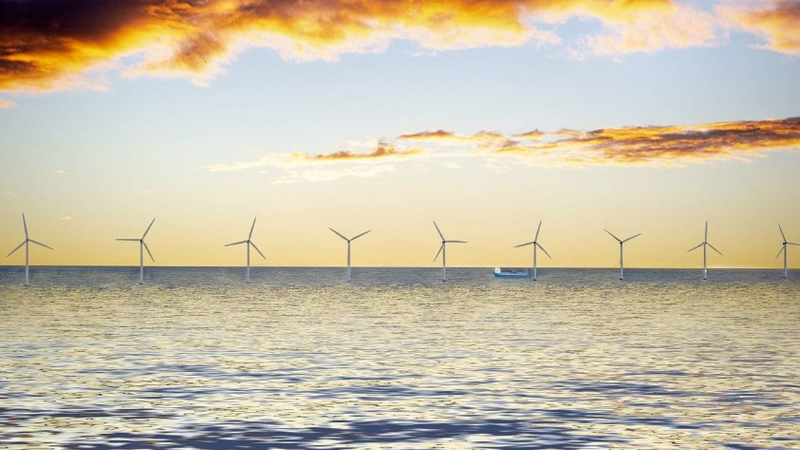
Five years ago, few international investors were paying attention to Alerion Clean Power. Today, it stands out as one of the most compelling wealth-creation stories on the Italian stock market.
The company engages in electricity production from wind and solar power in Italy, Spain, Bulgaria, and Romania. The company operates 31 wind power plants and serves approximately 600,000 households. Founded in 2003, it is headquartered in Milan.
An investment of €10,000 at the beginning of 2021 would now be worth approximately €24,600, excluding dividends. That represents a gain of more than 140% — significantly outperforming Italy’s benchmark index over the same period.
This wasn’t a speculative spike. The fundamentals tell a clearer story.
Over the past five years:
- Installed renewable capacity expanded significantly
- Revenues grew at a sustained pace
- Operating margins improved, supported by elevated energy prices
- Debt levels remained manageable relative to peers
According to European utilities analysts, the market did not simply reward ESG positioning. It rewarded cash flow visibility and execution. Companies with long-term contracts and strong project pipelines were re-rated upward as energy security became a structural priority across Europe.
In other words, this was not just a “green trade.” It was a business model revaluation.
Why the Market Rewarded It — And What Could Change
Alerion’s rally took place within a very specific macro environment:
- Elevated energy prices following the 2022 energy crisis
- Strong policy support for renewable infrastructure
- Capital flows into ESG and energy transition themes
- Inflation-driven demand for real assets
However, the backdrop in 2026 looks different.
Interest rates remain structurally higher than in the pre-pandemic era. For capital-intensive businesses such as renewable utilities, the cost of capital directly impacts valuations.
Several European strategists argue that if central banks move decisively toward rate cuts, renewable operators could see renewed multiple expansion. Lower bond yields typically make long-duration cash flows more attractive.
On the other hand, normalization in wholesale energy prices could compress margins compared to peak years.
This is where the story becomes nuanced.
Read more: Why oil prices keep swinging amid global uncertainty
Structural Opportunity or Maturing Cycle?
From a portfolio protection perspective, the Alerion case offers an important lesson: outsized returns tend to emerge from structural trends, not short-term narratives.
The global energy transition is far from complete. Investment needs over the next decade remain massive. That suggests the theme itself is not exhausted.
Yet markets are more selective today. Belonging to the "right sector" is no longer sufficient. Investors increasingly focus on:
- Free cash flow sustainability
- Debt discipline
- Project execution timelines
- Regulatory visibility
The investors who turned €10,000 into €24,600 benefited from:
- Correct timing
- Multiple expansion
- Genuine operational growth
Read more: Economic indicators: what are the main ones and what are they used for?
The key question for 2026 is not whether the stock can repeat a 140% gain.
The real question is whether the conditions that enabled that surge — strong pricing power, capital inflows, and favorable policy dynamics — are still in place.
Markets evolve.
The numbers remain.
And in this case, the numbers tell one of Milan’s most striking mid-cap stories of the past five years.