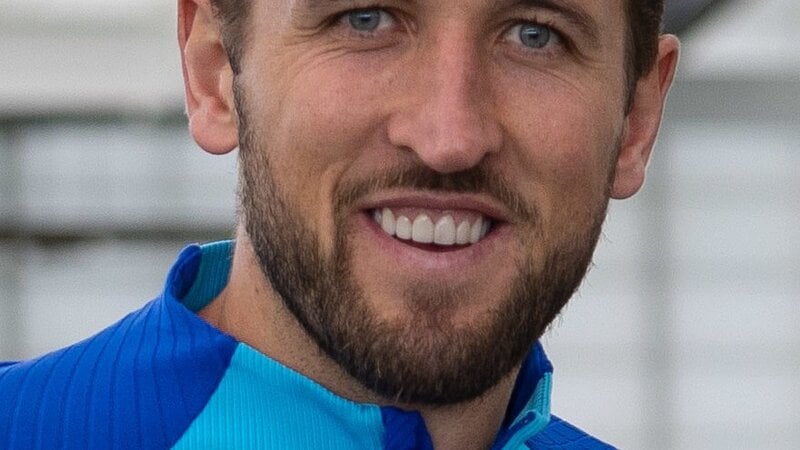
Harry Kane scored his 13th World Cup goal against Congo DR in the round of 16, a two-goal performance that pushed him past Pelé’s all-time tally and into rarefied company — only Germany’s Miroslav Klose, with 16, has scored more in the tournament’s history. It is the kind of milestone that tends to reframe a career. For Kane, it also reframes a financial conversation that his numbers have long deserved.
England’s captain has been the country’s most productive international forward for the better part of a decade. He is now also, by Forbes’ reckoning, one of the ten highest-paid athletes on the planet.
Where Does Kane’s $41 Million a Year Actually Come From?
Forbes estimated Kane’s total earnings at $41 million over the twelve months to May 2026, placing him among the highest-earning athletes in the world. The bulk of that figure starts in Munich.
Capology, the most authoritative public tracker of European football contracts, puts Kane’s base salary at Bayern Munich at €25 million per year — roughly $27 million at current exchange rates. The deal runs through June 2027, with Bayern holding an option for an additional season. That contract alone makes Kane the highest-paid player in the Bundesliga by a substantial margin and one of the ten highest-earning club footballers in European football.
Beyond the pitch, Kane’s largest off-field deal is a lifetime partnership with Skechers, signed in August 2023. The brand built its first-ever football boot range around him, and industry insiders estimate the deal pays Kane between $5 million and $10 million annually — a figure that could rise sharply if Skechers expands its football footprint following England’s World Cup run. He holds additional endorsement agreements with a cluster of mid-tier brands, with total sponsorship income estimated in the $10–14 million range for the current year.
The math gets Kane to $41 million. No venture capital bets, no clothing lines, no media production companies. Just football and deals that pay him for playing it.
How Kane Built His Fortune One Contract at a Time
Kane’s financial trajectory is different from the celebrity-athlete archetype. He did not build a brand empire or move to a Gulf club for a contract designed to double as a retirement fund. He accumulated wealth the old-fashioned way: by being unavoidably, consistently excellent for long enough that the market had no choice but to price him accordingly.
He spent sixteen years at Tottenham Hotspur, rising through the academy and eventually earning a reported £200,000 per week — roughly $260,000 — as the club’s highest-paid player. He left in the summer of 2023 for Bayern Munich in a deal worth €100 million in transfer fees, becoming the most expensive British footballer in history at the time. He was 30 years old.
That transfer did not earn Kane a penny directly — transfer fees go to selling clubs — but it unlocked a contract structure no Premier League team was willing to match. The €25 million annual salary he earns in Germany is substantially more than Tottenham ever paid him and more than most Premier League clubs pay their marquee signings.
Career salary earnings across both clubs over approximately fifteen years of top-level football likely total somewhere in the region of $200–250 million before taxes. After UK income tax — which applies to his England earnings and part of his international income — and agent commissions, net accumulated wealth is harder to pin down. Most estimates place Kane’s personal net worth between $60 million and $80 million, a figure that reflects both the scale of his career earnings and the tax reality of being a high-earning British professional.
For comparison, Erling Haaland — also playing his first World Cup in 2026 — sits at an estimated $100 million net worth, boosted by a Manchester City contract that carries release clause income and a different commercial structure. Kane’s wealth is more conservative, and more straightforwardly built.
What 13 World Cup Goals Mean for Kane’s Market Value
World Cup performances move markets. Kane’s five goals in this tournament — bringing his career total to 13 — have placed him among the top two scorers in the competition alongside Messi and Mbappé, and have made him the visible, dominant face of England’s deepest World Cup run in decades.
The immediate commercial consequence is endorsement leverage. Skechers, which tied its football credibility to Kane at the start of a multi-year build, now has its global ambassador performing at the highest stage in world sport. Industry observers expect the brand to accelerate its football spending in the back half of 2026, with Kane as the centerpiece. A new endorsement deal or contract extension negotiated while his World Cup profile is at its peak could add meaningfully to his annual income.
Kane’s England teammates Jude Bellingham and Bukayo Saka command higher transfer market valuations due to their age, but Kane commands something more durable in commercial terms: the credibility of a record-holder. Pelé’s name in the same sentence does not hurt.
His Bayern contract runs through mid-2027. At 33, Kane is approaching the phase of a footballer’s career where decisions get compressed. A move to the Premier League — where his commercial value in the UK market would peak — or a contract extension in Munich will likely define the final chapter of his earnings story. Either way, the World Cup run has ensured he is negotiating from the strongest possible position.
The numbers on the pitch have always been extraordinary. The financial recognition is catching up.
[1]