

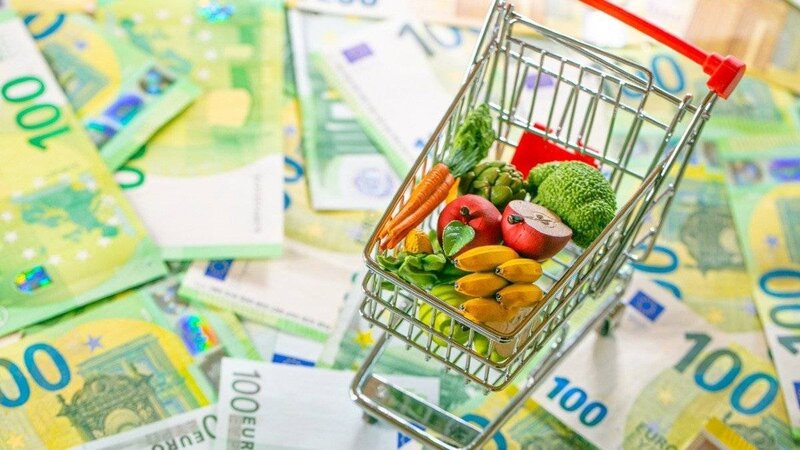
Five years ago, €1,000 felt like a solid amount of money.
It covered rent or a mortgage payment. It filled a supermarket cart without constant mental calculations. It left room for a dinner out, maybe a short weekend trip. It felt sufficient.
In 2026, the same €1,000 still looks the same on paper. The number has not changed. But what it can actually buy has.
Across Europe, inflation has slowed from the highs of 2022 and 2023. The emergency phase has passed. Central banks talk about stability instead of crisis. Markets are debating when interest rates might come down.
Read more: Insight: winners and losers of the 4.25% ECB rates
Yet many households still feel financially tighter than they did five years ago. The explanation lies not in this year’s inflation rate, but in the cumulative effect of the past five years.
The Quiet Mathematics of Change
Between 2021 and 2026, consumer prices in much of the euro area rose by roughly 18% to 25% in total. Energy shocks, supply chain disruptions and broader price pressures pushed up the cost of everyday life.
That means €1,000 in 2021 would need around €1,200 today to buy the same basket of goods and services.
Another way to see it: €1,000 in 2026 carries the purchasing power of roughly €800 to €850 five years ago.
No single moment caused the shift. It happened gradually. A few euros more at the grocery store. A rent increase. Higher electricity bills. Slightly more expensive insurance premiums. Each change felt manageable. Together, they reshaped budgets.
Even steady inflation of 4% per year erodes purchasing power by nearly 22% over five years. The effect compounds quietly.
Read more: Economic indicators: what are the main ones and what are they used for?
Where Households Feel It Most
The difference shows up first in essentials.
Supermarket receipts tell part of the story. Food prices surged during the inflation spike and have not returned to pre-2021 levels. Certain staples that once felt inexpensive now require second thought.
Housing costs have followed a similar path. In many European cities, rents have continued climbing amid limited supply. For homeowners, mortgage costs rose sharply when interest rates increased, adding another layer of pressure.
Energy bills, though less volatile than during the peak of the crisis, remain elevated compared to five years ago.
For families, these are not optional expenses. When core costs rise, something else gives — savings, leisure spending, or long-term plans.
The Wage Catch-Up — But Not Everywhere
Wages have risen across much of Europe in response to tight labor markets and inflation pressures. In some sectors, salary growth has helped restore part of the lost purchasing power.
But the recovery has not been uniform.
For some workers, pay increases have stabilized household finances. For others, especially those in lower-income brackets or fixed-income situations, the gap between prices and earnings has been harder to close.
That uneven adjustment helps explain why economic data may show improvement, while consumer confidence remains cautious.
Why Lower Inflation Doesn’t Feel Like Relief
When inflation falls from 8% to 3%, it signals progress. But it does not mean prices are falling. It simply means they are rising more slowly.
The grocery bill that jumped in 2022 did not shrink back in 2024. It plateaued at a higher level. The same is true for many services and housing costs.
By 2026, Europe is operating at a new price baseline. The crisis phase may be over, but the cost structure has changed.
Savings in a Higher-Price World
Inflation also leaves a mark on savings.
Money kept in low-interest accounts during the early 2020s lost real value as prices rose faster than returns. Although deposit rates improved after central banks tightened policy, the cumulative effect of five years of inflation has reduced the real purchasing power of many savings balances.
The erosion is subtle. There is no dramatic drop in account numbers. But what those balances can buy has shifted.
A Different Reality in 2026
In 2026, policymakers are focused on maintaining stability. Inflation is no longer spiraling. Economic growth is uneven but holding.
Yet households are living with the legacy of the past five years.
€1,000 still pays bills. It still fills shopping carts. But it stretches less than it once did.
Inflation’s hidden cost is not explosive or sudden. It works slowly, almost invisibly, until the difference becomes part of everyday experience.
And today, that difference is hard to ignore.


