

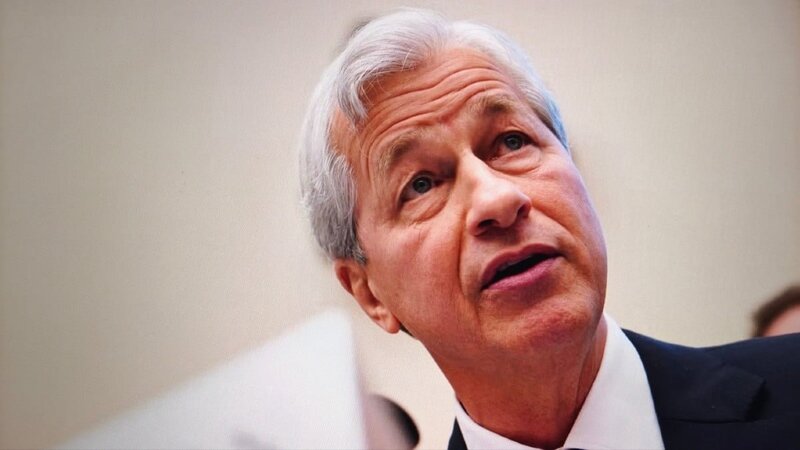
Jamie Dimon, the head of JPMorgan, the largest US bank by asset value, has spoken out again to lay out his concerns about the risks threatening the global economy. Risks that, in his view, investors are underestimating, given that they are «bigger than people think».
Dimon pointed to the wars in the Middle East and in Ukraine, but also to tensions between the United States and China, which are pushing governments around the world to spend more on defense and, as a result, to run higher deficits.
In an interview with CNBC’s Wilfred Frost, the banker said in effect that markets are not fully pricing in the growing list of geopolitical and fiscal dangers.
Dimon, by contrast, is factoring them in — to the point of saying that at these price levels he would buy neither stocks nor long-term Treasuries, that is, US government bonds.
But how far are investors underestimating the risk of a major shock? Dimon noted that it is hard to give a precise answer, stressing that «it’s possible something is priced in, but what isn’t priced in is what actually happens».
Speaking on «The Master Investor Podcast», Dimon acknowledged that the global economy is more resilient today than in the past, above all because it is no longer as dependent on traditional energy sources as it was in previous decades.
Why the US deficit worries him
Among the JPMorgan CEO’s sources of anxiety, however, are US deficit levels, which in his view will force the country to face reality at a time when, because of possible further interest rate increases, Washington will have to issue debt at higher rates. «I think it’s going to become a problem», the head of JPMorgan said, predicting a rise in yields as the so-called bond vigilantes — investors who push borrowing costs higher to discipline governments they see as fiscally reckless — demand greater compensation for funding America’s growing public debt.
Asked whether he would buy long-dated US government bonds today, Dimon was blunt: «No, personally».
The banker also explained that even if US inflation were to return to the 2% target set by the Federal Reserve, yields on 10-year Treasuries should settle between 4% and 4.5%, leaving little room for government bond prices to appreciate.
Stocks and the AI boom
The same cautious stance emerged on equities. While saying he would consider buying an individual stock if it represented «a great investment», Dimon made clear that he would not take a position in the stock market as a whole at current valuation levels.
On AI (artificial intelligence), the JPMorgan CEO compared the current wave of investment to the early years of the internet’s spread.
«The amount of money being invested is enormous. Will it pay off overall? Probably yes, just as happened with the internet».
But the warning was not long in coming: the banker recalled the brutal selection process unleashed by the market, which ended up wiping out many of the early protagonists of the internet boom, such as Yahoo and Netscape, and allowed the real winners — Google and Facebook — to emerge only later.
On AI once more, Dimon commented: «Will it deliver the results people expect, and in the timeframe people expect? Certainly not», he concluded.
Editor’s note
This article was originally published in Italian on money.it by Laura Naka Antonelli on July 21, 2026 as «JPMorgan, Dimon spiega perché non comprerebbe azioni o Titoli di Stato USA». It has been translated and adapted for an international audience by the Money.it International desk.