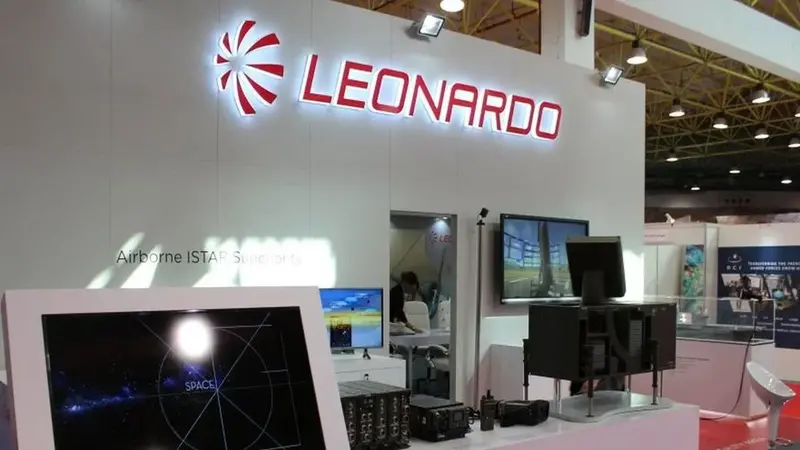
For much of the past year, Italy’s defense stocks have been among the standout performers in Europe.
As geopolitical tensions escalated and governments pledged to rebuild military capabilities, investors piled into names such as Leonardo, Fincantieri and Avio, betting that a new era of defense spending would translate into years of earnings growth.
That long-term investment case remains largely intact. But the market’s enthusiasm has clearly cooled.
Even as conflicts continue to simmer in Ukraine and the Middle East - and despite Europe’s determination to become more strategically autonomous - the sector is no longer delivering the outsized gains that defined 2025.
The European Union recently reaffirmed its ambitions after the latest European Council meeting on defense, with leaders calling for a decisive strengthening of Europe’s military readiness by 2030, urging member states to reduce strategic dependencies while closing critical capability gaps.
Yet investors appear to have shifted their focus from the macro narrative to something far more familiar: valuations.
The change is evident in the performance of the STOXX Europe Total Market Aerospace & Defense Index, which has retreated sharply from the record highs reached in mid-January.
Italian defense names have followed suit, with Leonardo, Fincantieri and Avio all pulling back from their peaks on Milan’s FTSE MIB.
So, has the defense trade simply paused, or is the sector entering a more challenging phase?
According to several market professionals interviewed by Money.it, the answer lies less in geopolitics than in execution.
The Easy Money Has Already Been Made
Francisco Matilla Serrano, an independent financial markets analyst specializing in technology, risk management and asset pricing, believes investors should remain selective when approaching Italian equities.
While he continues to favor companies benefiting from long-term structural themes - including defense - he argues that the conversation has changed.
“The long-term investment thesis is still very much alive”, Serrano says. “What has changed is that investors now need to pay much closer attention to valuation”.
In his view, Europe’s defense build-up is no longer a cyclical or tactical story but a structural shift in industrial and security policy that is likely to unfold over the next decade.
That continues to support companies such as Leonardo, Fincantieri and Avio, although each offers a very different investment profile.
“I think the structural case is still intact, but valuations require more discipline now. European defense spending is no longer a short-term trade; it is becoming a multi-year policy shift. That supports companies such as Leonardo, Fincantieri and Avio. Leonardo has a clearer large-cap defense and aerospace profile, Fincantieri has an interesting naval and underwater technology angle, and Avio offers more specialized exposure”.
But following the sector’s spectacular rerating, Serrano believes investors should distinguish between a company’s strategic importance and the price they are paying for it.
“After such strong performance, investors should separate strategic importance from valuation”, he says, adding that “defense companies can have excellent order books and still become vulnerable if the market prices them as if margins, procurement cycles and political support will all move in a straight line”.
Serrano says that, “for the medium term”, he still sees “upside in Italian defense”.
At the same time, “I would expect returns to become more uneven ”, since “the first phase was about re-rating the entire sector because Europe needed to spend more on defense” while the “next phase should be about execution: backlog conversion, margins, supply-chain capacity, working capital, contract quality and the ability to scale production”.
So, he “would be more constructive on companies that can show operating leverage, not only order announcements”
Rather than another broad-based rally, Serrano expects stock performance to become increasingly company-specific.
In other words, investors should reward operational performance, not headlines announcing new defense contracts.
Leonardo Illustrates Both the Opportunity and the Risk
Davide Accomazzo, Instructor of Finance at Pepperdine Graziadio Business School, shares a similar view.
Europe’s military rearmament, he argues, remains one of the defining investment themes of the decade:
“I do have peripheral exposure to Italian defense stocks in the context of a more diversified allocation to the European aerospace and defense sector. In an increasingly belligerent world, Europe will need to restructure its defense system and fortify its strategic position”.
Accomazzo explains that “while these stocks have already priced in some of the ’good news’, this is a trend that will unfold over many years”.
He mentions Leonardo which, in particular, demonstrates both the potential rewards and the risks associated with investing in the sector:
“Leonardo is a great example of opportunity and risk. The company is on the cutting edge of aerospace and defense technology, but it is also exposed to political risk, as it became manifest at the beginning of April when the government unexpectedly booted its CEO, who was well respected in financial markets. On that day, Leonardo fell 5%”.
Accomazzo also notes that the broader FTSE MIB is trading above historical valuation averages, another reason for investors to remain disciplined.
Fundamentals Matter More Than Ever
Antonio Prigiobbo, founder of innovation consultancy NAStartUp, also sees long-term value in Leonardo and Fincantieri, alongside semiconductor manufacturer STMicroelectronics.
He says that if he had to recommend only one Italian stock to international investors today, he would choose Leonardo, since “it is one of the few major European technology champions capable of combining defense, aerospace, electronics and cybersecurity”.
Looking at the Italian stocks, he says that he is “particularly interested in Leonardo, STMicroelectronics and Fincantieri”, noticing that “these are companies operating in strategic industries and technologies, with expertise that is difficult to replicate and a strong international presence”.
Asked whether defense stocks like Leonardo, Fincantieri and Avio are still attractive, his answer is yes, but with an important qualification:
“They remain attractive companies because I believe Europe’s defense cycle is supported by structural factors. However, part of those expectations is already reflected in current prices. Today, the entry point matters as much as the quality of the company”.
Europe’s Defense Story Isn’t Over
Joseph Gulino, International Law Attorney who has spent more than two decades advising institutional investors, believes defense remains one of Europe’s most important sectors to watch.
Defense budgets continue to rise across the continent, driven both by changing security priorities and by governments’ commitment to meeting NATO spending targets:
“I think we need to continue to watch the defense sector (in Italy and in Europe in general) more closely, as we continue to see increasing expenditures in defense across Europe, either through an internal valuation that this is needed or based on continued attempts to reach the NATO defense spending goals”.
Gulino, whose experience includes advising investors on high-profile securities matters involving companies such as Citigroup, Bank of America and Merck, also remains constructive on Italian equities more broadly.
“Certainly it is part of my personal portfolio, and I think that investors seeking diversification and looking for a global strategy are likely doing the same. It’s important to remember that Italy is one of the world’s largest economies and many important companies are listed on the Italian stock exchange. Beyond that, companies listed in other countries, including significant conglomerates in various sectors, have Italian investments through ownership of Italian companies and production in Italy”.
From Multiple Expansion to Stock Picking
The consensus among the experts is clear: the structural outlook for Europe’s defense industry remains compelling, but the investment landscape has evolved.
The sector is moving beyond the indiscriminate rerating that fueled spectacular gains over the past years.
Going forward, success is likely to depend less on geopolitical headlines and more on companies’ ability to execute, expand profitability and justify increasingly demanding valuations.
For investors, the era of buying the entire defense sector may be giving way to something much more selective: stock picking.