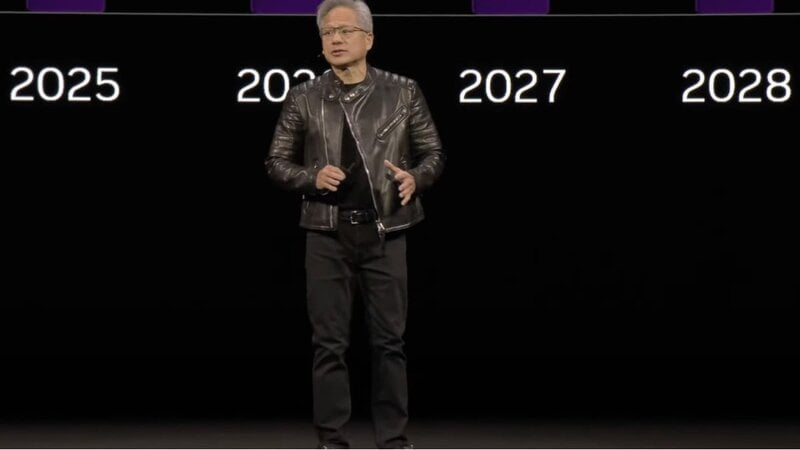
Nvidia’s eleven directors met in Santa Clara late on Wednesday, November 11, 2026, to decide whether Jensen Huang should stay on as chief executive of the company he founded in 1993. Several sources confirmed the meeting to Reuters, CNN and CNBC. By midday Thursday, the California headquarters had said nothing about Huang’s fate or a possible successor, and the company did not respond to requests for comment.
Prices filled the silence. The stock closed Wednesday’s regular session at $173.73, slipped to $158.78 in evening trading, and by around 6 a.m. Eastern was down roughly 6% ahead of the Wall Street open. Armina Rosenberg, co-founder of the Minotaur Capital fund, which holds Nvidia shares, told Reuters that the market is starting to price in an Nvidia without its founder “as the most likely scenario, not as a tail risk”.
What we know about Wednesday night’s meeting
Hard information is scarce, but enough has emerged to show how fast the climate has shifted. On Sunday the board opened an independent investigation into whether Huang had been “the target of a foreign intelligence operation”, following reports about his relationship with Alice Huang, an executive at the Singapore-based company Megaspeed whom US intelligence believes to be an agent of the Chinese services. The same statement expressed “confidence in Jensen and his team”.
On Tuesday the inquiry went to the New York law firm Wachtell, Lipton, Rosen & Katz. On Wednesday the situation deteriorated within hours. The New York Times reported a second relationship with a company executive who reported directly to Huang, citing an anonymous source; neither Huang nor Nvidia commented. The Wall Street Journal then reported that the board was preparing to remove him.
That second episode, according to Stacy Rasgon of Bernstein, makes it “much harder for the board to leave him in place”. A class action has also been filed in the United States alleging that investors were misled about the affair, on behalf of those who bought Nvidia shares between October 9 and November 8.
The board has every tool it needs. The bylaws allow the chief executive to be removed with or without cause by a majority of the eleven directors, all of them independent apart from Huang himself, on a board that, unusually for a group of this size, has no chairman. The founder owns about 3.6% of the share capital, far too little to block a decision, and losing the executive role would not automatically cost him his board seat. Bloomberg has reported that directors have been working for days with an outside search firm to identify replacements.
Colette Kress, the choice to steer the company through
If the board needs a quick fix, the name that comes up most often is the chief financial officer. Semafor has reported that some directors would favor Colette Kress as interim chief executive, and Citi analysts Atif Malik and Papa Sylla also point to her as the figure who could hold a steady course while the board weighs external candidates. Kress, 59, joined Nvidia in 2013 after a career spanning Microsoft, Cisco and Texas Instruments, and is, after Huang, the executive best known to the financial community.
Almost no one sees her as a permanent solution. At a company whose edge over competitors comes from technology, the absence of an engineering background weighs heavily. One analyst contacted by Reuters said the board will in all likelihood want an engineer in the top chair for the permanent job.
Ian Buck, the engineer who built CUDA
The in-house executive who best fits that profile is Ian Buck. He joined Nvidia in 2004 and is regarded as one of the fathers of CUDA, the software platform that for nearly two decades has tied developers and researchers to the group’s processors. He now leads the artificial intelligence products aimed at the big cloud operators and at high-performance computing. Business Insider puts his age at about 49, and those who know him describe him as a technologist who can solve fiendishly complex problems yet says little about himself.
On the prediction market Polymarket, which investors have watched closely this week, Buck is the favorite at roughly 33%, ahead of Kress at 30%. The scenario in which Huang stays in command was priced at just 12% during European morning hours. Reuters urges caution with these numbers, given that trading volumes remain modest. Buck does not appear among the executive officers listed in the company’s official filings, a detail that does not rule him out but shows how far from the spotlight he has stayed.
The external candidates, from Srouji to Haas
Outside the company, the most ambitious name is Johny Srouji, Apple’s head of hardware technologies and the architect of the in-house chips that allowed Cupertino to do without Intel processors. Several sources list him among the profiles under consideration, although the full roster of candidates for the permanent job remains confidential.
Rene Haas already knows the house. Before becoming chief executive of Arm in 2022 he spent seven years at Huang’s company. Shay Boloor of Futurum, who believes Nvidia today has no “obvious number two”, considers him an outside candidate not to be dismissed, even though his odds on Polymarket go no higher than 5%.
Press accounts also throw up the name of Lisa Su, who has turned AMD into Nvidia’s main competitor and whom newspapers have repeatedly described as a distant relative of Huang. Imagining her leaving the helm of a rival to cross to the other side of the field looks today more like a journalistic parlor game than a real possibility.
The two-headed leadership scenario and the family question
A middle way is circulating among investors. Rosenberg has suggested that the most realistic solution might be an interim leadership entrusted to the long-serving executives, perhaps with two co-chief executives side by side: one like Kress overseeing finances and markets, one like Buck handling product and technology. That arrangement would split between two people the roles Huang held alone for more than thirty years, at the risk of pushing the hardest choice back by a few months.
Further in the background is the family question, raised by some newspapers. Huang’s two children work at Nvidia, but the founder has ruled out handing them the baton. At a moment when the board must show it can decide a succession on its own, keeping it in the family looks like the least viable road.
Watch the quarterly results
Nvidia reports fiscal third-quarter results on Tuesday, November 17, after the Wall Street close. Reaching that date without knowing who will lead the company would hand analysts an unanswered question on the very day they should be focusing on the numbers.
Huang has always said he does not believe in succession plans and has built a flat structure, with dozens of managers reporting directly to him. For more than thirty years the face of Nvidia and that of its founder have been one and the same. Whoever is chosen, the first task will be to convince customers, governments and investors that the company can walk without the black leather jacket that became its symbol.
Editor’s note
This article was originally published in Italian on money.it by Flavia Provenzani on November 12, 2026 as «Nvidia, chi può sostituire Jensen Huang come CEO? I nomi dei candidati». It has been translated and adapted for an international audience by the Money.it International desk.