

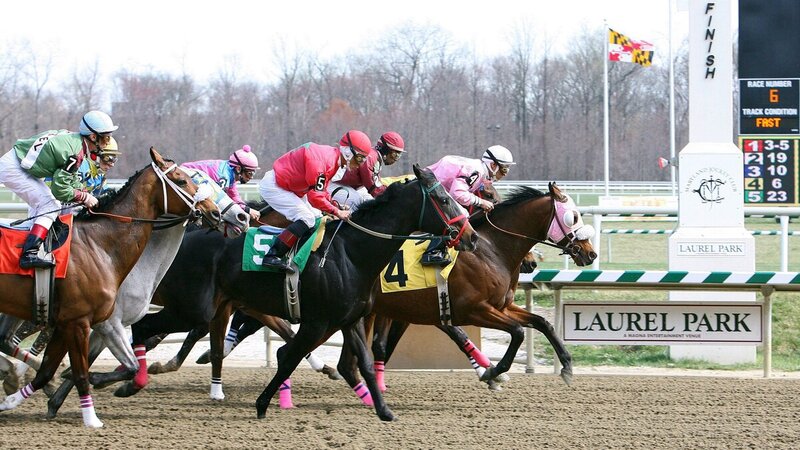
The 2026 Preakness Stakes is the second jewel of horse racing’s Triple Crown and the centerpiece of the Maryland racing calendar. This year it runs at Laurel Park in Laurel, Maryland — about 25 miles south of its traditional home — because Pimlico Race Course is in the middle of a state-funded rebuild that won’t be ready until the 2027 edition. The race is a 1 3/16-mile dirt test for three-year-olds, the post time is 7:01 p.m. ET, and NBC and Peacock have the broadcast in the US.
The total purse is $2,000,000, unchanged from 2025. The winning connections — owner, trainer, jockey, and breeding rights — split the lion’s share. Below is the full payout breakdown.
How is the $2 million purse split among the horses Saturday?
The Preakness pays the top five finishers and nothing beyond fifth place. Here is the standard split used by the Maryland Jockey Club for 2026:
- 1st place: $1,200,000 (60% of the purse)
- 2nd place: $400,000 (20%)
- 3rd place: $220,000 (11%)
- 4th place: $120,000 (6%)
- 5th place: $60,000 (3%)
The Kentucky Derby, by contrast, ran on a $5 million purse two weeks ago — more than twice the Preakness pot — and also stops paying after fifth place. Golden Tempo banked $3.1 million as the Derby winner, with $1 million to the runner-up. The Preakness pays less in total, in a more concentrated split, and pays nothing to horses 6 through 14 — so for the connections of a deep closer who finishes sixth or seventh, the day ends with nothing but the starter’s fee for entering the race and a long van ride home.
The winning trainer also takes home a sterling silver replica of the Woodlawn Vase, the original of which is held by the Maryland State Archives and only loaned out for the trophy presentation. The replica trophy is valued at roughly $30,000.
Who actually pockets the winner’s $1.2 million check?
The check is written to the ownership group, not the horse, and the owners almost never keep the full amount. Two players in particular take a slice off the top.
First, the winning trainer typically gets 10% of the winner’s share — that is roughly $120,000 out of the $1.2 million top prize. Second, the jockey usually takes 8% to 10% of the winning purse, another $96,000 to $120,000, plus a smaller mount fee of a few hundred dollars regardless of finish. After agents, valet, and a small cut to the stable workforce, the owner typically nets between $800,000 and $900,000 on paper from the race-day check itself.
But the real money isn’t the check. It is the stallion-rights bump that comes with a Triple Crown classic win. A colt who wins a leg of the Triple Crown can see his stud-rights valuation jump by tens of millions of dollars overnight. Sovereignty, the 2025 Kentucky Derby and Belmont Stakes winner who was named 2025 Horse of the Year, is racing on as a four-year-old in 2026 specifically because his connections judged the on-track value of a stronger résumé to outrank an early stallion deal. The Preakness check funds the next month of operations; the breeding deal that follows funds the next decade.
The same dynamic explains why ownership groups are stacked with syndicates of 10, 20, sometimes 50 people. The economics resemble what we have covered before in our breakdown of how athlete wealth actually compounds — see our piece on Michael Jordan’s ride from athlete paychecks to billionaire status, where the on-the-field income was a fraction of what the licensing and equity built later. Thoroughbred ownership runs on the same logic: the trophy is the marketing event, not the cash event.
Why is the Preakness at Laurel Park instead of Pimlico this year?
The short answer is construction. The longer answer is the largest publicly financed horse-racing project in the history of Maryland sports. In 2024, the state legislature authorized the Maryland Stadium Authority to issue $400 million in bonds to finance the demolition and complete reconstruction of Pimlico Race Course. Demolition began after the 150th Preakness ran at Pimlico in May 2025, and full construction has been underway since July 2025.
The new Pimlico is scheduled to open in time for the 2027 Preakness. For one year — 2026 only — the race relocates to Laurel Park, the same dirt-track facility about 25 miles south where most of Maryland Thoroughbred Racing’s spring meet already runs. The migration is the first time in well over a century that the Preakness is being staged away from its Old Hilltop home in north Baltimore.
For Laurel Park, the move is a one-shot showcase: a 14-horse field, an NBC primetime window, and a rare chance to host a Triple Crown classic on a track that has otherwise become known as the workmanlike home of the Maryland spring meet. For Pimlico, it is a bet that $400 million can revive an aging neighborhood — Park Heights — that has watched the rest of Baltimore’s stadium spending land elsewhere for two decades.
Why won’t there be a Triple Crown winner in 2026?
The 152nd Kentucky Derby on May 2 produced one of the most surprising stories in modern racing history: Golden Tempo, a 23-1 long shot, came from last place to win the Run for the Roses, and his trainer Cherie DeVaux became the first female trainer ever to win the Kentucky Derby.
But Golden Tempo’s connections announced almost immediately that the colt would skip the Preakness and point straight to the Belmont Stakes on June 6. That decision — increasingly common among modern Derby winners — kills the Triple Crown bid before it can start. It is the second straight year a Kentucky Derby winner has skipped Baltimore: last year’s champion Sovereignty also passed, before going on to win the Belmont himself.
Two horses from the Kentucky Derby field are running back in the Preakness — Ocelli and Incredibolt — joined by fresh shooters who skipped Louisville, including the morning-line favorite Iron Honor.
Who’s the favorite Saturday in the 14-horse field?
The morning line favorite is Iron Honor at 9-2, a son of 2016 Kentucky Derby winner Nyquist who skipped Louisville and comes in off a sharp 2026 Gotham Stakes win at Aqueduct. Next come three colts bunched at 5-1: Taj Mahal, a perfect three-for-three lifetime — every win recorded at Laurel Park itself; Chip Honcho, the fresh shooter from a New York-based barn; and Incredibolt, the Steve Asmussen-trained colt who finished sixth in the Kentucky Derby at 20-1.
For comparison, the Indianapolis 500 is a week later and pays a much bigger purse — see our breakdown of the Indianapolis 500 prize money breakdown on May 24, where last year’s record purse hit $20.28 million. The Preakness at $2 million looks small next to that number, but a Triple Crown classic also pays in a way the Indy 500 cannot: a stallion-rights jackpot that compounds for the next 15 to 20 years.
The other useful prize-money benchmark is tennis. For context, the Australian Open 2026 prize money structure now pays out to 128 players in each draw, with the champions clearing several million each. Thoroughbred racing concentrates the money in a way no other major sport does: 14 starters in the gate Saturday night, and nine of them walk away with literally zero.
What to watch Saturday night
Three numbers will define the night. The first is the post time: 7:01 p.m. ET on NBC, with the full Peacock stream including the undercard from 5 p.m. ET. The second is the winner’s check: $1.2 million, with the trainer and jockey peeling off roughly $120,000 each. The third — and the one that actually matters for the next decade of breeding — is the stallion-rights valuation that follows the Preakness winner into the Belmont on June 6.
Iron Honor is the morning-line favorite. Golden Tempo is the storyline that isn’t running. Laurel Park is the stage. The Woodlawn Vase replica is the only trophy that goes home with the winner — for one year, before it heads back to a rebuilt Pimlico in 2027.
Sources: NBC Sports, “When is the Preakness Stakes? Here’s everything to know for 2026” — https://www.nbcwashington.com/news/sports/triple-crown/preakness-stakes-watch-date-time-horses-location-prize-money-2026/4103203/. Yahoo Sports, “Preakness Stakes payout breakdown: How much prize money will the winner get in 2026?” — https://sports.yahoo.com/articles/preakness-stakes-payout-breakdown-much-074002737.html. Maryland Stadium Authority, “Redevelopment of the Pimlico Racing Facility and New Training Facility” — https://mdstad.com/redevelopment-pimlico-racing-and-laurel-park-racing-facilities. ESPN, “The new venue, the front-runners and one reason to bet every horse in the 2026 Preakness Stakes” — https://www.espn.com/espn/betting/story/_/id/48762116/2026-preakness-stakes-odds-bets-horses-triple-crown-golden-tempo. TwinSpires, “2026 Preakness Stakes purse: How much prize money the winning owner and trainer will earn” — https://www.twinspires.com/edge/racing/preakness-stakes/2026-preakness-stakes-purse-how-much-prize-money-the-winning-owner-and-trainer-will-earn/.}