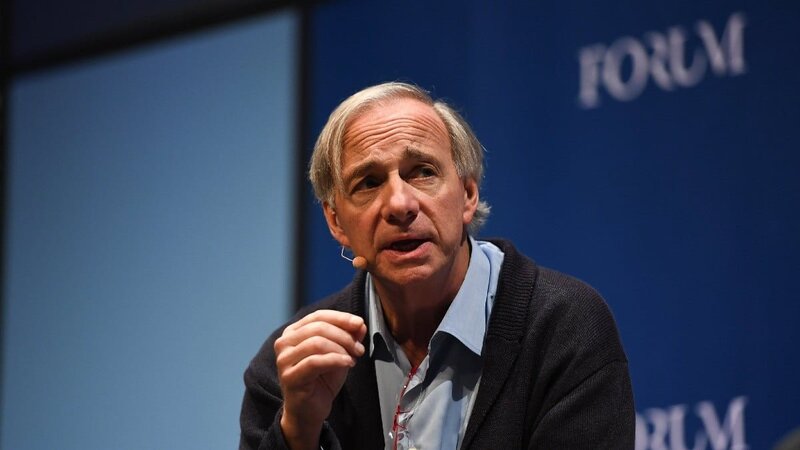
Ray Dalio, founder of hedge fund Bridgewater Associates, has offered fresh comments on artificial intelligence and the risk of a speculative bubble tied to its growth.
In his remarks, Dalio effectively validated both sides of the AI debate: those who focus on the positive effects of AI adoption and business growth, and those who tend to highlight its downsides, sometimes sketching apocalyptic scenarios for humanity as a whole — as happened recently when an AI safety researcher at Anthropic sounded an alarm about the technology.
Unprecedented productivity gains, but bubble risk too
Dalio’s view sits somewhere in the middle. On one hand, said the investor, one of the most closely followed voices in finance, AI will produce unprecedented benefits for productivity.
On the other hand, artificial intelligence will further widen wealth inequality, while at the same time fueling a gigantic bubble in stock markets.
“The AI bubble will have devastating effects on many people”
For Dalio, artificial intelligence is «one of the greatest forces capable of boosting productivity and changing the world.» At the same time, it is also «a bubble that, in the course of its evolution, will have devastating effects on many people.»
Dalio made the comments in a video prepared for the World Economic Forum (WEF):
«There’s a process underway in which big new technologies are something everyone wants to invest in, because they’re going to change the world. And then people over-invest, debt gets created, and you enter into a certain dynamic that, in a way, generates a bubble, which in turn leads to a crash.»
Dalio’s argument, as a Fortune article noted, is backed up by history: during the dot-com bubble, the Nasdaq rose 86% in 1999 alone, then crashed 77% from its peak by October 2002, wiping out trillions of dollars in market value.
At the same time, the internet went on to transform the economy and society at a deep level.
JPMorgan chief executive Jamie Dimon has also weighed in on the danger of an AI bubble. Unlike some of the more alarmist warnings circulating on Wall Street, Dimon has said he believes only some corners of the AI sector have entered bubble territory — not the entire ecosystem.
Dalio: the real question is how AI-driven wealth inequality will be managed
Dalio’s comments point in a similar direction. The investor warned, however, that while boosting some people’s wealth, artificial intelligence will widen income inequality:
«Whoever comes up with big ideas to invent something productive gets access to the capital that lets them do it,» he said, adding that «the consequence is the creation of very wide wealth gaps.»
The point, he argued, is that «against those who benefit from these miracle technologies capable of boosting productivity, most people don’t benefit from them to an adequate degree.»
That reasoning led the Bridgewater founder to conclude that «the real question isn’t so much about AI, but about human nature,» since artificial intelligence «will have enormous implications for differences in wealth and opportunity.»
The question that needs to be asked, then, is this: «How will [these inequalities] be managed? Those are the big questions of our time.»
Notably, many of the top names on the Bloomberg Billionaires Index have built their fortunes through technology companies that are investing billions of dollars in AI infrastructure and transformation.
At the top of the list is Elon Musk, founder of Tesla and SpaceX, followed by Google co-founder Larry Page and Amazon founder Jeff Bezos.
Editor’s note
This article was originally published in Italian on money.it by Laura Naka Antonelli on September 23, 2026 as «L’avvertimento di Ray Dalio: “l’AI sarà miracolosa per la produttività, ma creerà una bolla devastante”». It has been translated and adapted for an international audience by the Money.it International desk.