

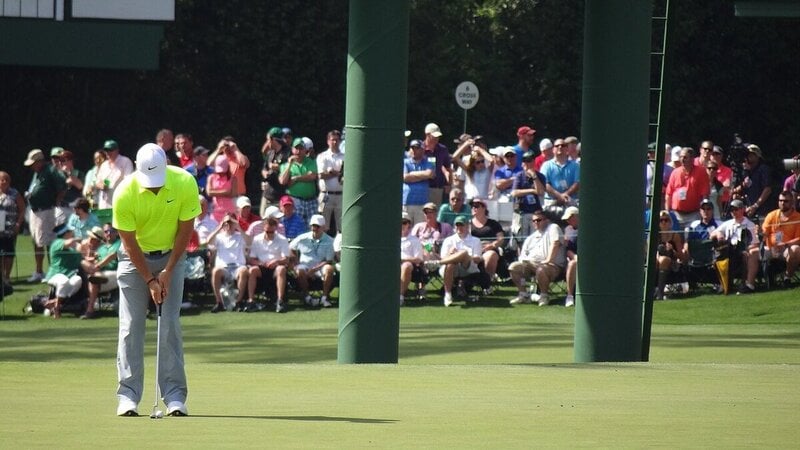
Rory McIlroy will tee off Sunday at Aronimink three strokes behind the leader, with $3.69 million in his sights.
That payout — the winner’s share of the record $20.5 million PGA Championship purse handed out by the PGA of America this week — would be a meaningful number for most professional athletes. For McIlroy, it is essentially a rounding error on a fortune that has been growing for nearly two decades. The bigger story is what a sixth major championship would do to the commercial value of the man widely regarded as the most marketable golfer on the planet since Tiger Woods.
What is Rory McIlroy’s net worth in 2026?
The most widely cited figure puts Rory McIlroy’s net worth in 2026 at roughly $250 million, a number echoed by Celebrity Net Worth and tracked by several independent sports-business outlets. Other estimates stretch the range from around $200 million on the conservative end to $300 million-plus on the more generous side, depending on how endorsement contracts, equity stakes and real estate are valued.
What is not in dispute is the trajectory. After winning the Masters in April 2025 to complete the career Grand Slam — the first European ever to do it, and only the sixth player in history after Sarazen, Hogan, Player, Nicklaus and Woods — McIlroy’s commercial value jumped sharply. Forbes ranked him the third highest-paid golfer in the world in its 2025 list, with total annual income of $84 million.
Where does the money actually come from?
McIlroy’s earnings split into three clear buckets.
The first is on-course prize money. As of April 2026 his PGA Tour earnings stand at $110.2 million, second all-time only to Tiger Woods. Add in roughly €50 million on the DP World Tour and $43 million in FedEx Cup bonuses, and his total tournament earnings worldwide are north of $290 million since he turned professional in 2007.
The second bucket is endorsements, and this is where the real money lives. Forbes estimates McIlroy pulls in around $45 million a year from sponsors. His Nike deal, signed in 2017 and reported at the time to be worth roughly $200 million over ten years, is the anchor. TaylorMade — the equipment partner that took over from Nike’s discontinued clubs business — handed him another $100 million across a ten-year agreement that same year. Workday, Omega and Optum round out a portfolio that has made him a fixture in airport billboards from JFK to Heathrow.
The third bucket is newer and harder to pin down: McIlroy holds a long-term equity grant through PGA Tour Enterprises, the for-profit arm created in the wake of the LIV Golf split. That stake is estimated to be worth roughly $50 million over time if the tour’s commercial reset performs as projected.
How does a sixth major change the math?
The $3.69 million winner’s share is only the headline number. A Wanamaker Trophy on Sunday would also trigger performance bonuses embedded in several of McIlroy’s sponsor contracts, push him up the FedEx Cup standings, and — most importantly for his long-term balance sheet — strengthen his hand when the Nike deal expires at the end of 2027.
A renewed contract, or a fresh deal with a competing apparel brand, would arrive on the back of a player who has now won six majors and a career Grand Slam, not the player who endured an 11-year drought between his fourth and fifth. Industry observers have suggested the next McIlroy apparel contract could comfortably exceed the original $200 million, if he stays at this level.
How does he stack up against other rich athletes?
McIlroy’s net worth sits comfortably inside the top tier of global sport. He is wealthier than every active player in the highest-paid NBA salaries ranking, and more than 20 times wealthier than rising basketball star Caitlin Clark, whose $12 million net worth we broke down last week.
In golf, only Tiger Woods — whose net worth has long been estimated above $1 billion — towers above him. Among active players, no one is even close.
What’s at stake beyond Sunday’s check?
If he wins, McIlroy will become only the second man in the modern era — after Tiger Woods — to add another major after completing the career Grand Slam. The financial upside is real, but the historical upside is bigger.
For a player who once described chasing the green jacket as «a daily mental burden», the freedom of playing with nothing left to prove is exactly the version of McIlroy that opponents have always feared most. Sunday at Aronimink, that version tees off late in the afternoon. The $3.69 million check is just the appetizer.
[1]