

You are coming into Monday with a 72-hour Russia–Ukraine ceasefire that, on paper, expires Tuesday at midnight Moscow time and that, in practice, has already been violated by both sides since Saturday. The S&P 500 closed Friday at a fresh all-time high of 7,398.93 with Brent settling near $101 — a tape that has decided, again, that geopolitical risk is something you fade rather than something you hedge. The April Consumer Price Index lands Tuesday at 8:30 a.m. ET, the Trump–Xi summit lands Thursday, and the Victory Day truce ends in between. Three binaries, five sessions, one trade book.
The setup is asymmetric in a way the headlines do not capture. If Trump extends the truce — even by 48 hours — defense names bid on the pre-existing Iran premium give back $15 to $25 in a session, while oil ETFs and integrated majors lose the war bid carrying them since February. A truce expiry without extension is the mirror image: a defense leg up, Brent toward $108, and an energy-equity bid that the Strait of Hormuz tape has been telegraphing for weeks. Either way, the move is in single-name beta, not the index.
What makes this Monday different is the positioning. Defense backlogs have rerated structurally — Lockheed Martin on $194 billion in committed orders, Northrop Grumman on $95.7 billion — but the cyclical bid has come almost entirely from headline algorithms tied to Hormuz and Donbas. That bid is mean-reverting on truce news in a way the structural one is not. The question is not whether to own these names; it is which of them you reload on the dip and which you trim into the bounce.
The four tickers below are the ones the professional desks I track were pricing into the Monday open as of Friday’s bell. Each has a defined trigger, a defined invalidation, and a target price you can mark a position against. Continue reading for the full breakdown — the setup is in the next four sections.
What’s at Stake When the Ceasefire Ends Tuesday Night
Read the truce as a four-line term sheet, not a peace deal. The agreement Trump announced on May 8 covers three calendar days — May 9, 10 and 11 — with a suspension of kinetic activity and a thousand-for-thousand prisoner exchange. The operative expiry is the end of Victory Day, May 11 Moscow time, which translates to 17:00 ET on Monday — the close of the U.S. cash session.
That timing matters more than the deal itself. The market gets the entire Monday session to price the binary while the truce is still technically in force. Headlines on extension talks, prisoner exchanges and front-line activity will hit during liquid hours, which means the defense and energy complex moves in real time on the wire — not on a Sunday futures gap. The Iran/Hormuz premium is still in the price. The Russia/Ukraine premium, which had partially bled out into Friday’s close, reloads from the cash open if the morning calls show talks faltering.
The base case among the desks I track is no formal extension by Monday’s close, a soft tail through Wednesday, and a return to prior tempo by Thursday’s Trump–Xi summit. The risk case is a 48-hour formal extension announced before the European open. Both are tradable. What is not tradable is being max long defense and max long oil at the same time into a binary that resolves intraday.
The Three Defense Names That Move on Truce Headlines
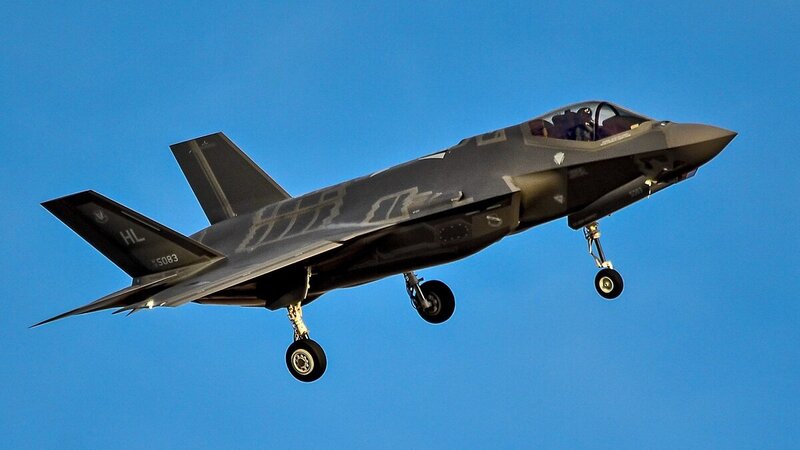
Lockheed Martin (LMT) closed Friday near $513, with consensus targets clustered between $595 (Jefferies, Hold) and a $665 median across 31 analysts, and a structural backlog of $194 billion anchored to the F-35, PAC-3 and Sentinel programs. The 50-day moving average sits in the $498–502 zone — that is your line in the sand on a truce-extension dip. A move below $498 on volume tells you the headline algorithms are unwinding the Iran premium too, not just the Russia premium. Reload zone: $485–495. Upside target into a truce breakdown plus a hot CPI: $545.
RTX (Raytheon) is the cleanest expression of the truce trade because Patriot, NASAMS and AMRAAM stockpile rebuilds are the contracts most directly tied to a sustained European theater. The stock is up roughly 67% over the trailing twelve months and trades into Monday at Moderate Buy consensus. The fade trade is into a confirmed extension — a $3–$4 single-session pullback is the historical template. The reload trade is a close back above the Friday print on Tuesday volume.
Northrop Grumman (NOC) is the asymmetric pick. The stock closed at $549.52, roughly 29% below its 52-week high of $774. The B-21 Raider ramp and the $95.7 billion backlog are not fully in the consensus model. Any truce breakdown that triggers a fresh European supplemental puts NOC on a path back toward $620 within the quarter, with $585 as the technical retracement worth marking. General Dynamics (GD) at $346.53 is the lower-conviction sibling — defense exposure with less single-program risk, but a smaller truce delta.
Energy: Why Brent’s Sunday Open Tells You What Monday Looks Like
Brent has spent the past week in the $99–$102 corridor, settling Friday near $101 after the latest CENTCOM action in Hormuz. The number to watch is the Sunday electronic open: a print above $103.50 in thin Asian liquidity is the signal that the truce extension talks are not progressing — and that the Iran tape is reloading on top of it. A print below $98.50 says the opposite, and you front-run the Monday gap with a defensive trim on the energy book.
ExxonMobil (XOM) closed Friday near $144.30, having traded a $143.92–$146.70 range. The integrated business — Permian and Guyana — is not what is in play here; the geopolitical premium that took XOM from $118 in February to $146 by early May is. A clean truce extension plus a soft CPI knocks $5–$7 out of XOM in a single session. A truce breakdown plus a hot CPI puts the stock through the $148 prior high on the way to $155, the level the Q1 earnings beat would have justified absent the Iran-related shipment disruption. The fact that Exxon and Chevron both fell 5% intraday on a single Iranian peace-overture headline last month tells you exactly how concentrated the war premium has become in these names.
The Levels to Watch at the U.S. Cash Open
Mark these on a card before Monday’s bell:
- S&P 500 (cash): 7,398 is Friday’s record. A gap-up open above 7,415 on a confirmed extension is a fade — concentrated longs lighten into strength every time. A gap-down below 7,360 is the line where the Trading-What-to-do-when-there-is-Volatility playbook activates.
- Brent (front-month): $103.50 = truce broken in the tape. $98.50 = truce holding. Anything in between is noise.
- LMT: reload $485–495, target $545. Invalidation: weekly close below $478.
- RTX: fade above Friday’s high on extension news; reload close back above on Tuesday.
- NOC: accumulation zone $530–545, target $620 on a 90-day swing. Invalidation: weekly close below $515.
- XOM: trim above $148; reload at $138 with a stop below $134.
The professional play into Monday is not to be more right than the consensus on whether the truce holds. It is to have a position sized for either tail, with the trim and reload zones already on the ticket before the open. As the Wall Street record-high tape with a war in the Persian Gulf has demonstrated since February, the index can absorb almost anything in the short run. The single names cannot. If the Monday wire shows extension talks progressing, you sell defense into the bounce and buy energy on the dip. If it shows them breaking, you do the inverse. Plan the trades before the headlines arrive — the headlines are coming whether you are ready or not.
Sources: Reuters and Washington Post coverage of the Russia–Ukraine three-day Victory Day ceasefire announced May 8, 2026, including the Sunday violation accusations from Kyiv. Bloomberg, Al Jazeera and Fortune reporting on Trump’s “beginning of the end” remarks, May 9, 2026. S&P 500 closing level for May 8, 2026 (CNBC). Brent crude front-month settlement and Hormuz incident reporting (TradingEconomics; CENTCOM via Reuters), May 8, 2026. LMT, RTX, NOC, GD, XOM closing prices and 52-week ranges (Yahoo Finance, Stock Analysis, MarketBeat), May 8–10, 2026. Lockheed Martin and Northrop Grumman backlog disclosures, FY24 10-K filings; SIPRI Trends in International Arms Transfers, March 2026. Cleveland Fed Inflation Nowcasting tool, May 6, 2026 update. CNBC, “Exxon Mobil and Chevron earnings fall as Iran war disrupts oil shipments,” May 1, 2026.