
While the overall level of US import duties has changed little, the new regime is reshaping the competitive landscape of global trade, giving European exporters an unexpected advantage while increasing pressure on countries such as Brazil and China.
European exporters have emerged in a surprisingly favourable position, while countries such as Brazil, China and several Asian manufacturing hubs face higher effective tariffs. Yet analysts warn that Europe’s advantage may prove temporary as Washington prepares additional trade investigations that could trigger a fresh wave of duties.
The new measures illustrate a broader shift in US economic strategy: tariffs are no longer simply bargaining tools but have become a structural element of American industrial and geopolitical policy.
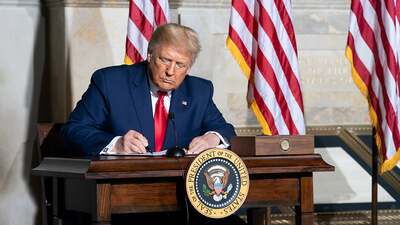
A New Legal Foundation for Trump’s Trade Agenda
The revised tariff regime follows a major legal setback for the Trump administration earlier this year, when the US Supreme Court ruled that the blanket tariffs introduced after the so-called “Liberation Day” announcement in April 2025 exceeded presidential authority.
Rather than abandoning his protectionist agenda, Trump has rebuilt it using Section 301 of the Trade Act of 1974, a long-established legal mechanism allowing the United States to impose trade measures in response to unfair commercial practices.
Instead of applying one universal tariff, Washington has now issued dozens of country-specific directives. This makes the policy significantly more difficult to overturn in court, since any legal challenge would have to target individual countries rather than the entire tariff framework. From the administration’s perspective, the new approach provides far greater legal certainty while preserving the political objective of encouraging domestic manufacturing.
Europe Receives an Unexpected Boost
Among the biggest surprises is the relative improvement for several European economies.
According to research undertaken by Global Trade Alert on the effective level of the tariffs applied to each country, Germany, France, Italy, Spain and the United Kingdom all benefit from slightly lower effective rates compared with the temporary measures introduced earlier this year. The reasons are largely technical. Many European exports fall within categories that qualify for exemptions, while the new system avoids “stacking” multiple tariffs on top of one another for many EU products.
Although the reductions are modest, they improve the competitiveness of European exporters in one of their largest overseas markets. The advantage stems not from preferential treatment but from the interaction between product-specific exemptions and the composition of European exports, with sectors such as luxury goods, footwear and textiles benefiting more than many Asian and Latin American competitors.
Brazil Becomes the Biggest Loser
If Europe has reason for cautious optimism, Brazil faces a much less favourable outlook. Its effective tariff rate, according to Global Trade Alert’s research, has jumped from approximately 11% to nearly 18%, making it the country most heavily affected by the latest revisions. The higher tariffs coincide with deteriorating political relations, which have expanded beyond traditional trade disputes to include broader geopolitical disagreements.
For Brazilian exporters of agricultural products, metals and industrial goods, higher tariffs risk reducing competitiveness in the US market at a time when global demand is already slowing. Other emerging economies, such as China, Vietnam, Indonesia, Chile and Colombia, also face higher effective duties, reinforcing a trend toward increasing fragmentation in global trade.
Brazilian President Luiz Inácio Lula da Silva has rejected Washington’s pressure, arguing in a Washington Post op-ed that “Brazil’s destiny is for Brazilians alone to determine.” His comments underline how tariff disputes are increasingly spilling over into broader diplomatic relations.
Tariffs Become Industrial Policy
The latest tariff overhaul demonstrates how tariffs have evolved beyond their traditional role as negotiating leverage. The Trump administration increasingly views import duties as a permanent instrument of industrial policy designed to encourage companies to relocate production to the United States while reducing dependence on strategic competitors. Whether this strategy proves sustainable remains uncertain. Although tariffs may encourage some firms to relocate production in the short term, many economists argue that prolonged protectionism could increase costs for businesses, reduce trade flows and ultimately weigh on economic growth.
This strategy aligns with broader efforts to strengthen domestic manufacturing in sectors ranging from semiconductors and electric vehicles to pharmaceuticals and critical minerals, where the US has long relied upon foreign imports. However, unlike earlier trade disputes that focused primarily on reducing trade deficits, today’s tariff policies are closely linked to national security, supply-chain resilience and technological competition.
The China Factor Remains Central
Although Europe currently benefits from lower effective tariffs, China remains the principal target of Washington’s long-term strategy. Successive US administrations, both Republican and Democrat alike, have sought to reduce dependence on Chinese manufacturing in strategic sectors.
The latest tariff adjustments continue that trajectory by maintaining pressure on Chinese exports while encouraging multinational companies to diversify supply chains.
For many businesses, however, relocation remains costly and time-consuming. Rather than abandoning China entirely, firms are increasingly pursuing a “China plus one” strategy, expanding production into countries such as India, Mexico and Southeast Asia while retaining part of their Chinese operations.
A More Fragmented Global Trading System
The latest tariff overhaul confirms that protectionism is becoming an enduring feature of the international economy rather than a temporary political phenomenon. Instead of pursuing comprehensive trade liberalisation, major economies are increasingly using tariffs, industrial subsidies and investment restrictions to pursue strategic objectives. For businesses, this means navigating a far more complex commercial landscape where market access depends not only on competitiveness but also on geopolitics.
While Europe has emerged as a relative winner in this latest round, the broader trend points towards a more fragmented global trading system in which trade policy is increasingly shaped by security concerns, industrial strategy and geopolitical rivalry.
As the United States prepares further investigations and other major powers respond with their own defensive measures, the era of predictable globalisation appears to be giving way to one defined by selective economic partnerships and strategic competition.