

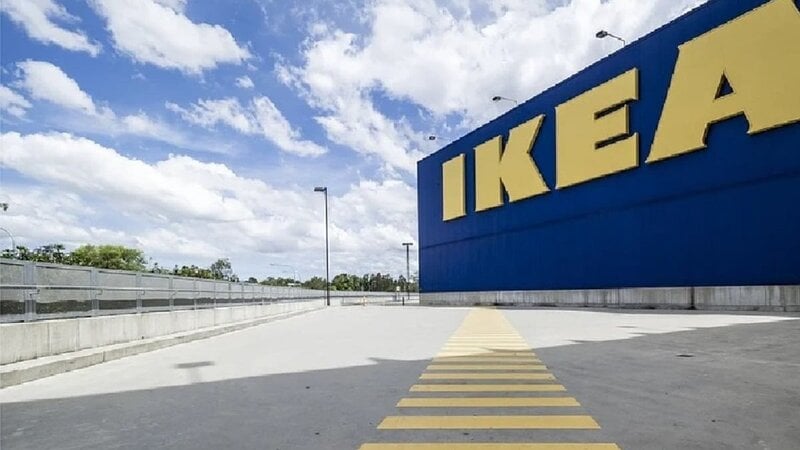
In 2024, IKEA generated €45.1 billion (about $48.7 billion) in revenue, and its official website logged more than 4.6 billion visits. Worldwide there are over 480 stores belonging to the company founded in 1943 by Ingvar Kamprad, spread across 63 countries and employing more than 170,000 people.
A global giant with a peculiarity: IKEA has no conventional chain of command. It operates as a franchising system split into two corporate groups, each headed by a foundation. Inter IKEA Group owns the brand and the IKEA Concept and acts as the franchisor. Ingka Group is the franchisee and runs most of the stores.
Two groups, one company
One of the secrets behind IKEA’s success is its unusual dual structure, in which management of the brand is kept separate from retail operations. The system was devised by founder Ingvar Kamprad to guarantee the group’s independence and longevity for generations to come.
Inter IKEA Group sets strategy, develops products, manages the supply chain and licenses the IKEA concept. Ingka Group, by contrast, runs the stores and generates most of the revenue.
The franchising model is unusual too. IKEA stores are not branches answering to a parent company; they operate under agreements with Inter IKEA Systems B.V., the division within Inter IKEA Group that holds the rights to the IKEA concept.
Money moves in two directions. Franchisees buy products wholesale from Inter IKEA Group and pay 3% of net revenue as a franchise fee.
The foundations
The real secret to IKEA’s longevity is the absence of owners. That is not a joke. Neither of the company’s two arms is owned by shareholders or by members of the Kamprad family. At the top sit two foundations with no beneficial owners.
A foundation does not answer to shareholders and cannot be bought, sold or inherited through traditional channels. That structure makes a hostile takeover nearly impossible and frees the company from the quarterly pressure that publicly listed companies typically face.
It is no coincidence that Ingka’s leadership has often said it thinks in terms of generations, not quarters.
IKEA’s main «shareholders»
The Stichting Ingka Foundation is the anchor of IKEA’s retail operations. Based in Leiden, in the Netherlands, it was set up by Kamprad himself in 1982 to keep control of the stores while safeguarding the integrity of the company’s mission.
85% of the foundation’s net profits are reinvested in the company’s development, while the remaining 15% is paid as a dividend to the Stichting IKEA Foundation for charitable purposes.
The Inter IKEA Foundation, meanwhile, became the owner of Inter IKEA Holding after the 2023 split from the Interogo Foundation. Its purpose is to run the IKEA business, to «safeguard» the mission and to oversee Inter IKEA Systems, the entity that owns the brands, logos and intellectual property rights.
Editor’s note
This article was originally published in Italian on money.it by Andrea Fabbri on August 03, 2026 as «Chi c’è dietro l’impero di Ikea?». It has been translated and adapted for an international audience by the Money.it International desk.