

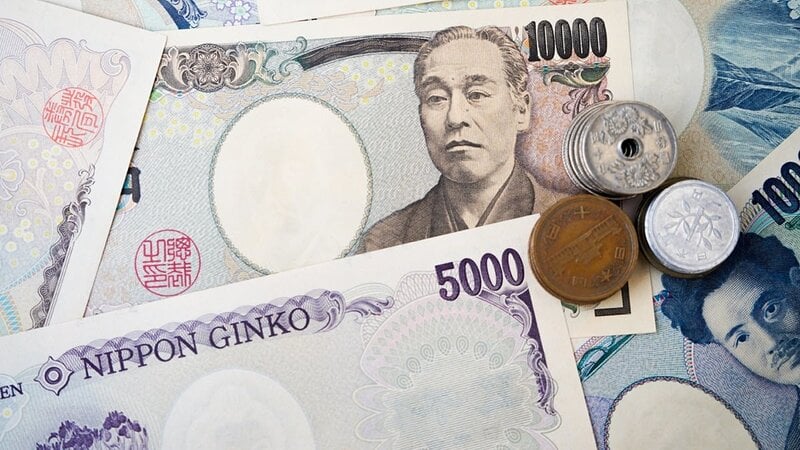
Today the yen fell to its lowest level against the dollar in 39 years, hitting 163 on USD/JPY amid a sharp acceleration in dollar buying, while Brent crude futures pushed above $92 a barrel on rising tensions between the United States and Iran.
This move is not an isolated event but the result of a combination of geopolitical factors, Japanese domestic economic policy, and structural dynamics in the currency market that are reshaping the outlook for Japan’s economy and for global capital flows.
The USD/JPY exchange rate moved from levels around 162.3–162.5 recorded just days earlier (July 17–21, 2026) to a sustained break above 163, with intraday peaks confirming the breach of the psychological and technical threshold of 162.36 already touched on June 30, 2026 — marking the lowest level since 1986.
Why the yen is falling
Tensions in the Persian Gulf, with a concrete risk of disruptions or threats to transit through the Strait of Hormuz, have pushed crude prices higher: Brent accelerated past $92, a level that immediately inflates Japan’s energy bill. The country imports more than 90% of its energy needs, and its June 2026 trade deficit was already affected by these rising costs.
When the price of oil rises by $10 a barrel, Japan’s energy bill increases by roughly 4–5 trillion yen a year, worsening the current-account balance and generating structural demand for dollars to pay for imports. This mechanism amplified yen selling by importers and energy companies, contributing directly to the break of the 163 level.
At the same time, market expectations tied to the economic plan of Prime Minister Sanae Takaichi have added further downward pressure on the yen. Takaichi’s leadership has emphasized a “responsible but proactive” fiscal policy, with massive investment in 17 strategic sectors (artificial intelligence, semiconductors, defense, biotechnology, shipbuilding) financed in part through public debt, and an approach that markets read as less aggressive on rate hikes than previously hoped.
The Bank of Japan had already raised its benchmark rate to 1% in mid-June 2026, the highest level since 1995, pairing the move with yen purchases and adjustments to pension-fund investments. However, the absence of immediate plans to revise the asset allocation of the state pension funds (GPIF, the Government Pension Investment Fund) disappointed hopes for greater support of the currency through domestic capital flows. The yield gap between 10-year U.S. Treasuries (around 4.63%) and Japanese government bonds remains wide, sustaining the carry trade and capital outflows from Japan into dollar-denominated assets.
What it means for Japan’s economy
The implications of such a weak yen are profound. On the export front, big Japanese multinationals such as Toyota, Sony, Honda, and Panasonic are getting a strong boost: every point of yen weakness against the dollar generates additional yen profits estimated in the tens of billions for automakers and electronics firms. Consensus estimates suggest a stable exchange rate of 160–165 could add 1–2 percentage points to operating-profit growth for companies listed on the Nikkei 225 in the second half of 2026. That advantage, however, is partly eroded by the rising cost of imported raw materials, which for many supply chains (semiconductors, chemicals, food) account for a significant share of production costs.
For Japanese households the impact is clearly negative. Imported inflation tied to energy and food has already pushed the core consumer price index steadily above the Bank of Japan’s 2% target, but real wages continue to struggle to keep pace. At an exchange rate of 163, the cost of an imported barrel of oil rises by roughly 15–18% compared with a rate of 140, translating into electricity and gas bills 10–12% higher year over year for the average consumer. The June 2026 trade deficit, already several trillion yen in the red, risks worsening further if Brent stays above $90, shrinking the current-account surplus that has historically supported the yen.
Bitcoin as a safe haven
The prolonged weakness of the Japanese currency has pushed many Japanese companies and investors to diversify their reserves into digital assets. According to Bloomberg estimates, Japanese companies increased their purchases of Bitcoin and Ethereum by 28% compared with the previous month, bringing total crypto allocations by listed companies to about $4.8 billion, up from $3.7 billion at the end of June. Many firms now prefer Bitcoin to 10-year U.S. Treasuries (yielding 4.63%), given the yen’s 22% loss of value over the past 12 months.
The yen-funded carry trade continues to play a key role: an estimated $180 billion is still invested in long positions on risk assets (including Bitcoin and Ethereum) financed with yen loans at costs close to zero. This flow has supported crypto-market liquidity in recent weeks. As USD/JPY touched 163, Bitcoin held steady between $66,150 and $66,450, posting an intraday change of just +0.4%. Still, the 30-day correlation between the yen and Bitcoin has shifted to -0.87, confirming that further weakness in the Japanese currency tends to generate short-term downward pressure on crypto through possible carry-trade unwinds.
A move in the exchange rate toward 165–170 could trigger liquidations of roughly $12–15 billion in yen-funded positions, according to Coinglass data, with Bitcoin’s realized volatility potentially rising 18–22% within days. Over the medium term (6–12 months), however, the narrative reverses: Metrical Japan found that 41% of Japanese retail investors under 40 now consider Bitcoin an alternative store of value against imported inflation, with net inflows into Japanese Bitcoin ETFs of $870 million in the past four weeks alone.
Editor’s note
This article was originally published in Italian on money.it by Redazione Money Premium on July 22, 2026 as «Perché il crollo dello yen ai minimi dal 1986 è una buona notizia per il Bitcoin?». It has been translated and adapted for an international audience by the Money.it International desk.