

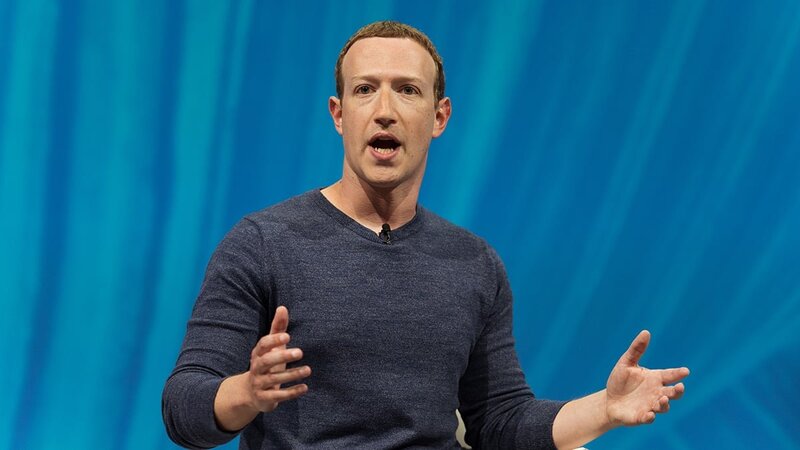
Mark Zuckerberg has tried to lift the morale of the employees still at Meta after the latest wave of layoffs, which over the past few months has pushed out roughly 8,000 people, about 10% of the workforce. The move, however, had the opposite effect.
The founder of the social-media giant announced a hackathon for July, a company event devoted to developing new ideas and projects. He also promised many workers a personal desk, doing away with the shared-seating system the US company had adopted in recent years. Both initiatives were met with irritation by much of the staff.
The offer that blindsided Meta employees
In an internal memo circulated on Friday, June 19, Zuckerberg framed the event as a moment of collective sharing and fun. The reaction, though, was icy. Meta has run hackathons for years, but after last month’s cut of 8,000 jobs, about 10% of the workforce, the initiative felt out of place. «I’m already busy keeping my team running. I have no incentive to take part, and I don’t even have the time», one employee wrote in an internal message quoted by Wired.
Other workers voiced the same discomfort. «I don’t think this company still supports a hackathon culture», one staffer observed, noting that employees are being asked to handle an ever-growing workload with less support, even as colleagues are laid off. Another explained that he had taken part in previous editions but no longer saw any way to fit the event around his department’s punishing pace.
Alongside the hackathon, Zuckerberg added a second measure: assigning many employees a permanent desk. Until now much of the staff worked under a hot desk system, which relies on shared workstations with no assigned seat. The initiative, meant as a signal of stability, instead reminded many people just how easily they could be replaced.
A mood described as the worst in years
The discontent has reached the top of the company. During an internal meeting in early June, chief technology officer Andrew Bosworth admitted that the mood at Meta is grim: «Maybe it’s not the worst ever in the twenty years I’ve spent here, but we’re definitely in one of the hardest stretches», he said. On employees’ sense of belonging he was equally blunt: it is «probably at an all-time low».
The only comparable precedent, according to Bosworth, remains the Cambridge Analytica scandal of 2018, when a political consulting firm obtained the data of about 87 million Facebook users without authorization, triggering one of the most serious reputational crises in the company’s history.
The tension has also surfaced in more direct ways. A presentation streamed live to thousands of employees was interrupted by one participant’s outburst against an executive in the AI division. In front of the Instagram teams, chief product officer Chris Cox called the climate of recent months «brutal», comparing it to running «a marathon in a hailstorm».
The work that grinds down those who stayed
Many of the remaining employees have been reassigned to repetitive tasks tied to artificial intelligence. Their job is to prepare, every week, the data and tests used to train and evaluate the company’s AI models, work that several employees have described as «alienating».
A large share of them has been folded into a new unit called Applied AI, created in March to support the researchers at Meta Superintelligence Labs and now numbering about 6,500 people. «It’s literally the gulag», one of them told Wired, describing days made up of repetitive tasks carried out in isolation and felt to be meaningless.
Those assigned to the unit have few alternatives: they must accept the transfer or leave the company. It is an unusual position for technical professionals who are among the most sought-after in Silicon Valley. Some employees describe themselves, as a result, as «conscripted». In the background looms Meta’s struggle to establish itself in the AI race: the company’s new models keep slipping behind schedule, while rivals gain ground and pile pressure on the group’s leadership.
Zuckerberg’s promise
In the memo, Zuckerberg acknowledged that the restructuring had produced widespread internal unease and conceded the possibility of further missteps. «Given the complexity of these changes, we’ve made mistakes and will almost certainly make more», he wrote.
The founder nonetheless promised to ensure as much stability as possible going forward, reiterating that there will be no further mass layoffs before the end of the year, and announced a cap on the number of employees assigned to each manager, a ratio that in some departments had reached as high as fifty people per supervisor.
Editor’s note
This article was originally published in Italian on money.it by P. F. on June 24, 2026 as «La strana proposta di Zuckerberg ai dipendenti “sopravvissuti” all’ondata di 8.000 licenziamenti». It has been translated and adapted for an international audience by the Money.it International desk.