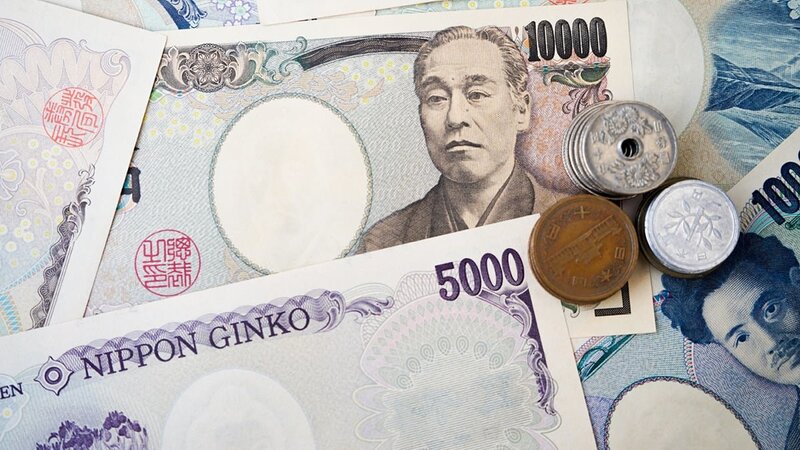
A wave of buying in the US dollar following the outcome of the first Federal Reserve meeting chaired by Kevin Warsh has pushed the yen close to its lowest level in 40 years.
After the close of trading on the Tokyo Stock Exchange yesterday, Thursday, June 18, 2026, the USD/JPY pair broke through 161, sliding all the way to 161.80 — its weakest reading since July 2024 and within striking distance of 161.96, a level that, if breached, would send the Japanese currency to its lowest point since 1986, a 40-year low.
Dollar buying after the Fed meeting sinks the yen, and the Takaichi government says it is ready to intervene
The move in USD/JPY immediately revived market speculation about a possible Bank of Japan (BoJ) intervention to defend the yen.
The reason: an excessively weak yen, while it supports exports, makes imports more expensive for Japan, a country that relies on imported oil and energy, at a moment when uncertainty over energy prices tied to the US-Iran war is the real unknown weighing on central banks and governments worldwide.
Alarms over the yen’s slide against the dollar have already been raised by officials in Sanae Takaichi’s government. At the recent G7 meeting, Finance Minister Satsuki Katayama said Japan is italicready to take decisive measures against the speculation/italic currently underway in the foreign-exchange (forex) markets.
Interventions to shore up the yen have already happened: the moves by the Finance Ministry and the Bank of Japan
Interventions on the yen have already taken place, including those by Japan’s Ministry of Finance in April and May, totaling more than $70 billion, the equivalent of more than 11.7 trillion yen.
More recently, the Bank of Japan also raised Japanese interest rates to a 30-year high in a further effort to defend the currency.
The measures, however, produced little effect, as the yen continued to hover around the 160 mark against the dollar. The steps proved not to be decisive, as several experts have pointed out.
The final blow: the Fed’s hawkish turn on rates under Kevin Warsh
CNBC, for example, reported comments from Masahiko Loo, senior fixed-income strategist at State Street Investment Management, who described the BoJ’s widely expected rate hike as little more than italica band-aid on a gunshot wound/italic for the yen.
The final blow for the Japanese currency came with the Federal Reserve meeting on Wednesday, June 17. Although it ended with a decision to hold US rates steady at 3.5%–3.75%, it fueled bets on a central bank ready to fight accelerating US inflation by returning to rate hikes.
The dollar buying was immediate, sending the Dollar Index to its highest level since May 2025.
Do the interventions actually work, or is the yen’s weakness structural?
So what will Tokyo do now? The Takaichi government, as its finance minister has signaled, is not ruling out fresh action on the exchange rate.
Yet skepticism about its effectiveness is widespread. According to experts, the yen’s weakness is structural, driven by a set of factors that on one side support the dollar — among them the high level of US Treasury yields — and on the other weigh on the currency, such as the economic policy adopted by Japanese Prime Minister Sanae Takaichi, which centers on expansionary fiscal measures.
Despite the BoJ’s monetary tightening, which has so far delivered an interest rate of just 1% — still very low — Takaichi has made no secret of her preference for looser policy.
Ironically, some analysts argue that the very statements coming out of the Takaichi government are themselves holding the yen back. Repeated warnings that Japan is ready to act decisively against excessive volatility have had no real impact on the currency, because they have made the Ministry of Finance’s next moves too predictable, removing the element of surprise — the one factor that might actually have been able to support the currency.
Beyond USD/JPY, on the back of the buying spree triggered in the dollar after the Fed meeting, it is also worth keeping an eye on the euro-dollar (EUR/USD), the pound-dollar (GBP/USD), and the USD/CHF pairs.
Editor’s note
This article was originally published in Italian on money.it by Laura Naka Antonelli on June 19, 2026 as «Febbre sul dollaro post Fed porta lo yen vicino ai minimi in 40 anni. Giappone pronto a intervenire?». It has been translated and adapted for an international audience by the Money.it International desk.