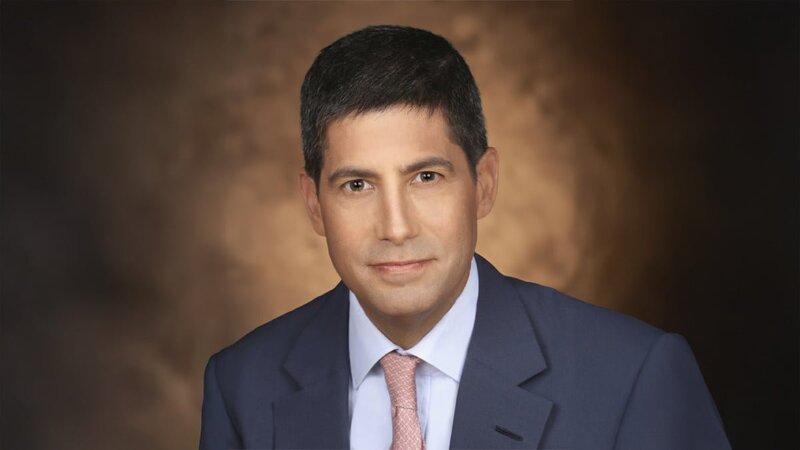
Markets are holding their breath ahead of the outcome of the Federal Reserve meeting, which will be known today, Wednesday, June 17, 2026, with the US central bank set to deliver its first decision on the fed funds rate under new Chair Kevin Warsh.
The rate announcement will come, as usual, at 2:00 p.m. Eastern Time. It will be followed at 2:30 p.m. by the press conference, where Kevin Warsh will field reporters’ questions for the first time as Chair of the Federal Reserve.
Rates held at 3.5%–3.75% in Warsh’s debut — but Trump’s dove already has his hands tied
Forecasts for the meeting’s outcome point to rates left unchanged in the range between 3.5% and 3.75%, the same level set at the last meeting chaired by Jerome Powell, on April 29. That was a meeting marked, it should be noted, by high tension over what to do next.
Tapped by Donald Trump to replace his predecessor Jerome Powell and usher in a new phase of monetary policy centered on rate cuts, Warsh is unlikely, under current conditions, to grant the President his wish.
If anything, the risk is that he, too, ends up sharply criticized by the American President. The point is that there is currently no justification for trimming rates.
Quite the opposite: with the US inflation rate now nearly double the Fed’s target, economists and analysts have already begun drawing up estimates of when the Fed will raise rates instead.
The expert view on the rate-hike risk: the danger threshold for US inflation that worries Warsh
Money.it gathered analysts’ views on the future of US monetary policy.
The odds of cuts now look to be zero, considering that in May, inflation as measured by the consumer price index jumped 4.2% year over year in the United States. The spike was driven by the energy component, a consequence of the US–Iran war.
Another warning sign came from the core PCE index — core Personal Consumption Expenditures, the gauge the Fed tends to watch most closely in deciding the direction of rates. That index jumped 3.3% in April. The figures show how decidedly hawkish the macro backdrop has become.
That is the conviction of the experts consulted by Money, among them Paul Ferrara, Senior Wealth Counsellor and Client Relationship Manager at Avenue Investment Management, who said that “the very concept of a rate cut no longer enjoys the same credibility.”
It is no coincidence, he added, that “roughly 70% of the market seems to have come to terms with this reality,” even though “it has not yet translated into a shift in monetary policy.”
There is, moreover, one factor that, according to Ferrara, “could keep Kevin Warsh from waiting — and therefore from continuing to hold rates steady: core inflation above 3% for three consecutive months.” At that point, Warsh would be forced to raise rates.
The new Fed is the most crucial factor for investment portfolios: watch Treasurys and duration
Ferrara went on to note that the evolution of the Federal Reserve’s stance is one of the most important themes to monitor for portfolio positioning — which is why Avenue Investment Management has already taken action, “watching this Fed transition and its implications for investment strategies very closely.”
Among Avenue’s decisions: adopting a more cautious approach as early as the first half of 2026. “We have progressively reduced the duration of portfolios and increased exposure to short-maturity fixed-income instruments. That choice alone allowed a client with roughly $400,000 invested in long-maturity bonds to avoid estimated unrealized losses of about $18,000.”
A warning to investors and savers was not far behind. Ferrara pointed out that, with “a Fed less inclined to provide forward guidance to the market, 10-year Treasury yields are recalibrating expectations more rapidly and aggressively.”
That means “a 5% yield is no longer just one of the possible scenarios: it is becoming a scenario to take seriously.”
A wave of selling on Treasurys, then, after today’s US rate announcement and Kevin Warsh’s first remarks to the press? Ferrara warns that “for investors with significant exposure to duration, the effects could be immediate, and many are not yet fully aware of it.”
In general, making changes to investment portfolios now “is all the more crucial given that the Dot Plot could be eliminated.” (The Dot Plot is the chart of interest-rate projections from the Fed’s 19 policymakers.)
What stance will Kevin Warsh take in the dot plot?
On the dot-plot question, the economists at TD Securities, interviewed by Reuters, noted that Warsh could decide not to include his own projection in the famous dot chart — which will be published today regardless — in order to “minimize any hawkish message” (that is, a signal of rising rates) “that might emerge from the June dot plot.” In other words, to avoid making the pill the markets already have to swallow any more bitter.
Other analysts said instead that Warsh might choose to contribute to the dot plot with a very specific aim: to launch a review of the Fed’s communications that could spell the end of the document itself. The FOMC (Federal Open Market Committee) has published the dot plot quarterly since 2012, and it has so far been viewed as a useful signal, containing the projections of the US central bank’s 19 officials on the direction of rates.
“We believe Warsh will present his own projections,” said Michael Feroli, chief economist at JPMorgan, since “not doing so would give the impression of spite toward his own committee.”
Also consulted by Money.it, Rami Sneineh, an insurance broker and owner of the US brokerage Insurance Navy Brokers, said he believes a dovish bias is now out of place in the current macro context, stressing that “removing the dovish bias would not be a restrictive move, but a choice consistent with the data: keeping rate-cut-oriented language would by now contradict the evolution of the economy.”
On the possibility that US rates could be raised again — as happened, after all, with Christine Lagarde’s ECB, which has just announced its first tightening since September 2023 — Sneineh aligned with other analysts, saying on the one hand that “there is no single event capable of triggering a rate hike in 2026,” and noting on the other that “the scenario to watch would instead be a reacceleration of the core PCE index to 3% for two consecutive months.”
What’s more, Sneineh pointed out, “delinquencies on auto loans by riskier borrowers in Texas and Illinois are already rising, and these signals often emerge before the deterioration shows up in the more closely watched macroeconomic data.”
Watch the steep bill for US consumers: forecasts of higher estate taxes
On the inflation danger threshold that could put Kevin Warsh on alert if it keeps being breached, Chad Silver, founder and CEO of Silver Tax Group — a US law firm providing advisory services to investors — also weighed in. Silver, too, identified it as a core PCE reading above 3%.
If the elimination of the dot plot were added to that situation, Silver warned, the consequences could be more significant, hitting the 10-year Treasury market in particular — as Steve Case also flagged — to the detriment of American consumers, who would pay considerably higher estate taxes:
“In the past I’ve seen 10-year Treasury yields move about 40 basis points following changes of this kind in Fed communication. For families already pursuing wealth-transfer strategies, a shift like that can translate into an estate-tax increase of hundreds of thousands of dollars.”
Among the experts Money also gathered was the comment of Steve Case, a consultant active in the financial and insurance sector of the UK market, who stressed that, in his view, Kevin Warsh will remove every reference in the FOMC statement that could suggest a Fed inclined to cut rates: “It’s language that can no longer exist with these labor-market numbers,” he said, recalling the latest figures from the great market-mover that is the US jobs report — the Non-Farm Payrolls.
Looking ahead, Case also cited a number that, in his view, “really makes the difference” — the 3% threshold of the core PCE index. A threshold that has, in fact, already been breached: “The Fed reacts only if the core PCE index accelerates again above the 3% threshold, and not because it listens to market pressure or the din of politics.”
As for what would happen to markets without the Dot Plot, Case anticipated that, “following the removal of the Dot Plot, I would not be surprised to see a jump of 20 to 30 basis points in 10-year Treasury yields.” After all, “historically, every time the Fed changes its communication approach, the market tends to recalibrate rate expectations quickly.” In short, scrapping the dot plot will push “volatility higher in the short term.”
For Ferrara, the situation will nonetheless settle “over the long run,” since “clearer, more consistent communication will help strengthen the Federal Reserve’s credibility.”
Hard times, then, for US consumers and businesses, set to keep paying the price of higher inflation, the risk of a hawkish Fed on rates, steeper mortgage rates and financing costs, and a sharp increase in estate taxes.
Editor’s note
This article was originally published in Italian on money.it by Laura Naka Antonelli on June 17, 2026 as «Previsioni riunione Fed, cosa aspettarsi oggi? Rischio rialzi tassi da Warsh, gli effetti sul portafoglio». It has been translated and adapted for an international audience by the Money.it International desk.