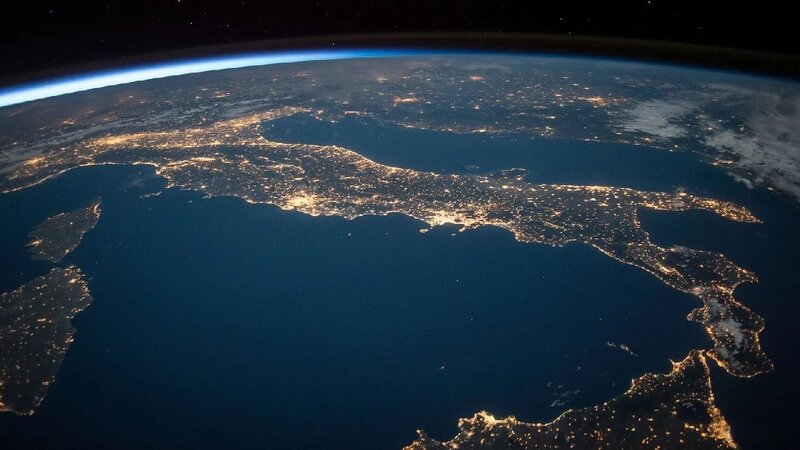
The International Monetary Fund (IMF) has raised its growth forecast for Italy. In the World Economic Outlook released on October 13, 2026, during the annual meetings under way in Bangkok, the Fund lifts its 2026 GDP projection for Italy from 0.5% to 0.8%, an improvement of 0.3 percentage points over the July update. The 2027 estimate also edges up by 0.1 points, to 0.6%. The projections incorporate data available through September 30.
The revision comes within a global picture that the Fund describes as solid but fragile. The report’s title, «Resilience under Strain, Urgent Choices», describes a world economy that has absorbed a series of shocks, culminating in the war in the Middle East, but whose resilience is now being tested and calls for swift decisions from governments.
Italy: forecasts improve, but growth stays below the euro area average
The 0.8% forecast for this year marks a change of pace: in both April and July the Fund had projected growth of 0.5% for Italy in 2026 and 2027. The figure should be read with some caution, however. Measured between the fourth quarter of 2025 and the fourth quarter of 2026, Italian growth would come in at just 0.5%: part of the 0.8% annual average reflects strong momentum at the end of 2025 carrying over into this year’s average.
Within Europe, Italy’s position remains in the middle of the pack. For the euro area, the IMF forecasts growth of 1.1% in 2026, a slight slowdown from 1.2% in 2025, and 1.2% in 2027. Italy therefore remains below the eurozone average and far from Spain, which would grow 2.5%, but does better than France, whose estimate falls to 0.4% after a 0.2-point cut from July. The largest upgrade is for Germany: after near-stagnation in 2025 (+0.2%), German GDP would grow 1.3% this year, 0.6 points more than the summer estimate.
The comparison is less favorable on prices. According to the Fund, Italy would end 2026 with average annual inflation of 3.3%, above the 3.1% forecast for the euro area, before slowing to 2.8% in 2027, in line with the European average. Among the euro area’s major economies, only Spain would be more exposed to the inflationary impact of the energy shock, with 3.7% projected for this year. For Germany the IMF indicates 2.7% in 2026, rising to 3.1% in 2027; for France, 2.4% and 2.2%. In the United States, 2026 inflation is projected at 3.6%.
On other indicators, Italy’s picture is more favorable. According to the Fund’s database, the unemployment rate would fall from 6.1% in 2025 to 5.6% in 2026, before rising to 5.8% in 2027. The public deficit would come in at 2.9% of GDP this year, below the EU’s 3% threshold, and at 2.8% next year. Debt remains the weak point: the IMF puts it at 137.9% of GDP in 2026, up from 137.1% in 2025, with a slight decline to 137.6% in 2027.
The weak point for the euro area as a whole, in the Fund’s reading, remains energy: persistently high costs and still-fragile consumer confidence weigh on the outlook, while inflation risks are expected to linger through much of next year.
IMF estimates for the major economies (real GDP growth, percent change)
| Country | 2025 | 2026 | 2027 | 2026 revision vs. July |
|---|---|---|---|---|
| World | 3.5 | 3.1 | 3.4 | +0.1 |
| Advanced economies | 2.0 | 2.1 | 1.8 | +0.4 |
| United States | 2.3 | 2.3 | 2.3 | 0.0 |
| Euro area | 1.2 | 1.1 | 1.2 | +0.2 |
| Germany | 0.2 | 1.3 | 1.1 | +0.6 |
| France | 0.9 | 0.4 | 0.7 | -0.2 |
| Italy | 0.5 | 0.8 | 0.6 | +0.3 |
| Spain | 2.6 | 2.5 | 1.8 | +0.4 |
| Japan | 1.2 | 0.7 | 0.7 | +0.1 |
| United Kingdom | 1.2 | 1.3 | 1.2 | +0.3 |
| Emerging economies | 4.5 | 3.7 | 4.4 | -0.1 |
| China | 5.0 | 4.5 | 4.0 | -0.1 |
| India* | 7.8 | 7.0 | 7.0 | +0.6 |
| Brazil | 2.3 | 2.2 | 1.9 | -0.2 |
| Russia | 1.0 | 0.9 | 0.9 | -0.2 |
| Saudi Arabia | 4.6 | -3.3 | 7.9 | -5.0 |
Source: IMF, World Economic Outlook, October 2026, Table 1.1. *Fiscal-year data for India.
Global growth holds at 3.1%, with oil above $95
Globally, the IMF expects growth to slow from 3.5% in 2025 to 3.1% in 2026, then rebound to 3.4% in 2027. This year’s estimate is unchanged from April and 0.1 points higher than in July, when the Fund had cut it to 3%. In the January update, before the war, the figure was 3.3%.
The report also quantifies the blow that was avoided. According to the Fund’s simulations, a closure of the Strait of Hormuz with no supply response would have pushed oil toward an average of about $110 a barrel this year and taken 0.9 points off global growth. Rerouting of supplies to other ports, higher output outside the Gulf and the use of inventories more than halved the impact, to 0.4 points, which falls to 0.3 points when accounting for economies’ lower oil dependence than in the past.
The assumptions behind the estimates are nonetheless heavy. The Fund assumes the Strait reopens in March 2027, with a return to near pre-war conditions by October, and an average oil price of $95.74 a barrel in 2026, 41.3% higher than in 2025, and $87.39 in 2027. Global inflation is projected at 4.7% this year, up from 4.1% in 2025, returning to 4.1% in 2027.
Among the large economies, the United States would grow 2.3% in both 2026 and 2027, supported by consumption, fiscal policy and technology investment. China would slow to 4.5%, 0.1 points lower than the July estimate, and to 4% in 2027, while India is confirmed as the most dynamic of the large economies, at 7%. The heaviest toll falls on countries close to the conflict: for the Middle East and Central Asia the Fund projects a 0.3% contraction in 2026, with Saudi Arabia at -3.3%, five points below the July estimate, and double-digit declines for Bahrain, Iraq, Kuwait and Qatar.
Growth is increasingly concentrated
The most significant finding in the report concerns how growth is distributed. According to the IMF, 32 countries now generate 95% of global growth, versus 54 in April, while downward revisions affected about 47% of economies. The Fund describes growth as being redistributed according to two factors: exposure to the energy supply shock caused by the conflict, and demand dynamics tied to artificial intelligence.
Silvana Tenreyro, the IMF’s chief economist since August 10, signs her first World Economic Outlook with this report. An economist with Argentine, British and Italian citizenship, she served as an external member of the Bank of England’s Monetary Policy Committee from 2017 to 2023. In the foreword she writes that «despite this barrage of shocks, the global economy has held up,» but that «this resilience is under strain.» At the press conference, as reported by Italian news agency Adnkronos, she described the two forces at play: on one side, rising energy prices, which create a negative supply shock and fuel inflation; on the other, investment, especially in AI, which produces a demand shock.
The weight of artificial intelligence
AI investment is driving growth in semiconductor-producing countries in particular. For Taiwan the IMF forecasts growth of 10.7% this year, and for South Korea 3.3%. According to the report, the two economies account for 62% of net trade in AI hardware, while the United States and China absorbed more than 75% of net imports of these components in 2025 and host 57% of the data centers built since 2024.
Managing Director Kristalina Georgieva stressed that, although concentrated in a few areas, the AI-driven acceleration is what allows the world economy to keep growing at around 3%. It is also a source of risk: the Fund warns that a reassessment of AI-related profit and productivity prospects could sharply curtail investment, trigger equity market corrections and tighten financial conditions.
The risks: energy stocks, debt and constrained central banks
In the foreword, Tenreyro warns that inventories in energy markets are thinning and that new geopolitical shocks could quickly be transmitted through prices and supply disruptions. On the monetary front, where commodity price increases and technology investment are feeding persistent inflationary pressures, monetary policy may have to become even tighter.
Room for fiscal policy is limited. With high debts and rising government bond yields, the Fund calls it increasingly urgent to rebuild fiscal buffers through credible adjustment plans, and asks that energy-relief measures be temporary and targeted. Deniz Igan, head of the IMF’s World Economic Studies division, summed up the request as a balance between short-term needs tied to inflation, including food and energy security, and medium-term stability.
Pressure is greatest for low-income countries, which do not benefit from the AI boom and must face high energy prices with limited resources. For Italy, the upward revision is good news, but it leaves open the same issues the Fund flags for the euro area as a whole: energy, inflation and a debt still close to 138% of GDP.
Editor’s note
This article was originally published in Italian on money.it by Flavia Provenzani on October 13, 2026 as «Il FMI alza le stime sull’Italia e conferma la crescita mondiale al 3,1%. Tutti i numeri del nuovo World Economic Outlook». It has been translated and adapted for an international audience by the Money.it International desk.